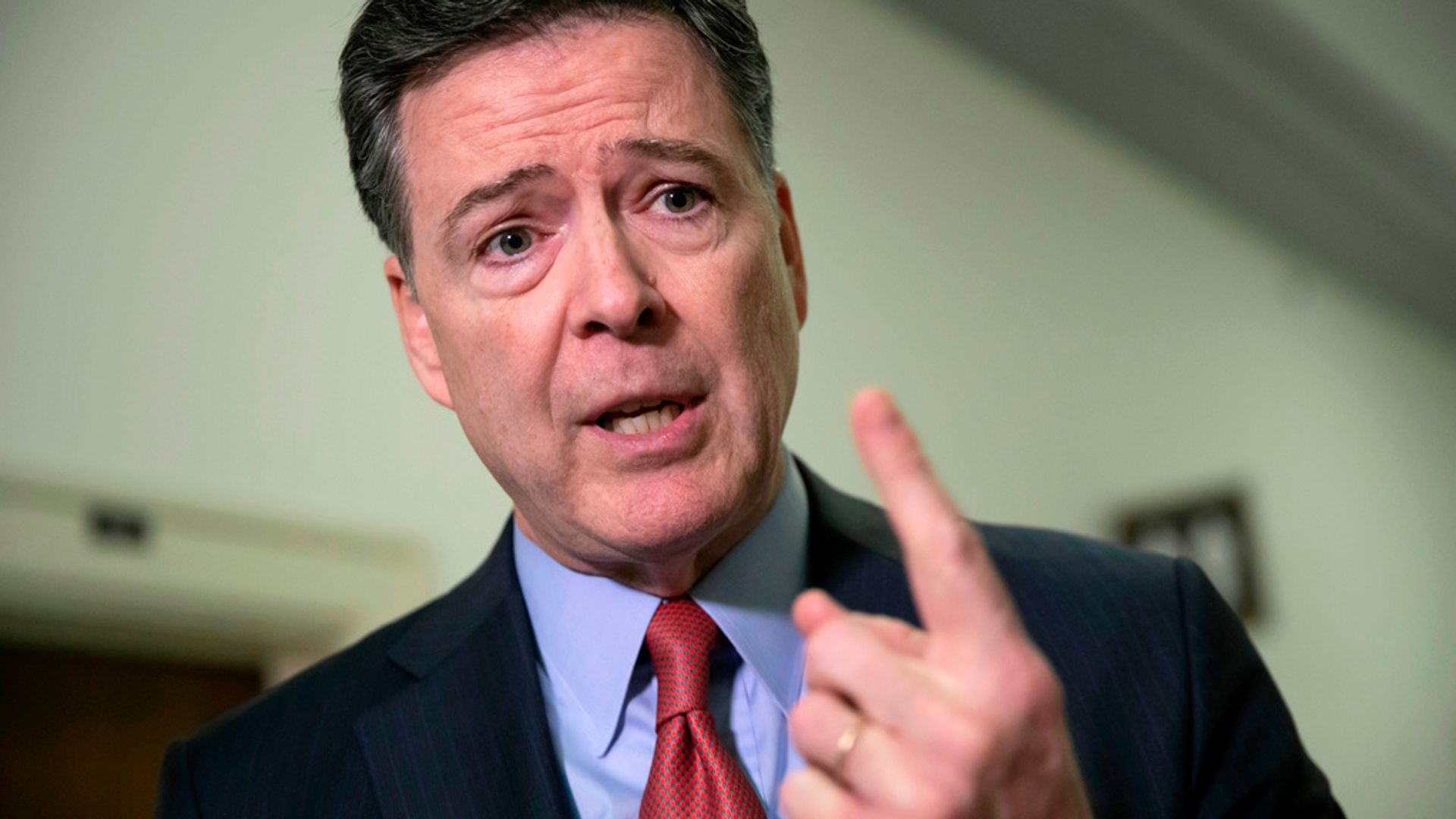
In a quiet federal courtroom in Alexandria, Virginia, a veteran of the national security establishment stood before a judge today to answer for a photograph of seashells. James B. Comey, the former FBI Director who has spent nearly a decade in a high-stakes tug-of-war with Donald Trump, surrendered to authorities Wednesday morning. This marks his second indictment in a year, a legal development that transforms a seemingly mundane beach photo into a litmus test for the First Amendment and the neutrality of the Department of Justice.
The case centers on a May 2025 Instagram post. Comey, then a private citizen, uploaded a photo of shells on a North Carolina beach arranged to read 86 47. For the uninitiated in restaurant slang or political shorthand, the number 86 means to cancel, eject, or, in more sinister contexts, eliminate. Donald Trump is the 47th President of the United States. To the Justice Department, now led by Acting Attorney General Todd Blanche, this was not a "cool shell formation," as Comey’s caption claimed, but a calculated, transmitted threat against the life of the Commander-in-Chief.
The High Bar for a True Threat
Prosecuting speech is a treacherous business in American law. To secure a conviction under 18 U.S.C. § 871(a), the government must prove that Comey’s post was a "true threat." This isn't just about how a recipient feels; it’s about the intent of the speaker.
The Supreme Court has set the bar high. In cases like Counterman v. Colorado, the court ruled that the government must prove the defendant acted with at least a reckless disregard for how their words would be perceived. Prosecutors are now tasked with proving that a 6-foot-8-year-old former prosecutor, who knows the law better than most, intentionally called for the assassination of a president using a cryptic arrangement of calcium carbonate on a public beach.
The indictment remains remarkably thin on evidence of intent. Beyond the image itself, the DOJ has not produced emails, texts, or witness testimony suggesting Comey was planning a crime or inciting others to commit one. Instead, the prosecution relies on the "reasonable person" standard. They argue that any reasonable person, seeing "86" paired with "47," would interpret it as a call for violence.
The Political Mechanics of Indictment
This isn't an isolated incident of overzealous social media monitoring. It is the culmination of a multi-year effort to criminalize political opposition. Comey has been a target since his 2017 firing, and this second indictment—following a failed 2025 case involving allegations of lying to Congress—suggests a strategy of legal attrition.
Acting Attorney General Todd Blanche, speaking at a news conference on Tuesday, sidestepped questions regarding the lack of direct evidence. "You are not allowed to threaten the president," Blanche said, a statement that is legally true but functionally empty without proof of a specific threat. By choosing to prosecute an ambiguous numeric slang, the DOJ is testing the boundaries of how far "context" can be used to bridge the gap between a political jab and a felony.
Why the Case is Fragile
- Ambiguity: "86" is widely used in the service industry to mean "we are out of this item" or "don't serve this person."
- Public Record: Comey deleted the post almost immediately after the backlash began, issuing a clarification that he did not intend to advocate for violence. In the world of criminal intent, immediate retraction usually works in the defendant’s favor.
- The "Found" Defense: Comey claims he stumbled upon the arrangement. If the shells were moved by the tide or a previous beachgoer, the prosecution's theory of "willful arrangement" collapses.
A Dangerous Precedent for Digital Speech
If a federal grand jury can be convinced that a photo of shells constitutes a threat, the perimeter of protected speech shrinks significantly. This case moves the goalposts from "clear and present danger" to "unfortunate interpretation."
We are seeing the weaponization of semiotics. The government is claiming the right to interpret symbols and numbers as inherent violence, regardless of the speaker's stated intent. If "86 47" is a crime, what stops the prosecution of other political slogans? The "86" slang has been used by activists across the spectrum for decades. By focusing on Comey, the DOJ is signaling that the identity of the speaker is as important as the content of the speech.
The defense will likely lean heavily on the fact that Comey is a public figure engaging in what he calls "political commentary." In the American tradition, criticizing or even wishing for the removal of a leader is protected, provided it does not cross into direct incitement.
The Courthouse Reality
Inside the courtroom, Comey appeared remarkably composed. He has played this game before. He released a video on Substack shortly after the indictment, stating, "I am still innocent, I am still not afraid." It was a calculated move, aimed at the court of public opinion while his lawyers prepare for the battle in the Eastern District of North Carolina.
The case has been assigned to U.S. District Judge Louise Flanagan. While she was appointed by a Republican president, her record suggests a strict adherence to procedure. This won't be a slam dunk for either side. The government has to prove a state of mind, which is notoriously difficult when the only physical evidence is a digital file of a temporary beach sculpture.
The trial will likely hinge on whether the prosecution can find a "smoking gun" in Comey’s private communications. If they can’t, they are asking a jury to convict a man for a metaphor. That is a heavy lift in a country that prides itself on the freedom to be loud, wrong, and even offensive.
The shells have long since been washed away by the Atlantic. What remains is a legal battle that will define the limits of dissent for years to come. If the government wins, the beach is no longer a place of leisure; it’s a crime scene waiting to happen. If Comey wins, it’s another high-profile failure for a DOJ that seems increasingly focused on settling old scores.
Prepare for a long summer of legal maneuvering. This case won't be settled by a simple apology or a deleted post. It is about who gets to decide what a number means in the age of digital outrage.
Watch the docket. The next hearing will determine if the government has enough to even get this to a jury. If the judge finds the evidence of intent lacking, this case may end before the first witness is called. Regardless of the outcome, the message is clear: watch what you post, because the interpretation is no longer yours to control.