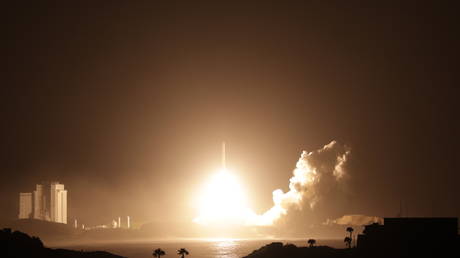
Japan launched the Martian Moons eXploration mission, known as MMX, to grab soil from Phobos and bring it back to Earth, aiming to answer whether Mars captured asteroids or built its moons from a giant collision. Most headlines treat the launch as a simple victory lap for space exploration. It is not. It is a calculated gamble on a rock that sits inside one of the nastiest radiation and debris environments in the inner solar system, guided from millions of miles away with radio delays that turn every maneuver into a high-stakes bet.
After decades watching space agencies burn billions chasing dusty craters and rover tracks on Mars, I have learned to look past the press releases and ask who is actually paying for the risk. Chasing a potato-shaped moon is rarely about pretty postcards. It is about origins, planetary defense, and proving that an agency can pull off a return trip from deep space without losing its shirt or its spacecraft.
The Quiet Bet Behind Phobos
Everyone talks about Mars because Mars looks familiar enough to sell tickets. You get dunes, ice caps, ancient riverbeds, and the seductive myth of a second home. Phobos offers none of that romance. It measures roughly twenty-seven kilometers across at its widest stretch, orbits dangerously close to its parent planet, and lacks the comforting blanket of a thick atmosphere to slow down a descending lander.
So why spend years building a spacecraft for a target that looks like a floating slag heap? Follow the science and the money together. Phobos and its smaller sibling, Deimos, sit right at the crossroads of two competing stories about how rocky planets grow up. One story says Mars grabbed passing carbonaceous asteroids out of the outer solar system and locked them into orbit. The other says a massive body slammed into early Mars, blasting enough debris into orbit to form a ring that eventually clumped into moons.
Getting physical grains back to terrestrial laboratories changes everything. Remote spectrometers can squint at reflected light from orbit and guess at mineral makeup, water content, and organic compounds until the sensors burn out. Nothing beats holding actual regolith under clean-room microscopes on Earth, where instruments the size of shipping containers can measure isotopes with surgical precision.
A handful of Martian moon dirt returned to Earth carries more answers about planetary origins than a decade of orbiting cameras guessing from afar.
There is an overlooked angle here that rarely makes the glossy brochures. Studying small, low-gravity bodies in deep space is also a dress rehearsal for handling near-Earth objects and building supply depots in orbit. If future missions ever want to refuel deep-space craft using water or volatiles locked in moons or asteroids, you first have to know what is actually stuck in the dirt and how hard it is to dig out without launching yourself back into space by accident.
Why Sample Return Changes the Math
Sending a rover across a planet is already hard. Bringing material back is an entirely different beast. Every extra gram on the way out multiplies the fuel needed to get home, and landing on a tiny moon means gravity is so weak that a clumsy thruster firing can turn a gentle touchdown into an unintended escape trajectory.
Japan already proved it could pull off tricky small-body sample returns with Hayabusa and Hayabusa2 at asteroids Itokawa and Ryugu. Those missions were triumphs of engineering stubbornness, surviving fuel leaks, reaction wheel failures, and years of nerve-wracking navigation. Applying that hard-won muscle memory to MMX makes sense on paper, yet Mars is a harsher neighborhood than the main asteroid belt. The round-trip light delay stretches up to roughly forty minutes at peak distance, which means ground controllers cannot joystick a lander out of trouble in real time.
Engineering for a Low-Gravity Trap
Spacecraft engineers love clean equations. Nature loves throwing jagged boulders, electrostatic dust, and timing glitches at them. On Phobos, surface gravity is tiny—a fraction of a percent of Earth's—which sounds easy until you try to anchor a machine or fire a sampling mechanism without kicking the whole craft off balance.
To solve that problem, MMX relies on a multi-part architecture rather than a single all-in-one gamble. The main spacecraft handles transit, orbital surveys, and the return leg, while a small rover—developed with international partners including CNES and DLR—is designed to explore the rugged surface and gather context before the big sampling push. Instead of relying solely on a slow, multi-minute surface touchdown like an asteroid mission, the sampling approach uses a rapid touch-and-go style mechanism designed to grab material quickly and get clear of hazards.
Consider a hypothetical example to see how tight the margin gets. Suppose a lander approaches a slope covered in loose regolith and sharp rocks just as a solar flare spikes radiation levels and an autonomous hazard algorithm flags a tilted boulder. If the system hesitates too long, orbital mechanics keep moving the target relative to the craft. If it commits blindly, a single snag can tilt the vehicle past its recovery angle. Autonomy has to be smart enough to react fast, yet conservative enough not to chase phantoms.
Several technical hurdles stand out right away:
- Navigation and orbital mechanics: Phobos orbits Mars every few hours, meaning the spacecraft has to track a moving target inside a complex gravity field shaped by both Mars and its moons.
- Thermal and radiation stress: Operating near Mars exposes electronics and mechanisms to harsh space weather and wide temperature swings between sunlight and shadow.
- Sample containment and reentry: Keeping collected grains uncontaminated across millions of kilometers—and surviving Earth's fiery atmosphere without losing the cargo—leaves zero room for sloppy seals.
None of these problems is new in abstract theory. Together, in one mission profile, they punish any shortcut.
The Geopolitics of Deep Space Dirt
Sample return is no longer a polite academic club where agencies simply share data over coffee. It has become a quiet test of national capability, industrial supply chains, and strategic prestige. When a nation successfully brings pristine samples back from deep space, it signals that its rocket propulsion, deep-space communications, autonomous guidance, and planetary protection protocols can handle complex multi-year campaigns.
Look at the broader race around Mars and its moons. Other space powers have pursued ambitious Mars sample return concepts of their own, only to run headlong into cost overruns, schedule slips, and budget fights back home. Bringing material back from a Martian moon is not identical to lifting samples off the Martian surface through a thicker atmosphere and deeper gravity well, yet it still puts a country squarely in the top tier of deep-space operators.
There is a catch, though, and honest analysts should point it out. Deep-space missions live at the mercy of multi-year political cycles and launch windows. Earth and Mars only line up for fuel-efficient transfers roughly every twenty-six months. Miss a window because of a valve glitch or a software bug, and the calendar punishes you with a two-year wait, ballooning contractor costs and testing political patience.
| Mission Dimension | Phobos Sample Return (MMX) | Surface Mars Sample Return | Asteroid Sample Return (Hayabusa2) |
|---|---|---|---|
| Primary Target | Martian moon Phobos | Martian surface / regolith | Near-Earth asteroid Ryugu |
| Gravity Challenge | Very weak gravity, complex moon-planet orbit | Stronger gravity plus atmospheric entry and ascent | Microgravity, irregular shape |
| Scientific Payoff | Moon origin (capture vs. impact) and Mars system history | Direct ancient surface and atmospheric clues | Early solar system building blocks |
| Operational Risk | Long comm delay, tight orbital geometry, landing hazards | Multi-stage complexity, high cost and schedule pressure | Deep-space endurance and mechanical wear |
Comparing these paths shows why MMX occupies a distinct strategic lane. It avoids the brutal engineering stack of landing a heavy ascent vehicle on Mars and blasting back off through Martian air, while still offering a genuine window into the Martian system's past. That middle path is still unforgiving, and nobody should pretend a moon sample is a free lunch, but it is a sharp bet on where return on investment is highest.
What Could Still Go Wrong
Optimism is cheap at launch. Reality shows up months later when a thruster valve sticks, a star tracker gets blinded by stray light, or a surface sample comes up shorter than planned. Even if a spacecraft reaches Phobos cleanly, gathering enough material to satisfy dozens of eager research teams is never guaranteed on the first try.
Contamination is another quiet threat that rarely grabs headlines until a mission team is sweating over lab results. If terrestrial lubricants, thruster plumes, or stray debris mix with captured grains, scientists have to spend years untangling what came from space and what came from the spacecraft itself. Cleanliness in deep space is an engineering discipline as demanding as rocketry.
There is also the risk of public and political whiplash. A mission like MMX takes years from launch to sample arrival back on Earth. In a culture addicted to instant gratification, a multi-year timeline can look slow from the outside even when engineers are working at full tilt behind the scenes. If technical hiccups happen mid-flight—and in deep space, hiccups happen more often than people admit—calm leadership and realistic expectations matter just as much as clever software.
Beyond the Launch Hype
Strip away the applause and the flags, and MMX is really a test of patience and precision. It asks whether an agency can navigate a crowded orbital neighborhood, touch down on an irregular rock, grab a few grams of history, and send them home across tens of millions of miles without losing the thread.
For engineers and planetary scientists, the real payoff begins long after liftoff, when data streams down from Mars orbit and, years later, when tiny grains sit inside a sealed canister on Earth waiting to be opened. Keep your eyes on the telemetry and the sample return capsule, not just the launch smoke—because in deep space, getting off the ground is only the opening act.