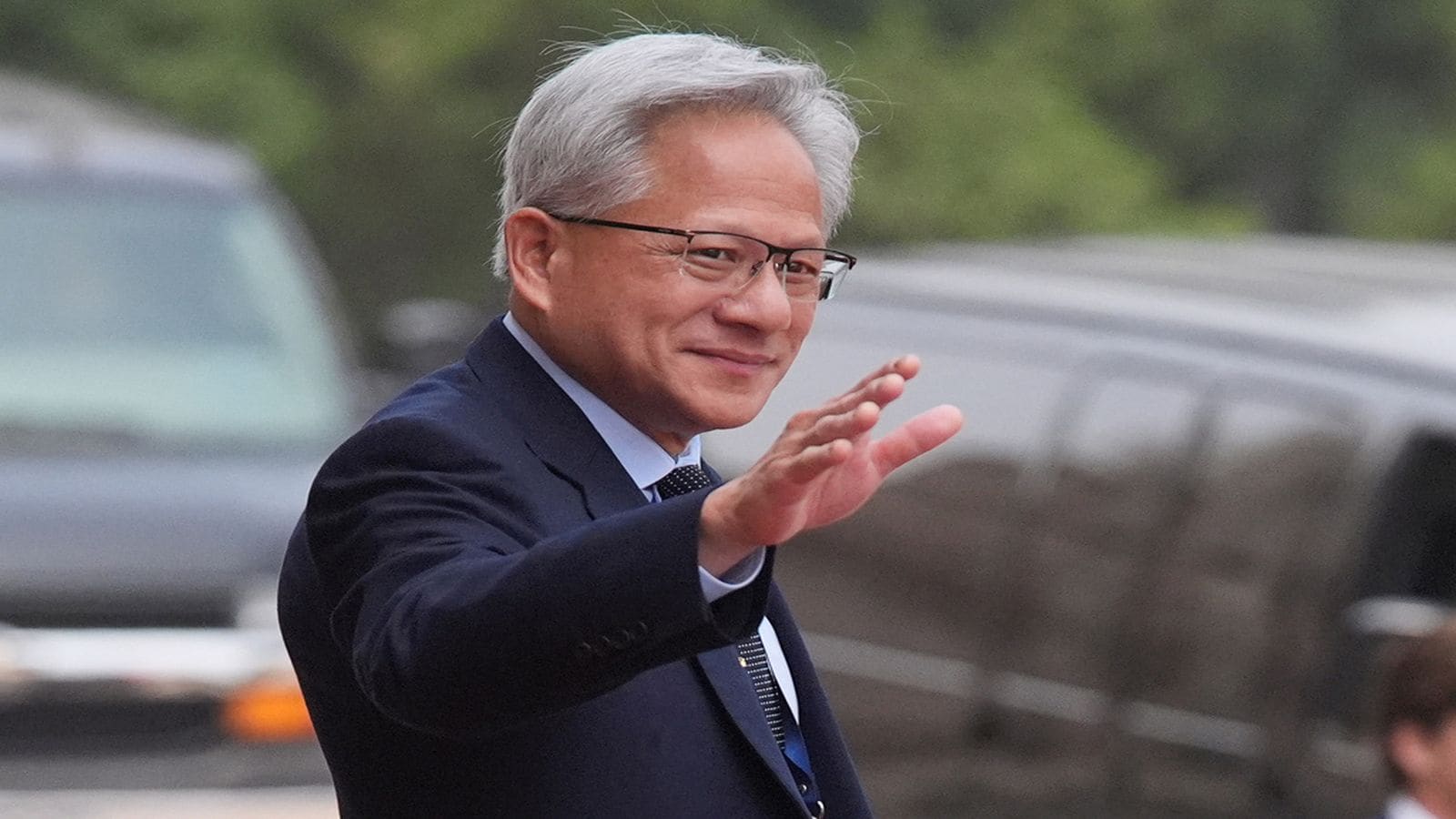
Rumors that Jensen Huang has been quietly conferring with close allies about staging a comeback as Nvidia CEO misunderstand a basic reality of Silicon Valley power. He never left. Since co-founding the Santa Clara chipmaker in 1993, Huang has held the chief executive title without interruption, turning a graphics card vendor into the central nervous system of modern artificial intelligence. Yet persistent whispers about leadership transitions, boardroom contingency plans, and founder re-engagement reveal something far more revealing about Nvidia's current predicament. When a single executive becomes indistinguishable from a multi-trillion-dollar balance sheet, every strategic pivot looks like a comeback—and every succession rumor reads like an existential threat.
The mechanics of this confusion trace back to how Wall Street and the technology press process founder-led empires. In recent quarters, as hyperscale cloud providers have accelerated in-house silicon programs and regulators from Washington to Brussels have tightened export controls and antitrust scrutiny, observers began noticing a shift in Huang's public cadence. He spent less time on celebratory product keynotes and more time behind closed doors with sovereign wealth funds, utility executives, and senior political figures. To outside onlookers accustomed to the clean corporate handoffs of traditional Fortune 500 firms, this looked like a retired patriarch being summoned back to rescue a faltering dynasty. In truth, it was the opposite. It was a sitting chief executive abandoning routine delegation to fight a multi-front war over infrastructure, supply chains, and geopolitical survival. Learn more on a similar subject: this related article.
The Architecture of Irreplaceability
To understand why any conversation about Jensen Huang's leadership status triggers immediate market tremors, you have to look at Nvidia's unusual organizational chart. Most semiconductor giants operate through rigid hierarchical layers that insulate the chief executive from day-to-day engineering trade-offs. Nvidia does not. Huang famously maintains upwards of fifty direct reports, flattening middle management so that bad news travels to the top floor in hours rather than quarters.
That structure creates blinding speed when a market inflects. When the company bet its survival on CUDA—a proprietary software layer that allows general-purpose parallel computing on graphics processors—two decades ago, Wall Street punished the stock for years because the immediate return on investment looked terrible. A conventional chief executive answering to impatient institutional activists would have killed the project to protect quarterly margins. Huang held the line because he controlled both the technical roadmap and the boardroom narrative. More reporting by MIT Technology Review explores related views on the subject.
The flip side of that radical centralization is acute key-person risk. When fifty vice presidents report directly to one man, there is no obvious heir apparent sitting in a chief operating officer chair learning how to balance foundry allocations at Taiwan Semiconductor Manufacturing Company against software licensing disputes with cloud giants. If Huang steps back from granular operational reviews even briefly to focus on global diplomacy, the internal vacuum is felt immediately. Allies and board members do not discuss a "comeback" because he resigned; they discuss it because the modern demands of running Nvidia require him to constantly re-enter the trenches of chip architecture, supply chain negotiation, and customer retention simultaneously.
Why Hyperscalers Want to Break the Monopoly
The pressure forcing Huang back into full-time wartime mode comes from his wealthiest customers. Amazon, Microsoft, Alphabet, and Meta account for an enormous share of Nvidia's data center revenue, and every single one of them is spending billions of dollars to escape his pricing power.
Custom application-specific integrated circuits—commonly called ASICs—do not need to outperform Nvidia's flagship architectures across every conceivable workload to damage Nvidia's margins. They only need to handle narrow, predictable tasks like inference or recommendation engines at a lower total cost of ownership. Look at the math facing a cloud provider deploying hundreds of thousands of accelerators:
- Capital expenditure compression: Paying massive gross margins to a single vendor eats directly into cloud operating profits.
- Supply chain autonomy: Relying on one company's allocation schedule at TSMC leaves multi-billion-dollar data center builds hostage to another firm's product cycle.
- Software leverage: As long as developers write exclusively for CUDA, switching hardware remains prohibitively expensive.
Huang's response to this threat has not been defensive price cutting. Instead, he accelerated Nvidia's product cadence from a two-year architectural cycle to a relentless one-year rhythm. By compressed timelines, before a rival's custom silicon even finishes tape-out and enters volume production, Nvidia has already shipped the next generation of interconnects, networking switches, and rack-scale systems. Executing an annual hardware-and-software overhaul at global scale cannot be managed from thirty thousand feet. It demands obsessive involvement from the person who built the culture.
The Geopolitical Squeeze on Silicon
Even if Huang solves every engineering bottleneck in Santa Clara, he cannot out-code export licenses. Over the past several years, Nvidia has found itself trapped between Washington's national security apparatus and Beijing's determination to achieve semiconductor self-sufficiency.
Each time the United States Commerce Department tightens thresholds on compute density and interconnect bandwidth, Nvidia's engineering teams must strip down flagship chips to create compliant variants for the Chinese market. Almost immediately, domestic competitors like Huawei rush into the gap, backed by state subsidies and forced procurement mandates. Losing seamless access to one of the world's largest technology markets forces Nvidia to replace billions in lost revenue elsewhere—primarily by convincing sovereign nations in Europe, the Middle East, and Asia to build state-backed sovereign AI data centers.
Selling sovereign infrastructure is a completely different business than selling graphics cards to PC gamers or servers to Silicon Valley startups. It requires negotiating directly with heads of state, energy ministers, and national telecommunications monopolies. Nobody in Nvidia's executive suite carries the personal authority to close a multi-billion-dollar national compute pact in Abu Dhabi, Tokyo, or Paris except Huang himself. Every trip abroad pulls him away from internal product reviews; every return to headquarters feels like a high-stakes re-entry into engineering management.
The Myth of the Silicon Valley Succession Plan
Corporate governance consultants love to preach the gospel of orderly succession. In theory, a responsible board identifies two or three internal candidates five years before a founder plans to step down, rotates them through profit-and-loss divisions, and executes a frictionless transition.
In practice, semiconductor history is littered with the wreckage of textbook handoffs. When Andy Grove stepped aside at Intel, the company possessed deep managerial benches, rigorous operational playbooks, and dominant market share. Yet successive leadership transitions slowly traded engineering urgency for financial optimization, allowing TSMC and ARM-based designers to seize the future of manufacturing and mobile computing. Apple managed its transition from Steve Jobs to Tim Cook largely because Cook inherited an unmatched supply chain machine and a hardware ecosystem locked in for a decade—and even then, critics spent years questioning whether Apple could invent new categories without its founder.
Nvidia's board knows this history intimately. Several directors have served alongside Huang for more than twenty years. They understand that his value does not sit in a binder of management principles that can be handed to a newly minted MBA. It lives in his willingness to bet the entire company on unproven architectures and his ability to intimidate competitors simply by announcing a faster roadmap.
Consider a hypothetical scenario where Nvidia's board bowed to governance purists tomorrow and installed a traditional operational executive while moving Huang to an executive chairman role. Within two quarters, major cloud customers would test the new chief executive's resolve on pricing, key engineering leads frustrated by slower decision cycles would field recruitment calls from rival chipmakers, and sovereign buyers would wonder whether Nvidia still possessed the audacity to fund multi-year infrastructure gambits. The market capitalization penalty would be swift and brutal.
Inside the Operational Reality
Walk through the mechanics of how Nvidia actually ships a modern AI cluster, and the absurdity of separating Huang from daily operations becomes obvious. Nvidia no longer sells standalone chips. It sells entire data center architectures—combining graphics processors, central processors, high-speed NVLink interconnects, InfiniBand and Ethernet networking gear, liquid-cooling specifications, and enterprise software stacks.
A failure in any single link stalls revenue recognition across the entire rack. If a networking switch misses a qualification window, billion-dollar shipments of accelerators sit idle in warehouses. If a thermal design flaw forces data center operators to throttle power draw, hyperscalers delay deployment schedules.
Managing those dependencies requires someone who can sit in a room with optical transceiver engineers at ten in the morning, review CUDA compiler optimizations at noon, and negotiate wafer pricing with foundry executives that evening. Huang's famed intolerance for corporate politics and PowerPoint theater exists precisely to strip away the excuses that allow cross-functional delays to hide in large organizations. Allies who talk about him "coming back" to core operational oversight are really describing the cyclical reality of how he runs the company—periodically dropping global ambassador duties to personally untangle engineering and supply chain knots before they become public crises.
What Happens When the Founder Clock Runs Out
None of this erases the biological reality that Jensen Huang, born in 1963, cannot maintain an eighty-hour workweek forever. Ignoring succession does not prevent mortality; it merely guarantees chaos when an unplanned exit eventually arrives.
Right now, Nvidia enjoys a structural moat built on developer familiarity, networking lock-in, and unmatched capital resources. That moat gives the company time, though far less time than bullish analysts assume. Open-source software frameworks like PyTorch and Triton are steadily abstracting away some of the low-level hardware dependencies that once made CUDA untouchable. Meanwhile, power grid constraints and data center construction bottlenecks are emerging as hard physical ceilings on how fast customers can deploy new silicon, regardless of how quickly Nvidia designs it.
To survive the eventual post-Huang era without suffering an Intel-style decline, Nvidia has to institutionalize three things while its founder is still at peak strength:
- Software independence from hardware cycles: Turning Nvidia's enterprise software and inference microservices into durable, recurring revenue streams that do not depend entirely on annual chip upgrades.
- Distributed technical authority: Empowering a small circle of senior systems architects to make cross-divisional trade-offs without waiting for final sign-off from the chief executive's office.
- Supply chain redundancy: Qualifying secondary packaging and memory partners aggressively enough that geopolitical shocks or single-vendor bottlenecks cannot paralyze quarterly shipments.
Until those pillars stand on their own, every rumor about boardroom succession, executive fatigue, or a founder's strategic return will continue to rattle markets. Jensen Huang does not need a comeback because he never surrendered the wheel—and until Nvidia learns how to survive without his constant intervention, neither he nor Wall Street can afford for him to let go.