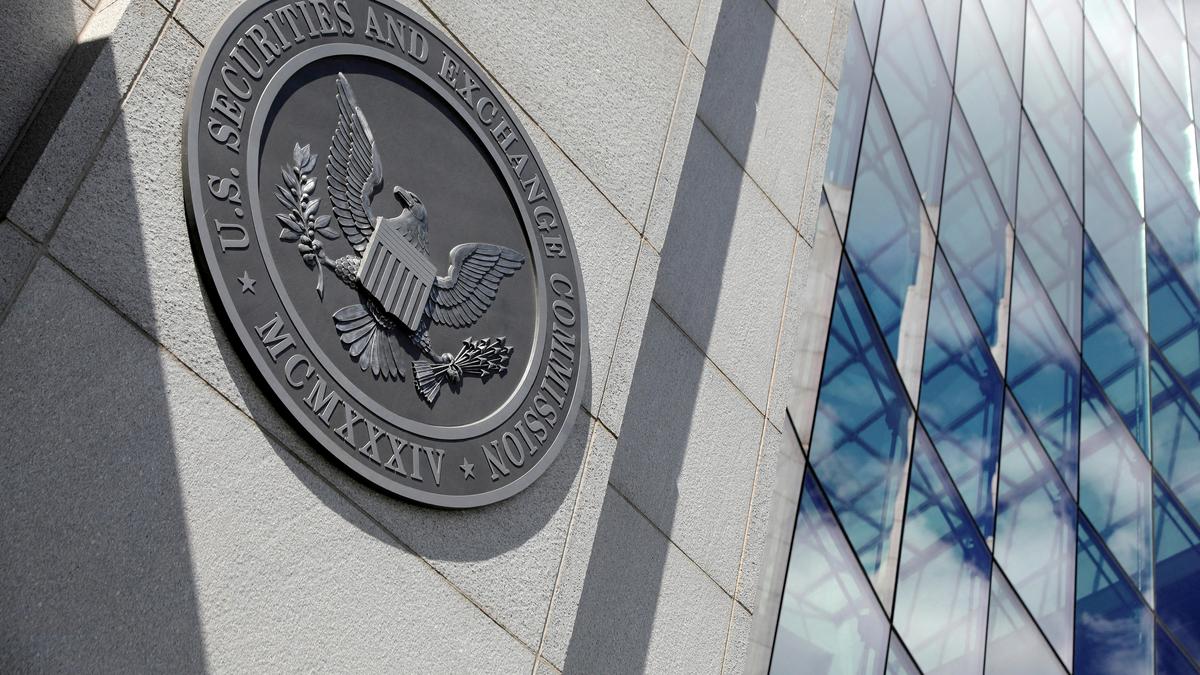
The Securities and Exchange Commission (SEC) lawsuit against Gautam Adani and his associates rests on a contentious application of the "effects test" to determine if United States courts possess subject-matter jurisdiction over foreign entities. By moving for a dismissal, the Adani Group is not merely denying the allegations of bribery and fraud; they are challenging the legal geography of the Southern District of New York. This litigation functions as a stress test for the limits of the Foreign Corrupt Practices Act (FCPA) and the Securities Exchange Act of 1934, specifically regarding how far the "long-arm" of US regulation can reach when the alleged misconduct occurs on foreign soil between foreign nationals.
The defense strategy operates through three distinct layers of legal insulation: the lack of a "nexus" to the United States, the principle of international comity, and the specific failure of the SEC to satisfy the "conducts and effects" test established by the Dodd-Frank Act and refined by the Supreme Court in Morrison v. National Australia Bank.
The Structural Mechanics of the Jurisdictional Challenge
Jurisdiction is the prerequisite for any judicial action. Without it, the merits of the SEC's fraud claims—regardless of their perceived evidentiary weight—are legally irrelevant. The Adani defense centers on the argument that the SEC has failed to establish a sufficient link between the alleged bribery scheme in India and the US capital markets.
The SEC's theory of the case relies on the fact that Adani Green Energy and its subsidiaries raised capital from US investors through dollar-denominated bond offerings. The Commission asserts that these investors were misled because the offering documents did not disclose the bribery scheme used to secure lucrative solar power contracts. From a regulatory perspective, the "harm" occurred within the US when domestic investors purchased these securities based on allegedly fraudulent omissions.
The defense counters this by focusing on the location of the core activity. The "Three Pillars of Jurisdictional Immunity" cited in the dismissal motion include:
- Territoriality of Conduct: The alleged meetings, payments, and agreements occurred entirely within India. No part of the "scheme" to influence Indian government officials was executed on US soil.
- Identity of Actors: The defendants are Indian nationals. The entities involved are incorporated under Indian law.
- Nature of the Instruments: While the bonds were marketed to US institutional buyers, the defense argues the transactions were structured in a manner that does not trigger the same oversight as exchange-listed stocks.
Deconstructing the Conducts and Effects Test
To maintain its suit, the SEC must prove that the conduct had a "substantial effect" within the United States or that "significant steps" in furtherance of the fraud occurred here. This is the "Conducts and Effects" test. The Adani legal team argues the SEC is attempting to bypass the restrictive "transactional test" established in Morrison.
Under Morrison, Section 10(b) of the Exchange Act only applies to transactions in securities listed on a domestic exchange or domestic transactions in other securities. Because the Adani bonds were not listed on a US national exchange, the SEC must rely on proving the transactions were "domestic" in nature. The defense argues that the mere presence of US investors does not make a transaction domestic. The location where legal title passed and where the "irrevocable liability" was incurred remains, in their view, outside the US.
The failure to satisfy this test creates a structural bottleneck for the SEC. If the court agrees that the transactions were primarily foreign, the SEC loses its authority to police the behavior, effectively rendering the bribery allegations moot in a US civil context. This creates a high-stakes precedent: a ruling in favor of Adani would signal to global conglomerates that private placements to US institutional investors do not automatically grant the SEC a "roving commission" to audit their global operations.
The Fraud Disclosure Gap
The SEC's complaint is technically a "disclosure fraud" case rather than a direct bribery prosecution. This distinction is critical for understanding the Adani Group's counter-maneuver. The SEC alleges that Adani executives signed certificates and provided "anti-bribery" assurances to banks and investors while simultaneously orchestrating the payment of approximately $250 million in bribes.
The defense’s move for dismissal highlights a logic gap in the SEC’s causal chain:
- The Specificity Requirement: Under the Private Securities Litigation Reform Act (PSLRA), fraud must be pleaded with particularity. The defense argues the SEC has used "generalized" allegations of a scheme to smear specific bond offerings without showing exactly how the alleged bribery in 2021 impacted the financial integrity of bonds issued in previous or subsequent periods.
- The Materiality Threshold: For a statement to be fraudulent, it must be "material"—meaning a reasonable investor would find it significant. The Adani Group argues that the SEC has not quantified the impact of the alleged solar contracts on the overall valuation of the enterprise in a way that proves investors were financially harmed by the non-disclosure.
By framing the issue as a failure of "particularity," the defense seeks to exploit the high bar required for fraud pleadings in US federal courts. They are betting that the SEC's evidence of internal "bribe tracking" (such as the alleged spreadsheets and phone messages) does not bridge the gap to the specific financial disclosures made to US bondholders.
International Comity and Sovereign Interests
A secondary but potent argument in the motion to dismiss is the doctrine of international comity. This principle suggests that US courts should decline to exercise jurisdiction when doing so would interfere with the sovereign interests of another nation—in this case, India.
The alleged bribery involves Indian government officials and Indian infrastructure projects. India has its own regulatory bodies, such as the Securities and Exchange Board of India (SEBI) and the Central Bureau of Investigation (CBI), which are tasked with policing domestic corruption. The Adani defense posits that the SEC is essentially attempting to act as a global policeman for Indian internal affairs.
This creates a conflict-of-laws scenario. If a US court assumes jurisdiction, it risks a diplomatic and legal friction point where US standards of corporate governance are imposed on an Indian infrastructure giant. The "sovereign friction" argument is particularly relevant given the strategic importance of the Adani Group to India's energy transition and national security. The defense is subtly signaling to the court that pursuing this case is not just a matter of law, but an overreach into the domain of a key US strategic partner.
The Risk of Regulatory Arrogance
The SEC often operates under the assumption that the use of the US financial system (wire transfers in dollars, use of US-based correspondent banks) is sufficient to ground jurisdiction. However, recent jurisprudence has pushed back against this "dollar-clearing" theory of jurisdiction.
The Adani motion argues that the use of US banks for the mechanics of a transaction is "incidental" and "ancillary." If the court adopts this view, it would represent a significant contraction of the SEC’s power over the global "Eurobond" market. The cost function for the SEC is high: a loss here would limit their ability to pursue other multinational firms that tap US capital markets via private channels rather than public listings.
Identifying the Evidentiary Deficiencies
The SEC’s reliance on "co-conspirator" testimony and digital traces (cell phone data) faces a rigorous challenge in the dismissal motion. The defense characterizes the SEC’s narrative as a "construct" rather than a factual record. They highlight that the SEC's complaint lacks:
- Direct Links to Disclosures: No evidence is presented that the specific individuals who signed the bond offering documents were aware of the alleged bribery occurring in a different segment of the massive Adani conglomerate.
- Temporal Consistency: The SEC attempts to back-date a "scheme" to cover years of financial activity, but the defense argues the evidence of bribery is localized to a specific timeframe and specific solar contracts that do not contaminate the entirety of the Group's financial history.
This "segmentation defense" is a classic strategy for diversified conglomerates. By isolating the alleged misconduct to a specific subsidiary (Adani Green Energy) and a specific project, the defense seeks to protect the broader Group and its leadership from the "scheme" designation.
The Strategic Path Forward
The motion to dismiss is the first move in a multi-year chess game. If the court denies the motion, the Adani Group will be forced into a discovery phase where internal documents and communications would be subject to intense scrutiny. This is the outcome the defense must avoid at all costs.
The legal reality is that the Southern District of New York is a "pro-regulatory" venue, yet the Supreme Court's trend toward "judicial modesty" regarding extraterritoriality provides the Adani Group with a viable path to dismissal. The case will likely hinge on whether the judge views the bond offerings as "domestic transactions" under the Morrison framework.
For the Adani Group, the dismissal motion serves a dual purpose: it provides a legal exit ramp and acts as a signal to the markets that they are prepared to fight the US government on fundamental constitutional and jurisdictional grounds. They are not negotiating; they are challenging the SEC's right to even speak on the matter.
The most probable trajectory involves a narrow ruling. The court may dismiss certain claims related to older bond issuances where the US nexus is weakest, while allowing others to proceed. However, if the Adani Group succeeds in proving that the "irrevocable liability" for the bond purchases was incurred outside the US, the entire SEC case collapses. This would force the SEC to pivot toward a settlement or withdraw, as they cannot prosecute a case where the court lacks the power to hear it.
Investors and analysts must monitor the "transactional location" arguments specifically. The focus should not be on whether bribes were paid—a matter for Indian courts—but on whether the purchase of an Adani bond by a New York hedge fund constitutes a "domestic transaction" when the issuer is Indian, the project is Indian, and the governing law of the indenture is often English or Indian. The resolution of this tension will define the boundaries of US regulatory power in the 21st-century global economy.