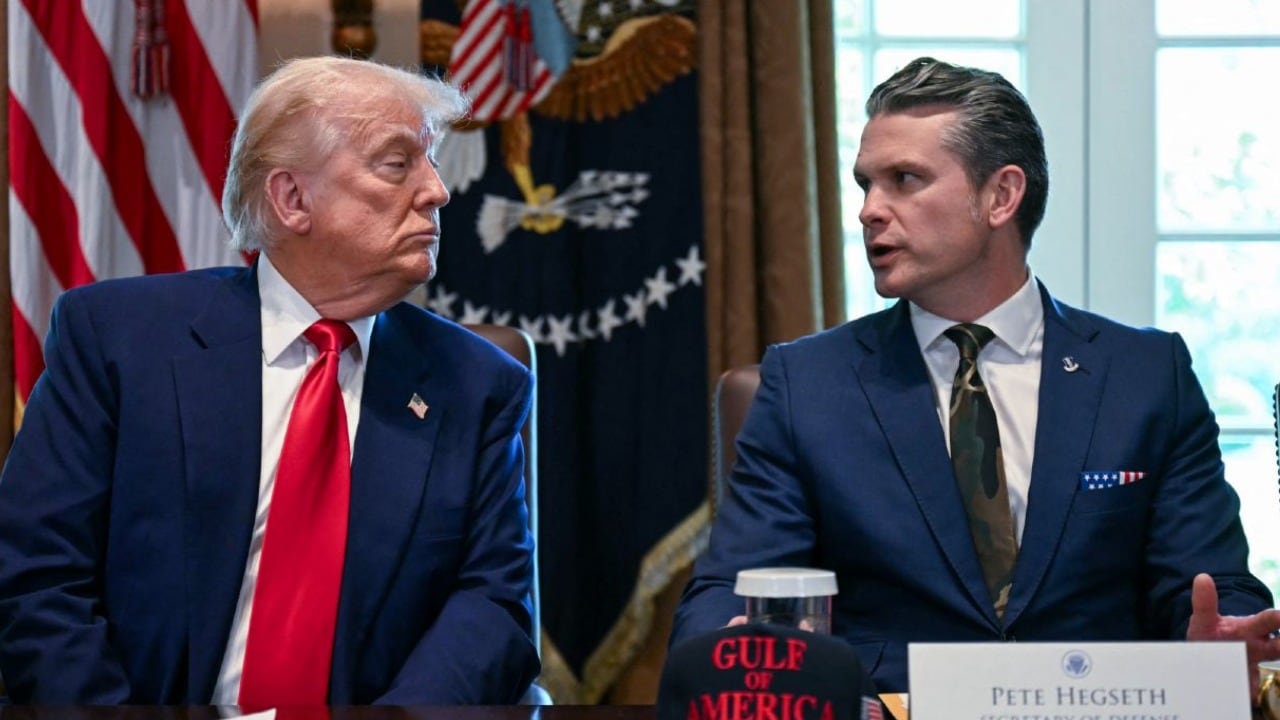
Washington pundits are currently hyperventilating over a simple, predictable headline. Donald Trump refused to fire Defense Secretary Pete Hegseth following bruising midterm election losses and tanking approval numbers.
The beltway press calls it stubbornness. They call it loyalty blinding strategy. They treat the Pentagon chief like a deadweight anchor dragging the administration down, assuming that a classic Washington scapegoat ritual would magically reset the polling averages.
They are completely wrong.
Firing a high-profile cabinet official immediately after an electoral drubbing is the oldest, laziest panic move in American politics. It signals weakness. It validates the opposition's narrative. Worst of all, it hands the media a scalp while solving zero underlying structural problems. By keeping Hegseth in the E-Ring, Trump is executing a calculated power play that institutionalists refuse to understand because they are still playing by 1990s rules.
The Scapegoat Trap That Destroys Administrations
I have watched political operatives and corporate boards burn through millions of dollars and years of institutional momentum chasing the myth of the "clean slate." When numbers dip, the consultants swarm. They demand a sacrifice. They tell the principal that tossing a controversial lieutenant overboard will appease the sharks and buy six months of favorable press.
It never works. Never.
Look at the historical mechanics of cabinet firings after midterm losses. When Harry Truman fired Defense Secretary Louis Johnson in September 1950 to deflect blame for early Korean War missteps and domestic political headaches, it did not save Democrats from losing seats in November. When George W. Bush finally jettisoned Donald Rumsfeld the day after the 2006 midterm wipeout, the move was universally read not as a bold course correction, but as a belated confession of failure. The press did not reward Bush for listening to voters; they used Rumsfeld’s departure as proof that the administration’s critics had been right all along.
In modern media ecosystems, firing a cabinet secretary under fire accomplishes three destructive things simultaneously:
- It confirms the attack line. The moment Hegseth walks out the door, every Democratic talking point about his qualifications, his cultural crusades, and his management of the Pentagon becomes settled historical fact.
- It creates a confirmation nightmare. Replacing a polarizing figure in a post-midterm Senate—especially one where the opposition smells blood—guarantees months of paralyzing hearings, leaked vetting files, and stalled Pentagon initiatives.
- It demoralizes the base. Trump’s core voters do not view Hegseth as a bureaucratic liability. They view him as an ideological battering ram aimed directly at the entrenched defense establishment. Firing him tells those voters that suburban swing-district polling matters more than the mandate they delivered.
What the Polls Actually Measure Versus What the Pentagon Does
The lazy consensus assumes a direct, linear pipeline between a Defense Secretary’s favorability rating and a House candidate’s margin in a swing district. That pipeline does not exist.
Midterm elections are overwhelmingly referendums on the economy, inflation, healthcare costs, and local kitchen-table anxieties. Voters in Pennsylvania or Arizona do not walk into a voting booth thinking about Pentagon procurement reform or military readiness metrics. When they tell pollsters they disapprove of the administration’s handling of defense or leadership, they are expressing a generalized frustration with the party in power.
Media outlets love tying midterm losses to colorful, polarizing personalities because personality drama sells clicks. Analyzing district-level turnout models, redistricting math, and macroeconomic headwinds is boring. Blaming Pete Hegseth is easy.
Imagine a scenario where Trump caves to the pressure tomorrow morning. Hegseth resigns to "spend time with his family." A safe, predictable, retired four-star general or defense industry veteran is nominated to replace him. The editorial boards at the New York Times and the Washington Post applaud the "return to normalcy."
Does the price of groceries drop? Does a single independent voter in Michigan suddenly decide to back Republican congressional candidates in the next cycle because a former Raytheon board member is now running the Department of Defense? Of course not. You trade a loyal ideological enforcer for a bureaucratic caretaker and gain zero electoral equity in return.
The Real Reason Hegseth Is Untouchable Right Now
To understand why Hegseth stays, you have to understand what he was hired to do. He was never brought into the Pentagon to win popularity contests among Georgetown cocktail party regulars or boost generic ballot numbers in suburban office parks.
He was hired to disrupt a trillion-dollar bureaucracy that historically outlasts presidents.
The Department of Defense is the largest, most inertia-bound institution on earth. Career officials in the building have perfected the art of the "slow roll"—nodding politely at political appointees while delaying implementation until the administration runs out of clock. A standard Washington insider takes eighteen months just to learn where the levers of power are hidden, and another year to get comfortable pulling them. By then, the midterm elections arrive, the political capital evaporates, and the bureaucracy wins by default.
Hegseth’s entire value proposition rests on asymmetric disruption. Because he came from outside the traditional defense-industrial pipeline, he is immune to its social pressures. He does not care if defense contractors invite him to their post-government boards. He does not care if retired generals criticize him on cable news panels.
If Trump fires him at the two-year mark, the institutional immune system of the Pentagon wins. Every career official currently resisting changes to personnel policies, procurement priorities, and military culture will immediately realize they just need to wait out the clock. Keeping Hegseth sends an unmistakable, chilling message to the building: He isn't going anywhere, and neither is the agenda.
Dismantling the "Voters Want Moderation" Myth
Whenever an administration takes a hit in the midterms, pundits immediately dust off the Bill Clinton 1994 playbook. They argue that the president must immediately tack to the center, purge the firebrands, and govern as a cautious moderate.
That playbook belongs in a museum.
American politics in the 2020s is driven by base mobilization and asymmetric attention, not median-voter triangulation. When a populist leader tries to appease institutional critics, the critics pocket the concession and demand three more, while the leader's own coalition fractures out of disgust.
Look at how Trump operates when cornered. During his first term, he burned through cabinet officials at a historic pace, often bowing to media pressure or internal leaks. What did that revolving door buy him? Constant chaos narratives, endless tell-all books from disgruntled former aides, and an administration that spent half its energy fighting itself instead of executing policy.
Retaining Hegseth proves Trump learned the core lesson of his first term: Never feed the crocodiles. Once you give the press a high-profile scalp, they do not go away satisfied; they immediately pick their next target inside your cabinet and start the exact same campaign all over again.
The Brutal Downsides Nobody in Trump's Orbit Will Admit
Refusing to fire Hegseth is the right strategic move for maintaining power and ideological momentum, but pretending it comes without severe costs would be dishonest. Even the smartest contrarian play carries heavy baggage.
First, the distraction tax is real. Every news cycle spent defending the Defense Secretary’s latest rhetorical flare-up or personnel clash is a news cycle stolen from the administration's economic messaging. In politics, if you are explaining, you are losing. Hegseth is a lightning rod, and lightning rods attract storms that soak everyone standing nearby.
Second, friction with Senate appropriators will escalate. You cannot run the Pentagon purely through executive fiat. Congress holds the purse strings. Keeping a polarizing secretary in place means senior lawmakers on the Armed Services and Appropriations committees—including skeptical members of Trump's own party—will use budget markups and confirmation holds on lower-level Pentagon nominees to extract concessions. Governance becomes a trench war.
Third, operational bandwidth shrinks. Managing constant political defense consumes the time and focus of senior Pentagon leadership. When the top floor of the E-Ring is locked in a perpetual media war, critical, unglamorous work—like fixing broken shipyard maintenance schedules, untangling supply chain bottlenecks, and modernizing munitions production—risks getting pushed to the back burner.
Stop Asking Who Gets Fired and Start Asking Who Holds the Levers
If you are watching this story to see when Pete Hegseth finally gets the ax, you are asking the wrong question. The personnel drama is a smokescreen.
The real metric to watch over the next twenty-four months is not Hegseth’s polling numbers. It is whether the administration can translate survival into execution.
Here is what actually matters if the White House wants this gamble to pay off:
- Shift from culture war headlines to hard procurement wins. Firing shots at bureaucratic norms plays great on cable news, but voters and lawmakers eventually judge a Defense Secretary on whether the military can actually build ships, drones, and missiles on time and under budget. If Hegseth wants to silence critics permanently, he needs to break the defense contractor monopolies that have fleeced taxpayers for decades.
- Lock down the deputy layer. A disruptive secretary only succeeds if the undersecretaries and assistant secretaries beneath him are ruthless operators who know how to write directives that survive legal challenges and bureaucratic sabotage.
- Starve the leak ecosystem. Most Pentagon controversies do not start in the press room; they start with disgruntled mid-level staffers leaking internal memos to beat reporters. Controlling the paper flow inside the building matters infinitely more than winning a Sunday morning talk show debate.
Washington analysts will spend the next several months writing breathless columns about how Trump’s refusal to dump Hegseth proves the administration is out of touch with the electorate. Let them write. They are measuring power with a broken ruler.
In politics, surviving the storm is half the battle, and refusing to hand your enemies a trophy is the other half. Pete Hegseth still sits behind General Pershing’s desk because Donald Trump understands a fundamental truth that beltway consultants always forget: you do not win a knife fight by throwing away your sharpest blade just because the crowd doesn't like how it looks.


