Money usually dictates political outcomes, but the 2026 Georgia gubernatorial race flipped that script completely.
Billionaire Rick Jackson poured over $194 million of his own wealth into his campaign. His personal contributions accounted for nearly 85% of his overall war chest, generating a political spending spree rarely seen in state-level elections. By early autumn, every major television market, streaming platform, and digital feed across Georgia was saturated with ads backing Jackson. If you found value in this article, you should look at: this related article.
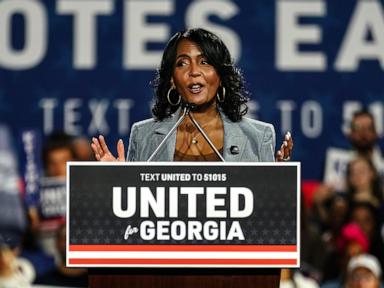
Yet, when the votes were tallied on November 3, 2026, former Atlanta Mayor Keisha Lance Bottoms won the governorship, securing her place in history as the first Black woman elected governor in the United States.
Her victory offers a blueprint for how a candidate can overcome an unprecedented financial imbalance through ground-level grass-roots mobilization and targeted policy messaging. For another perspective on this event, see the latest coverage from NPR.
Campaign Financial Disparity (2026 Georgia Gubernatorial Race)
========================================================================
Rick Jackson (Self-Funded Total):  ~$194,000,000+ (85% of total budget)
Keisha Lance Bottoms (Late Surge): ~$23,200,000   (Driven by 74,000+ small donors)
Result: Bottoms wins historic election despite 8-to-1 spending disadvantage.
========================================================================
Ground Game Beat Massive Ad Buys
The sheer disparity in spending dominated headlines throughout the late summer and early autumn. Jackson’s financial dominance allowed him to run continuous television and digital ads across every media market from Atlanta to Savannah.
Instead of trying to match Jackson dollar-for-dollar on broadcast television, the Bottoms campaign relied heavily on micro-targeted voter turnout operations and local organizing. While Jackson relied on high-dollar donations—reporting only 80 contributions of $10 or less between August and late October—Bottoms built a grassroots network that yielded over 74,000 small-dollar donations in that same window.
That grass-roots backing gave her the momentum needed to survive the broadcast media blitz until key national groups stepped in. During the final weeks of the race, institutions like the Democratic Governors Association contributed $11.5 million to her leadership committee, while outside donors like former New York Mayor Michael Bloomberg added multi-million dollar contributions to narrow the cash gap during early voting.
Grassroots Engagement vs High-Dollar Contributions (Aug 1 - Oct 20)
------------------------------------------------------------------------
Small-Dollar Donations ($10 or less):
- Bottoms Campaign: 74,000+ individual contributions
- Jackson Campaign: 80 individual contributions

Campaign Finance Disclosure Length:
- Bottoms Filings: ~2,000 pages of small-donor records
- Jackson Filings: ~200 pages of itemized records
------------------------------------------------------------------------
Economic Messaging Over Cultural Debates
Bottoms centered her platform squarely on pocketbook pressures affecting working-class Georgians. Rather than getting drawn into national identity debates, her team focused on three core economic pillars:
- Housing & Healthcare Costs: Pushing for Medicaid expansion to support rural hospitals while advocating for direct state-level intervention to lower household healthcare bills.
- Early Childhood & Technical Education: Campaigning to fully fund universal Pre-K for every 4-year-old in the state and offering tuition-free access to community and technical colleges.
- Utility & Infrastructure Relief: Demanding pauses on specific state taxes, including the tax on diesel fuel, to provide immediate relief for logistics businesses and consumers hit by inflation.
This relentless focus on local affordability resonated across suburban counties outside Atlanta, where rising housing prices and cost-of-living spikes were primary concerns for independent voters.
The Playbook for Outspent Campaigns
Future campaigns facing massive financial disparities can take clear tactical lessons from the 2026 Georgia race.
- Build a Small-Donor Network Early: A vast base of small donors proves authentic grassroots support, providing crucial evidence of momentum that attracts major outside committees when the race enters its final push.
- Focus on Micro-Targeted Messaging: When broadcast ad buys are out of reach, double down on local civic organizations, direct voter contact, and digital networks that directly reach high-propensity voters.
- Control the Local Economic Narrative: Stay laser-focused on state-specific economic issues like housing, energy costs, and public education rather than getting dragged into expensive national media battles.
As Bottoms prepares to take office as Georgia's 84th governor on January 11, 2027, her campaign stands as one of the clearest examples in modern political history that money, while powerful, is not the sole determinant of an election outcome.