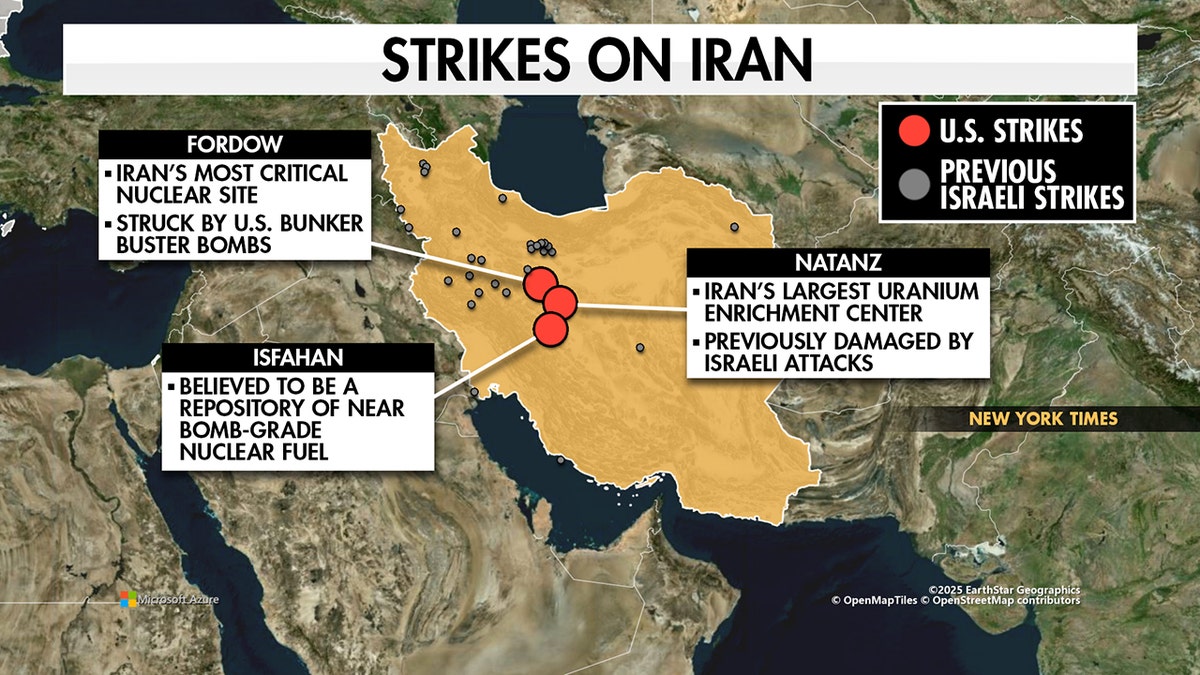
The convergence of political rhetoric and kinetic military planning regarding Iranian energy infrastructure represents a fundamental shift from containment to systemic disruption. When external actors signal the intent to strike power plants, they are not merely targeting physical structures; they are attempting to collapse the National Energy Equilibrium, a precarious balance between industrial output, domestic stability, and regional power projection. The United States’ recent signals concerning Iranian electrical grids and power generation facilities function as a psychological and operational precursor to a high-intensity conflict. Analyzing this shift requires moving beyond inflammatory headlines into a structured evaluation of the technical, economic, and geopolitical variables that govern such an escalation.
The Triad of Critical Infrastructure Vulnerability
Targeting a nation’s power generation involves a specific logic of cascading failure. Iran’s energy sector is defined by three distinct layers of vulnerability that dictate the success or failure of a kinetic strike.
- Generation Density and Centralization: Iran relies heavily on natural gas for approximately 90% of its electricity production. The system is anchored by massive combined-cycle plants. A strike on a single 1,000 MW facility does not just remove that capacity; it creates a frequency imbalance across the entire synchronized grid.
- The Interdependency of Desalination: In arid regions, electricity is the primary input for potable water. Thermal power plants often house co-generation units for water desalination. Destroying the power plant effectively severs the water supply for surrounding urban centers, converting an infrastructure strike into a humanitarian crisis within 72 hours.
- Industrial Feedstock Ratios: The Iranian economy uses electricity as a subsidized input for its steel and petrochemical industries. These sectors are the primary non-oil revenue generators for the state. Decoupling these industries from the grid through kinetic means creates an immediate fiscal vacuum.
[Image of a combined cycle power plant diagram]
Mechanics of Grid Collapse
The UN’s alarm regarding these threats stems from the technical reality that modern power grids are not designed for rapid recovery from "Black Start" conditions after massive physical trauma. If the Trump administration or any subsequent actor utilizes precision-guided munitions against the busbars and transformers of primary substations, they trigger a Non-Linear Failure Chain.
Unlike fuel depots, which can be bypassed with mobile tankers, high-voltage transformers are long-lead items. The global supply chain for large power transformers (LPTs) is currently constrained, with lead times exceeding 18 to 24 months. For a sanctioned nation like Iran, replacing destroyed 400kV transformers is nearly impossible under current trade restrictions. This leads to a permanent degradation of the grid's operational ceiling rather than a temporary outage.
The mechanism of escalation here is the Attribution Gap. While a missile strike is overt, cyber-kinetic attacks on the Industrial Control Systems (ICS) governing these plants offer plausible deniability. However, the rhetoric currently being deployed focuses on the "blowing up" of facilities—a move toward kinetic certainty that removes the off-ramps typically found in gray-zone warfare.
The Economic Cost Function of Power Neutralization
Quantifying the impact of an energy-sector strike requires assessing the Opportunity Cost of Non-Generation. For Iran, the value of one megawatt-hour is not merely the domestic price but the lost export value of the natural gas that would have fueled the plant.
- Fiscal Contraction: Total loss of industrial output during a nationwide blackout is estimated to cost between 2% and 4% of GDP per week of sustained outage.
- Social Contract Erosion: The Iranian state maintains legitimacy through the provision of heavily subsidized utilities. When the "flicker of the light" ceases, the state's visibility and authority diminish, potentially triggering civil unrest.
- The Repair-Resource Bottleneck: Every rial spent on emergency infrastructure reconstruction is a rial diverted from the military or domestic social programs.
Geopolitical Feedback Loops and Proxy Asymmetry
The strategy of targeting Iranian power plants ignores the Reciprocity Constant in Middle Eastern conflict dynamics. Iran’s military doctrine is built around asymmetric response. If the Iranian grid is compromised, the logical military response is the neutralization of critical energy nodes across the Persian Gulf, specifically the Abqaiq-type facilities or the desalination plants of neighboring GCC states.
This creates a Symmetric Vulnerability Paradox. While the U.S. may possess superior kinetic capabilities to destroy Iranian plants, it cannot protect the global energy market from the resulting price shocks. A 10% reduction in global oil transit through the Strait of Hormuz—a likely response to energy infrastructure strikes—would likely result in a 30% to 50% spike in global Brent crude prices within weeks.
The UN Legal Framework and the "Dual-Use" Argument
The United Nations’ concern is rooted in Protocol I of the Geneva Conventions, which prohibits attacks on "objects indispensable to the survival of the civilian population." Power plants are traditionally categorized as "dual-use" facilities—serving both military communications and civilian hospitals.
The strategy currently being discussed relies on a broad interpretation of military necessity: the argument that the Iranian grid powers the centrifuges at Natanz and Fordow. By framing the entire grid as a nuclear-relevant target, the aggressor attempts to bypass international legal protections. However, the technical reality is that most nuclear enrichment facilities utilize dedicated, isolated power loops and backup diesel generation. Striking a public power plant in Bushehr or Tehran has a negligible impact on hardened underground military assets but a total impact on civilian life-support systems.
The Logic of Total Systemic Pressure
The shift in rhetoric toward infrastructure destruction signals a move from Targeted Attrition to Total Systemic Pressure. In this model, the goal is not to win a tactical engagement but to make the cost of national existence so high that the regime is forced to capitulate on its strategic priorities (nuclear enrichment and regional proxies).
This model assumes that the target is a rational actor with a specific breaking point. History suggests, however, that infrastructure destruction often leads to Rally-Around-the-Flag effects, where the population directs its animosity toward the external attacker rather than the internal government. The technical efficacy of the strike is thus undermined by the sociological response.
Strategic Forecasting of the Escalation Path
The upcoming deadline regarding Iranian nuclear compliance serves as the temporal anchor for this kinetic threat. If the diplomatic path remains stalled, the following operational sequence is highly probable:
- Electronic Warfare and Signal Jamming: Initial efforts to "blind" the grid’s communication protocols without physical destruction.
- Transformer Sabotage: Kinetic or cyber-physical strikes on the most difficult-to-replace components of the transmission network.
- Primary Generation Neutralization: Direct missile strikes on boiler houses and turbine halls of major gas-fired plants.
The strategic play for any actor involved in this theater is to recognize that energy infrastructure is the ultimate lever of state control. However, using that lever is a binary choice with no middle ground. Once the grid is shattered, the conflict transitions from a controlled pressure campaign into a regional kinetic war with no clear exit strategy. The decision to strike is the decision to accept a permanently destabilized energy market and a direct military confrontation that transcends the borders of the Islamic Republic.
For global markets and regional players, the move to include power plants in the target set is the final signal that the era of managed proxy conflict is ending. The focus must now shift to hardening regional energy nodes and diversifying supply chains to mitigate the inevitable "shockwave" of a Persian Gulf blackout. This is no longer a matter of "if" the rhetoric becomes reality, but a calculation of how the global economy absorbs the resulting structural vacuum.