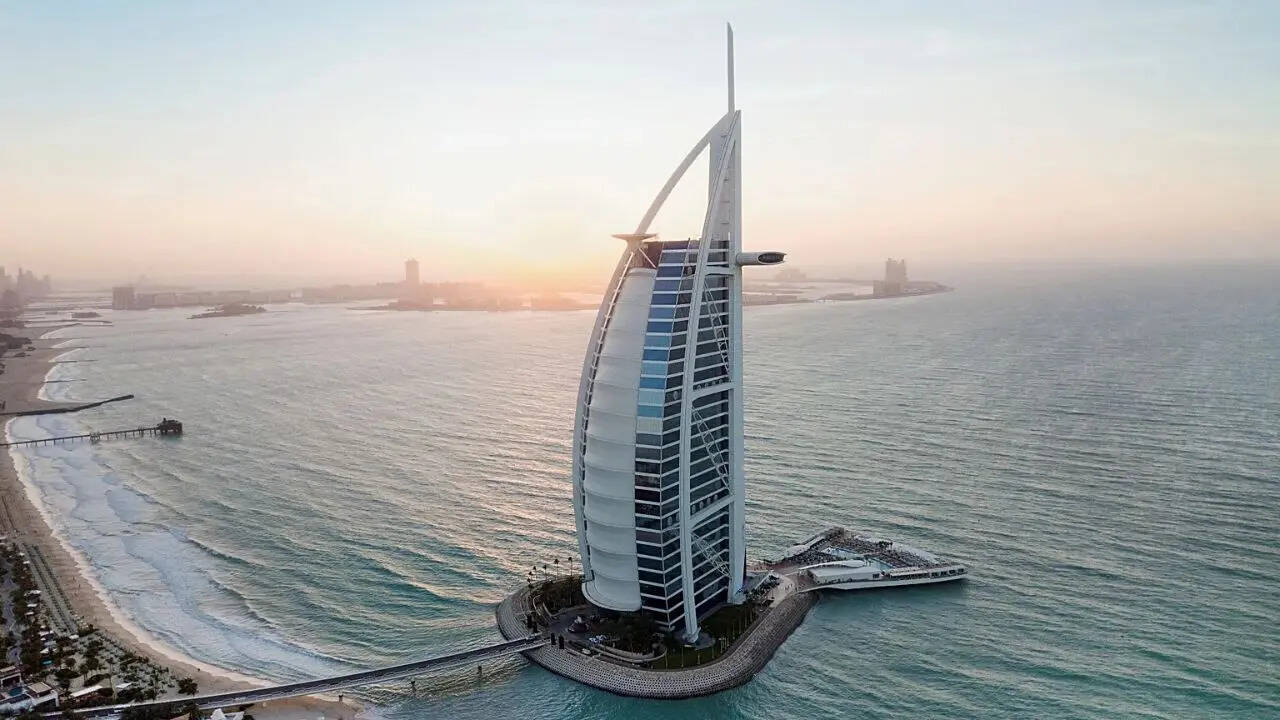
The gold leaf is peeling. To the casual observer standing on Jumeirah Beach, the silhouette remains the same—a billowing dhow sail frozen in glass and steel, tethered to the shore by a private bridge. It is perhaps the most recognizable building on the planet. But step inside, past the dancing fountains and the aquarium-lined escalators, and you will find that the air has changed. The opulence that defined the turn of the millennium has grown heavy. The 24-karat gold accents, once a bold statement of a new empire, now whisper of a bygone era.
For the first time since its doors swung open in December 1999, the Burj Al Arab is going dark.
This isn't a minor facelift. This is a surgical teardown. The hotel is shutting its doors for eighteen months, a period of silence that will cost millions in lost revenue but is deemed vital for its survival. In a city that treats "newness" as a religion, even a legend can become a relic. The stakes are higher than mere interior design; the soul of Dubai’s identity is on the operating table.
The Weight of Gold
Consider a hypothetical guest named Elena. She is a high-net-worth traveler who first stayed at the Burj in 2004. Back then, the vibrance of the colors—the electric blues, the searing oranges, the sheer audacity of the multi-level suites—felt like the future. It was "seven-star" luxury before the world realized that scale only went to five. To Elena, the Burj Al Arab wasn't just a hotel; it was the proof that Dubai had arrived.
But when Elena returned last year, the magic had frayed at the edges. The technology in the room felt clunky compared to the sleek, minimalist interfaces of the newer Bulgari or Aman resorts down the coast. The heavy drapery and the ornate patterns that once signaled wealth now felt claustrophobic.
This is the "invisible decay" of luxury. It isn’t that the marble is cracked; it’s that the cultural relevance has shifted. The modern traveler no longer wants to be intimidated by grandeur. They want to be cradled by it. The Burj Al Arab was built to scream. Now, it needs to learn how to whisper.
The refurbishment, scheduled to span the next year and a half, aims to strip back the 1990s maximalism. Engineering teams face a Herculean task. Because the hotel sits on a man-made island, every piece of equipment, every slab of new stone, and every specialized artisan must be shuttled across that narrow bridge. The logistical nightmare is why the doors must close. You cannot reinvent a myth while guests are trying to sleep in the next room.
The Ghost in the Atrium
Walking through the atrium—the tallest in the world—during this shutdown will be an eerie experience. Usually, this space is a symphony of sound: the choreographed hiss of the fire-starting fountains, the hushed tones of concierges in silk, the clinking of afternoon tea sets.
Without people, the building reveals its age.
When it was built, the Burj was a miracle of engineering. To prevent the island from eroding, architects used "hollow" concrete blocks designed to dissipate the force of the waves. Inside, they used nearly 2,000 square meters of gold leaf. But the salt air is a patient enemy. It eats at the sealants. It dulls the shine. Beyond the aesthetic overhaul, this eighteen-month hiatus is a battle against the elements. The "skin" of the sail—a double-layered teflon-coated fiberglass fabric—requires meticulous care to maintain its bright white glow against the desert sun.
The refurbishment will target the core infrastructure that guests never see. The cooling systems, the high-speed elevators, and the desalination integration are all being dragged into the 2020s. It is a massive gamble. In the time it takes to finish this project, three or four more ultra-luxury hotels will have opened in Dubai, each vying for the same crown.
The Human Cost of Silence
What happens to the people who make the Burj breathe? A hotel of this caliber employs over 1,500 staff members. There are florists who spend twelve hours a day arranging exotic blooms from Holland and Kenya. There are "Elite Butlers" trained in the psychology of the ultra-wealthy.
For these individuals, the shutdown is a period of profound uncertainty. Management has hinted at reallocating staff to other Jumeirah properties, but the culture of the Burj is unique. It is a high-pressure, high-reward ecosystem. When you remove the guests, you remove the pulse of the building.
The artisans tasked with the renovation are the new protagonists of the story. They aren't just contractors; they are conservators. They have to navigate the fine line between modernizing the space and preserving the "Spirit of the Sail." If they change too much, they lose the nostalgia that keeps loyalists coming back. If they change too little, they remain a museum of the nineties.
A City in Transition
Dubai is no longer a one-trick pony. In 1999, the Burj Al Arab was the only reason many people could find the UAE on a map. Today, the city is a sprawling megalopolis of record-breaking skyscrapers and artificial archipelagos.
The decision to close the Burj for eighteen months is an admission that being first is no longer enough. You have to be relevant. The "Vegas-on-the-Gulf" aesthetic is evolving into something more refined, more sustainable, and more integrated with global design trends.
We often think of buildings as static objects. We forget they are more like organisms. They need to shed their skin to grow. This shutdown is a molting process. It is expensive, it is risky, and it is entirely necessary.
The "Seven-Star" label was always an unofficial marketing myth, but it carried a weight of expectation. To meet that expectation in 2026, the hotel has to solve a difficult riddle: How do you stay iconic while becoming new?
The Wait for the Unveiling
When the bridge finally reopens to the public, the world will be watching. They will look for the gold. They will look for the vibrant colors. But more importantly, they will look to see if the Burj Al Arab still has the power to make them gasp.
The eighteen-month gap is a gamble on the future of luxury. It is a bet that the brand is strong enough to survive a year and a half of absence. In the world of high-end travel, out of sight often means out of mind. But the Burj isn't just any hotel. It is a landmark, a lighthouse, and a symbol of a city's sheer will to exist in a place where nothing was meant to grow.
The cranes will soon arrive. The lights will dim. The fountains will go still. For eighteen months, the sail will be a quiet sentinel on the Arabian Gulf, waiting for its second wind.
The gold leaf is coming down. Something else is going up.
The ghost of 1999 is finally leaving the building, making room for whatever the next era of Dubai chooses to be. The silence on the island isn't the sound of an end; it’s the sound of a very long, very expensive breath being held.