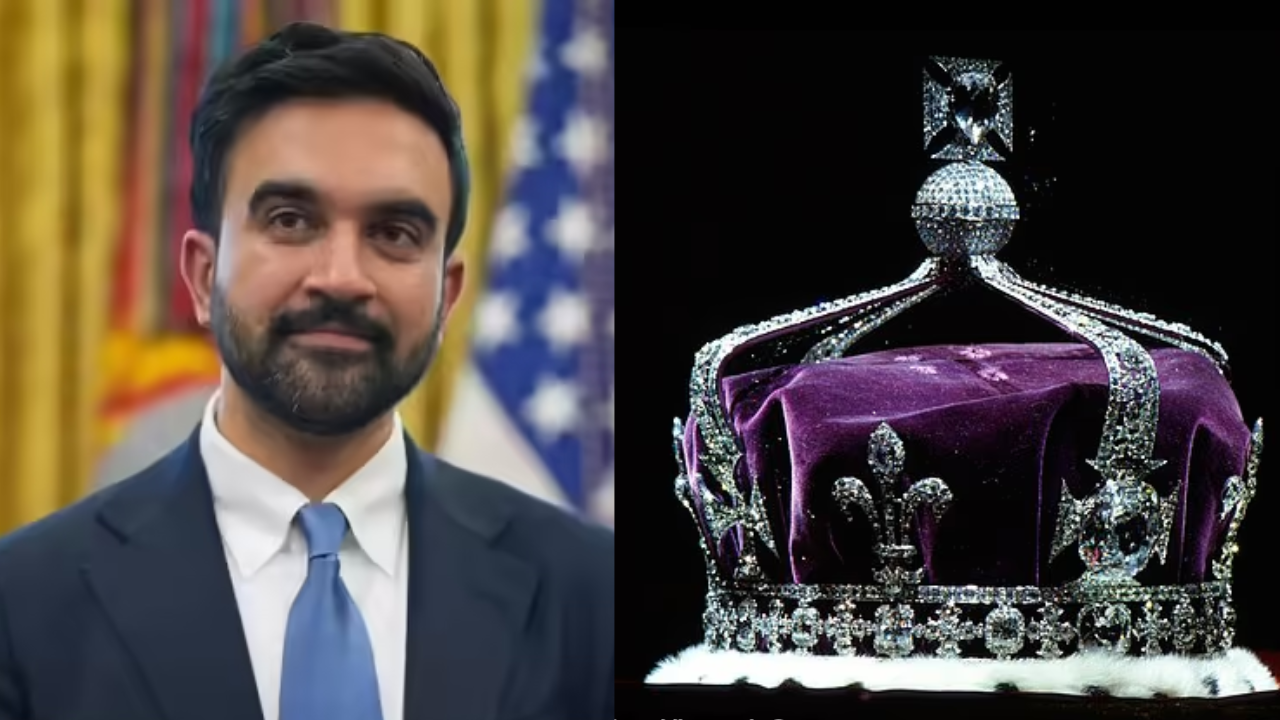
The diplomatic rift between Reform UK Chairman Zia Yusuf and New York City mayoral candidate Zohran Mamdani is not a simple spat over a diamond. It is the opening salvo in a new era of transnational political friction. When Yusuf threatened to bar Mamdani from British soil following the New York Assemblyman's demand for the return of the Kohinoor diamond, he wasn't just defending a piece of jewelry in the Tower of London. He was drawing a line in the sand regarding national sovereignty and the limits of post-colonial reparations.
This clash bridges the Atlantic, pitting a rising figure in British right-wing politics against a standard-bearer of the American democratic socialist movement. At its core, the dispute centers on whether historical artifacts held by Western powers are legitimate property or stolen loot. Mamdani’s call for the return of the 105-carat gem—one of the world’s most famous and contested diamonds—resonates with a global movement seeking to "decolonize" museums. Yusuf’s aggressive retort, however, signals that the UK’s right wing is no longer interested in polite academic debate on the matter. They are treating these demands as hostile acts against British heritage.
The Diamond as a Political Weapon
The Kohinoor is more than carbon. It is a symbol of the British Empire's zenith and its complex, often brutal, relationship with the Indian subcontinent. For Zohran Mamdani, an Indian-American politician running for the highest office in America's largest city, the diamond represents an unpaid debt. By centering the Kohinoor in his platform, Mamdani is signaling to a specific progressive and immigrant voter base that his vision of justice is global. He is connecting the local struggle for economic equity in Queens to the international struggle for historical justice.
Zia Yusuf views this through a different lens. As the chairman of a party that secured millions of votes by promising to "take back control," Yusuf sees Mamdani’s rhetoric as an outside interference in British affairs. The threat to ban a foreign official over a policy stance is an extreme measure, typically reserved for those inciting violence or breaching national security. By elevating a disagreement over a museum piece to a matter of border control, Yusuf is performing a calculated act of political theater designed to show that Reform UK will be the most uncompromising defender of British "treasure."
Transnational Grandstanding
We are seeing a collapse of the traditional boundaries of domestic politics. Historically, a New York Assemblyman would have little reason to comment on the British Crown Jewels, and a British party chairman would have even less reason to respond to a local American official. However, in an era of viral clips and globalized identity politics, these figures are using each other as convenient foils.
Mamdani gains "revolutionary" credentials by taking on the British establishment. Yusuf gains "patriot" credentials by shutting down a foreign critic. It is a mutually beneficial exchange of outrage that feeds their respective bases while doing nothing to actually resolve the legal status of the diamond. The Kohinoor remains in its glass case, but its symbolic value has been successfully mined by two men on opposite sides of the world.
The Legal Reality of Repatriation
Despite the fiery rhetoric, the legal path for the Kohinoor to leave London is virtually non-existent under current UK law. The British Museum Act of 1963 and the National Heritage Act of 1983 strictly prohibit national institutions from de-accessioning items in their collections except under very specific, narrow circumstances.
To return the diamond, the British Parliament would need to pass new legislation. In the current political climate, where Reform UK is exerting significant pressure on the Conservative Party and even influencing the rhetoric of the Labour government, such legislation is a non-starter. Yusuf knows this. His threat to ban Mamdani is not about protecting the diamond from a physical heist; it is about protecting the narrative of British ownership.
The New Guard of Reform UK
Zia Yusuf represents a shift in the British right. He is young, wealthy, and a child of immigrants, which makes him a complicated figure for critics who wish to paint Reform UK as a purely nativist movement. When he defends the British Empire’s right to keep its historical acquisitions, he does so with a conviction that suggests a total rejection of the "guilt" narrative that has dominated Western academia for decades.
By taking a hardline stance against Mamdani, Yusuf is also signaling to the British electorate that Reform UK is the only party willing to engage in "asymmetric political warfare." While mainstream politicians might issue a dry statement about the legal status of the diamond, Yusuf goes for the jugular. He understands that in the current media environment, the person who sets the most extreme consequence—in this case, a travel ban—controls the conversation.
The New York Connection
Zohran Mamdani is not an accidental protagonist in this drama. As a democratic socialist, his campaign for Mayor of New York is built on the idea of radical redistribution. His focus on the Kohinoor is a logical extension of his domestic policy. If you believe that wealth should be redistributed within a city to correct for systemic inequality, it is only a small leap to believe that cultural wealth should be redistributed globally to correct for imperial history.
However, the intervention into British politics carries risks. For many New Yorkers, the return of a diamond in London is a distant concern compared to the city’s housing crisis, crumbling subway system, and public safety issues. Yusuf’s response allows Mamdani to frame himself as a David fighting a global Goliath, but it also opens him up to charges of focusing on "performative" international issues rather than the gritty realities of municipal governance.
The Mechanics of an Entry Ban
Can a party chairman actually ban someone from the UK? No. That power resides with the Home Secretary. However, Yusuf’s rhetoric serves as a "pre-emptive policy" brief. He is signaling what a Reform-influenced government would do. Under the "conducive to the public good" clause, the Home Office has broad powers to exclude individuals. While expressing an opinion on a diamond hardly meets the traditional threshold for exclusion, the definition of "public good" is becoming increasingly politicized.
This sets a dangerous precedent. If political disagreement becomes a valid reason for restricted travel between Western allies, the "Special Relationship" between the US and the UK will move into uncharted territory. We are looking at a future where political factions across borders treat each other with the same hostility usually reserved for enemy states.
The Failure of Diplomacy
The traditional diplomatic channels are being bypassed. Normally, a dispute of this nature would be handled with quiet memos between the State Department and the Foreign Office. Instead, it is being litigated on social media platforms. This democratization of diplomacy means that the loudest voices—those who use the most inflammatory language—become the de facto representatives of their nations' interests.
The "why" behind this shift is clear. Polarization is a profitable business model. For Yusuf and Mamdani, the Kohinoor is a low-stakes issue that yields high-impact engagement. Neither man loses anything if the diamond stays or goes; they both win as long as they are seen fighting over it.
A Modern Precedent for Cultural Conflict
This isn't just about one stone. From the Benin Bronzes to the Elgin Marbles, the world is currently re-evaluating the ethics of museum collections. What makes the Yusuf-Mamdani clash unique is the level of personal animosity and the introduction of border security as a debating tactic. It suggests that the culture wars have moved beyond the classroom and into the realm of hard state power.
The Kohinoor diamond was acquired through the Treaty of Lahore in 1849, under circumstances that involve a child Maharaja and the overwhelming pressure of the East India Company. Historians will forever debate the "legality" of a treaty signed under duress. But the current political struggle isn't about history. It’s about the present. It’s about who gets to tell the story of the past and who gets to decide who is welcome in the future.
Beyond the Rhetoric
The threat to ban Mamdani is likely a hollow one in the immediate term, but it serves a vital purpose for Yusuf’s brand. It reinforces the idea that the UK is a "sovereign fortress" that does not answer to foreign activists or politicians. It tells the British public that their history is not up for negotiation.
For Mamdani, the controversy provides a global stage for a local campaign. It allows him to present his candidacy as part of a larger, historic movement for justice. He is no longer just a candidate for New York Mayor; he is a challenger of empires.
This is the new reality of global political communication. Issues are chosen for their symbolic resonance, responses are calibrated for maximum viral potential, and the actual substance of the disagreement is secondary to the performance of the conflict. The Kohinoor is a relic of the 19th century being used to fuel the political machinery of the 21st.
The demand for return and the threat of the ban are two sides of the same coin. Both rely on the idea that history is a zero-sum game. In this environment, the diamond is no longer a treasure to be admired for its beauty. It is a weight, dragging both sides into a confrontation where the only goal is to prove who can be more uncompromising.
Stop looking at the diamond and start looking at the men holding the microphones. The Kohinoor hasn't moved in decades, and it likely won't move anytime soon. But the tectonic plates of political discourse are shifting rapidly, and the cracks are forming right between London and New York.