The calendar on the wall says it is May 1, 2026. In the halls of the Capitol, the air is thick with the sterile scent of polished marble and hurried bureaucracy. Outside, in the real world—the world of grocery prices, of flickering television screens, of young men and women waiting for a text message that might never come—the date means something entirely different. It is a deadline.
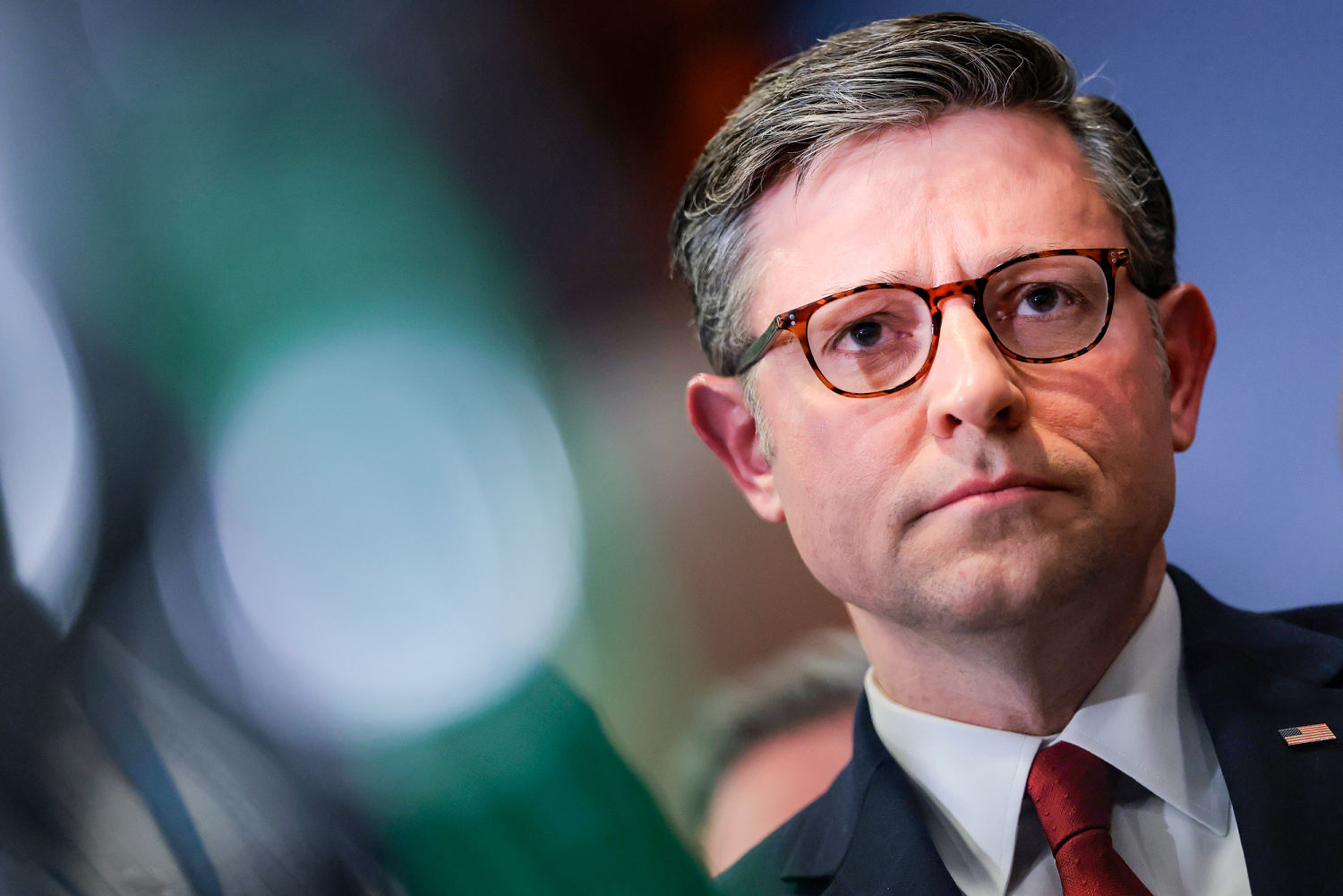
For sixty days, the United States has been in a strange, liminal state. We are told we are not at war. Speaker Mike Johnson, standing before cameras with the practiced calm of a man holding back the tide, repeats the mantra with surgical precision: "We're not at war right now." The administration echoes the sentiment. They look at the 1973 War Powers Resolution, a piece of paper born from the ghosts of Vietnam, and they find a loophole. They argue that a ceasefire, however fragile, is a stop-clock. It is a linguistic trick played on a constitutional mandate.
Consider the soldier sitting in a bunker, staring into the humid, dark silence of the Middle Eastern night. He has heard the drones overhead. He has felt the earth shudder from the concussive force of a strike. He has watched his friends receive medals for actions taken in the name of a mission that, according to the official transcripts, does not exist. He does not care about the legal definition of "kinetic activity" versus "peacekeeping." He cares about the thin layer of steel separating him from the unknown.
Words matter. They are the scaffolding upon which we build our reality. When a leader says "We are not at war," he is doing more than summarizing a diplomatic status. He is deciding who is held accountable. He is deciding whether the law applies or whether it waits, hovering in the wings, until a more convenient time.
The sixty-day clock is not merely a legal hurdle for the White House. It is a pulse. It is the heartbeat of a democracy that demands transparency. By claiming the hostilities have "terminated"—a convenient term for a pause in fire—the administration is attempting to outrun the clock. They are betting that if they can rename the conflict, they can continue it without the messy, difficult, and democratic process of congressional authorization.
But look at the cost of this naming game.
Imagine a family in Ohio. They see the news of a ceasefire. They see the talk of oil prices and nuclear enrichment programs. They see the politician on the screen promising that no American lives are at risk in a war that isn't happening. Then, they see the name of a neighbor’s son on the evening scroll. They are left in a state of cognitive dissonance, trapped between the reassuring narrative of the state and the brutal reality of the casualty count.
This is the hidden tax of our political discourse. It is paid in uncertainty. It is paid by the people who must reconcile the gap between the official record and the ground truth.
The administration’s argument—that the ceasefire effectively pauses the legislative clock—is a high-stakes gamble with constitutional norms. If the clock stops every time there is a brief lull in fighting, then the War Powers Resolution becomes a ghost. It becomes a relic that can be summoned or dismissed at the whim of the executive branch. This is not about the logistics of military strategy. This is about the fundamental distribution of power.
There is a danger in being too clever with language. When you stretch a definition until it snaps, you do not just confuse the public; you erode the trust that keeps the system standing.
Speaker Johnson is caught in his own version of this trap. He must hold the line, keeping his party united and his legislative agenda moving, while simultaneously navigating the demands of a public weary of endless commitments. He pivots. He deflects. He says the right things to the right people. But the truth is, the war—whatever we choose to call it—continues to shape the world, whether we admit to its existence or not.
The ceasefire is a fragile thing. It is a paper boat in a hurricane. It relies on the assumption that the other side plays by the same rules, that they also wish to define this silence as peace. But the region does not care about the definitions we draft in Washington. Missiles do not check the date on a calendar to see if the war powers window has closed. Proxies do not pause their operations because a committee hasn't voted.
We are standing on a precipice. The legal deadline has arrived. The clock has chimed midnight. The administration says the time has stopped. The Constitution, if it could speak, might suggest otherwise.
In the end, we are left with the silence. It is not the silence of peace, but the silence of the held breath. We are watching a nation try to negotiate with reality, hoping that if we close our eyes and call the storm a breeze, we can somehow avoid getting wet.
The soldiers remain in their bunkers. The families remain in their kitchens, waiting for news. The legal battle continues in the hushed, carpeted rooms of the Capitol. And the clock, whether we acknowledge its ticking or not, continues to move forward, marking the time in a conflict that refuses to be ignored, no matter how many times we deny its name.
The light is dimming. Shadows stretch across the floor of the House. Somewhere, a vote is being counted. Somewhere, a decision is being made. And for those who have lived the truth of these last sixty days, the words "not at war" are just another set of echoes in a long, dark corridor.
The truth is rarely as comfortable as the statement. It lives in the cracks between the legal briefings and the reality on the ground, waiting for the moment when the mask finally slips. We are waiting. The world is watching. And the sun, indifferent to our political maneuvers, will rise tomorrow on a world that is exactly as it was when the clock struck twelve.
Heavy. Uncertain. And entirely, undeniably real.