The soil in Burgundy does not look like a graveyard. In the early morning, coated in a fine powder of limestone dust and pale autumn light, it looks eternal. It looks like the kind of dirt that has birthed empires, poetry, and centuries of quiet Sunday dinners. But if you press your palm against the earth in late August, the truth rises up to meet you. It is hot. It is dry. It feels less like a cradle for roots and more like an open hearth long after the wood has burned to embers.
Pierre knows this heat in his bones. For forty years, he has pruned the same gnarled stalks of Pinot Noir on a gentle slope overlooking the Saône Valley. His grandfather worked this exact plot, guided by an instinctive calendar written in the blooming of wildflowers and the arrival of migratory birds. That calendar is broken.
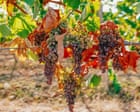
When Pierre walks his rows today, the leaves are not the vibrant, thirsty green of high summer. They are scorched at the edges, curled inward like clenched fists against a furnace. The grapes themselves—those small, stubborn spheres meant to capture the soul of the French countryside—are shriveled, their skins thick and leathery, hoarding every vanishing drop of moisture like misers.
Official projections from the French agricultural ministry confirm what Pierre feels in his aching joints. The harvest numbers are in, and they paint a grim portrait. France is staring down a thirty-year low in wine production. Severe, unrelenting drought paired with punishing heatwaves has baked the vineyards from Bordeaux to the Rhône. The vines have simply stopped drinking. They have gone into a survival mode, shutting down their own engines just to stay alive, leaving the fruit to wither on the vine.
We talk about climate statistics as if they exist in a vacuum. We read about shifting averages, percentage drops, and millions of hectoliters lost. We look at graphs that spike upward like jagged mountain peaks. But statistics do not capture the sound of a vineyard dying of thirst. They do not capture the silence of a cellar where casks sit half-empty, waiting for a juice that never arrived.
Consider what happens next in a village like Pommard or Saint-Émilion. The economy of wine is not just about luxury bottles auctioned off in London or Hong Kong. It is the lifeblood of rural communities where generations have lived within a five-mile radius of the press house. It is the seasonal laborers who arrive with the autumn chill, only to find the crates stacked high and empty. It is the local cooper who shapes French oak barrels, staring at a diminishing order book because there is simply not enough wine to fill them.
When yields drop to a thirty-year low, the shockwaves ripple outward with ruthless efficiency. Prices climb, yes. Rare bottles become mythical. But the deeper casualty is cultural erasure. Winemaking is an act of translation. It takes the specific weather, soil, and sunlight of a single year and translates it into a liquid memory. When the weather becomes an extremity, the translation fails. The wine of a drought year does not taste like terroir. It tastes of stress. It tastes of survival.
Scientists and agronomists speak of adaptation. They talk of planting heat-resistant rootstocks, of training vines to grow lower to the ground to escape the searing winds, of pulling leaves to shade the clusters. Pierre has tried some of these modern interventions. He has planted late-ripening varieties that his grandfather would not have recognized. Yet, there is a limit to how fast a landscape can reinvent itself. A grapevine is not software; you cannot patch it overnight. It takes decades to mature into something magnificent, and only a few weeks of unyielding July heat to push it to the brink of collapse.
There is a profound melancholy in watching something ancient struggle against a modern reality. Every morning during the harvest window, the tractors move slower. The pickers are fewer. The baskets are lighter. As the sun climbs over the hills, casting long shadows across the dust, the air smells less like the sweet, intoxicating fermentation of previous decades and more like dust and dry straw.
The glass on your table this year carries a hidden weight. It holds the story of a summer that refused to yield. It holds the sweat of men and women who watched the sky day after day, waiting for clouds that never gathered. When you raise that glass, you are not just tasting fermented fruit. You are tasting the end of an era, a quiet warning rising from the oldest valleys of Europe, reminding us that even the most enduring traditions are ultimately at the mercy of the earth.