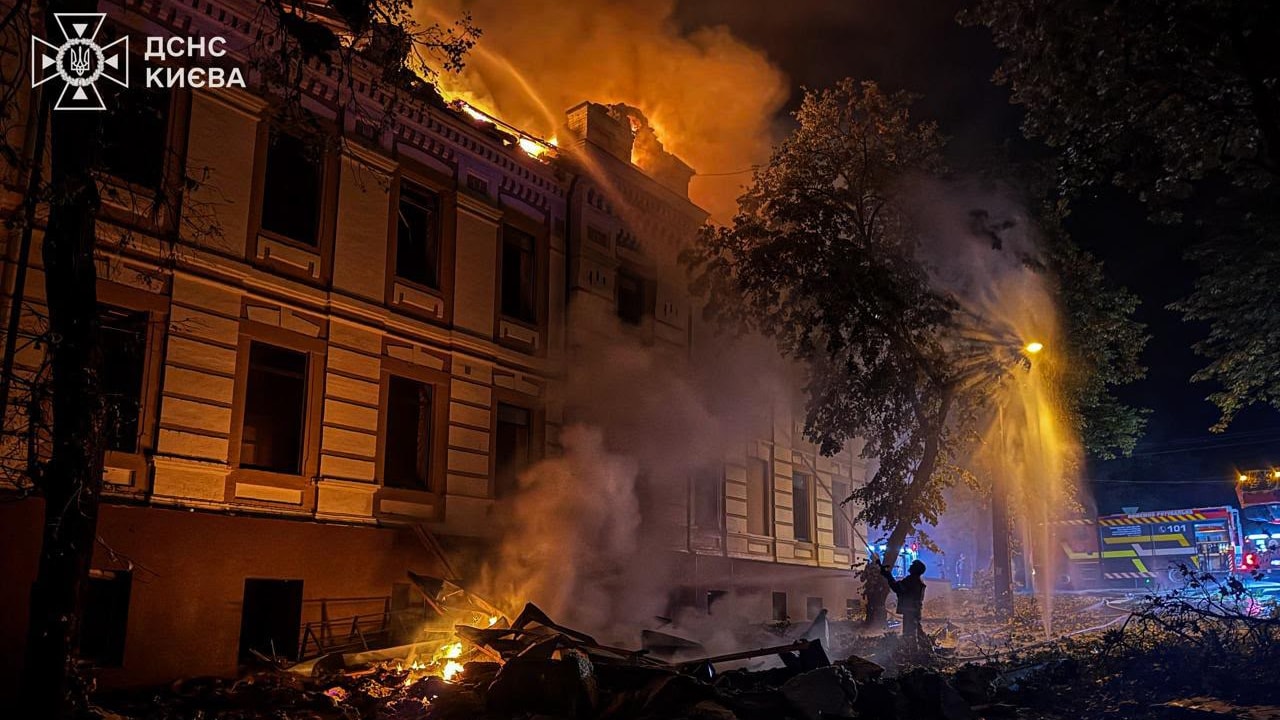
The air raid sirens started screaming across Kyiv around 1:30 a.m., but for the city's millions of residents, the real terror wasn't the noise. It was the realization of what was coming next.
Russia just slammed the Ukrainian capital with one of its most intense and coordinated aerial assaults in recent memory, firing 41 missiles—including 25 high-speed ballistic missiles—and unleashing 125 attack drones across the country. When the smoke cleared, one person was dead, 16 were wounded, and five city districts were dealing with raging fires. If you liked this post, you should read: this related article.
If you think this is just another routine night in a long war, you're missing the bigger picture. This attack exposed a massive, widening gap in Ukraine's armor that Russia is exploiting with brutal precision.
The Numbers behind the Capital's Terrifying Night
Let's look at the raw data, because the math here is grim. Out of 125 drones, Ukrainian forces managed to suppress or shoot down 108. That's a solid interception rate. But the missiles tell a completely different story. Ukraine intercepted only 18 out of the 41 missiles launched. For another look on this development, refer to the latest coverage from USA Today.
President Volodymyr Zelenskyy confirmed that the vast majority of those heavy missiles targeted Kyiv directly. The impacts were widespread, shattering apartment blocks, tearing through a dormitory, ripping apart industrial warehouses, and even destroying a busy underground pedestrian passage near a central metro station.
For the people on the ground, the psychological toll is shifting from exhaustion to sheer dread. Residents like Viktoria Shejko, who huddled in a hallway with her husband and seven children, noted that these ballistic strikes used to happen once a week or less. Now, it's every other day. Ballistic missiles travel at extreme speeds, giving families minutes—sometimes only seconds—to find shelter after the alarm sounds.
Why Russia Is Chasing Ballistic Dominance
Moscow's strategy isn't random cruelty; it's calculated military attrition. Russia knows Ukraine is facing a critical shortage of U.S.-made Patriot air defense interceptors.
Standard air defense systems can handle slow-moving cruise missiles and Iranian-designed drones. They fail miserably against heavy ballistic missiles. The Patriot system is one of the few shields capable of knocking a ballistic missile out of the sky reliably. By overwhelming Kyiv with 25 ballistic targets in a single night, Russia forced Ukraine to make impossible choices about which targets to save and which ones to let get hit.
Russia's defense ministry claimed the strikes targeted drone and missile production plants, including facilities making "Flamingo" and "Neptune" systems. But the reality on the ground showed burned-out private homes, ruined local businesses, and emergency crews pulling terrified citizens out of blazing three-story residential buildings.
A Dual Escalation Beyond the Frontlines
This massive barrage didn't happen in a vacuum. It's part of a sharp escalation from both sides taking the fight far beyond the muddy trenches of the Donbas.
While Kyiv burned, Ukraine struck back hard at Russia's economic engine. Ukrainian drone units hit three oil depots in the Stavropol region and targeted Russian oil tankers in the Black Sea. A specific strike on two tankers at the Caspian Pipeline Consortium terminal off the Russian coast actually halted oil loading operations. The pipeline handles roughly 80% of Kazakhstan's crude exports, making it a massive global energy node.
Kyiv's strategy is clear: choke off the oil revenues funding the Kremlin's war machine. Russia's response is equally clear: use its missile stockpiles to break the capital's back and destroy the factories producing Ukraine's long-range strike weapons.
The Patriot Production Illusion
There's been a lot of political chatter about solving Ukraine's defense crisis. U.S. President Donald Trump mentioned a willingness to grant Ukraine licenses to manufacture Patriot interceptor missiles locally. Zelenskyy even voiced hope that production could start late this year.
Honestly, that timeline is a fantasy for the immediate future. Building high-tech missile defense systems requires complex global supply chains, specialized tooling, and highly secure facilities. You don't just spin up a Patriot production line in a country under daily bombardment and expect missiles to roll off the line next month. It takes years to establish full production capabilities.
Ukraine needs interceptors right now, not blueprints for a factory that won't be fully operational for years.
What Needs to Happen Right Now
Kyiv isn't giving up. Hours after the attack, excavator crews were already clearing rubble near the damaged metro station while local vendors set up their fruit stalls right next to the debris. The resilience is undeniable, but resilience alone doesn't stop a ballistic missile.
If Western allies want to prevent Kyiv's air defense grid from collapsing entirely, the next steps are urgent and non-negotiable:
- Immediate Stockpile Transfers: Western nations must pull Patriot interceptors directly from their active stockpiles rather than waiting on new manufacturing contracts.
- Bridge the Supply Gap: Deploy intermediate European defense systems, like the SAMP/T, to protect industrial zones while saving Patriots exclusively for capital defense.
- Decentralize Strategic Manufacturing: Move critical drone and missile assembly lines underground or scatter them into smaller, mobile facilities to deny Russia easy, high-value targets.
Without immediate, physical deliveries of interceptor missiles to plug these defensive holes, Russia will continue to exploit Kyiv's skies, and the casualty lists will only grow longer.