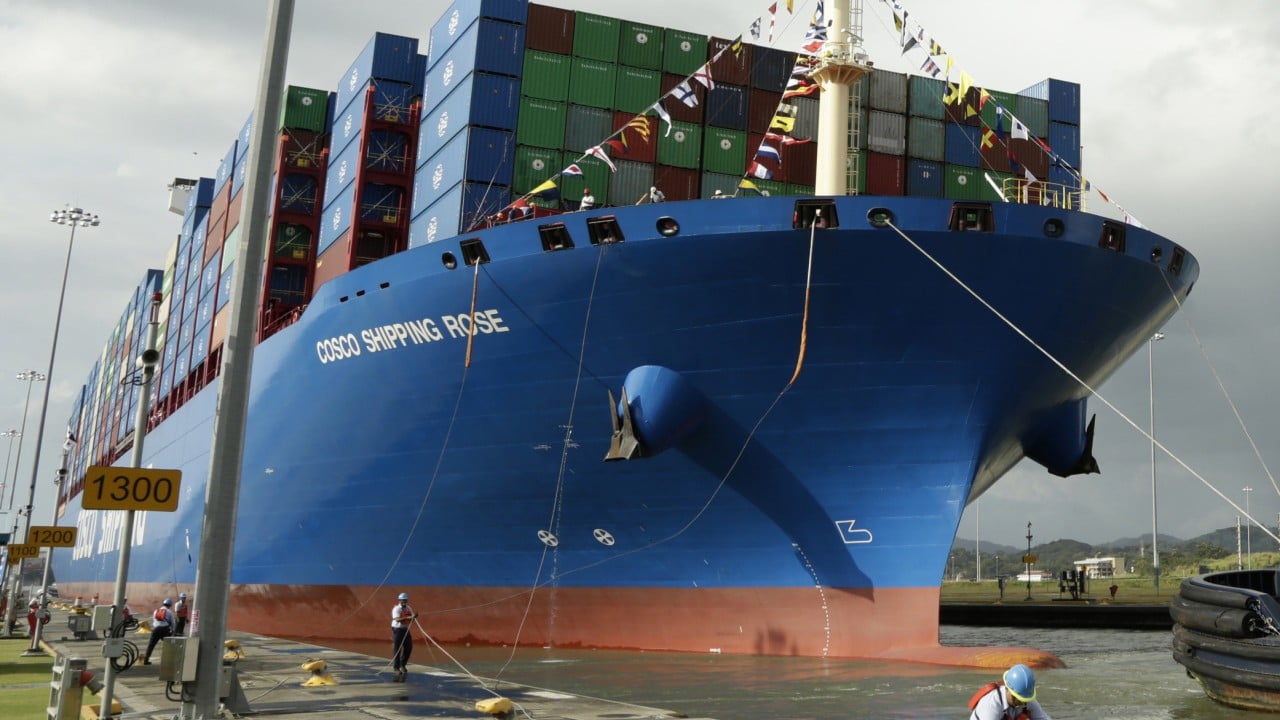
Trade rules are only as good as the borders protecting them. When Washington clamped down on Chinese imports with heavy duties, goods didn't stop flowing; they just changed their return address.
A high-profile White House report released by Peter Navarro's office titled "The Great Transshipment Scam" directly targeted nine Latin American countries, claiming they help Chinese exporters sidestep American import taxes. Mexico, Panama, and Colombia now join Argentina, Brazil, Chile, Peru, Costa Rica, and the Dominican Republic on a list of over forty nations accused of enabling a massive shadow network of trade rerouting.
If you think this is just paperwork shuffling, look closer. The financial scale is staggering. The White House calculates that illegal transshipment drains between $19 billion and $26 billion in annual federal revenue, while displacing roughly 450,000 domestic jobs.
The Mechanics of the Routing Game
The strategy is straightforward. Chinese manufacturers ship components or finished products to intermediary nations where enforcement is lax or free trade zones offer permissive rules. Once there, items undergo minor processing, relabeling, repackaging, or a simple change in paperwork.
When the cargo finally departs for US ports, its country of origin has magically transformed. It enters under a lower tariff bracket, bypassing the Section 301 duties meant to penalize Chinese state-subsidized industries.
The official document highlights specific regional corridors where this movement concentrates. For instance, the Guanajuato-Queretaro corridor in Mexico links directly to electric motors and transformers bound for Detroit and Grand Rapids. Similar routes stretch from Costa Rica and the Dominican Republic, moving electrical components and cables straight into American distribution hubs.
Yet, regional experts point out a massive flaw in treating all these nations with a broad brush. Mexico, for instance, operates under the strict oversight of the United States-Mexico-Canada Agreement (USMCA). Roughly three-quarters of every dollar of Mexican manufactured exports actually originates inside North America, incorporating US labor and materials before returning home. Calling every regional supply chain a laundering front ignores how modern multinational manufacturing actually functions.
Categorizing the Risk Tiers
The administration splits the accused nations into distinct risk categories based on how deeply they integrate into these shadow trade routes.
- The Frontline Border States: Mexico and Canada sit at the top tier alongside heavyweights like the European Union, India, and Japan, where high-volume trade hides routing anomalies.
- The Regional Hubs: Brazil, Argentina, Chile, and Peru are placed in middle tiers due to their broader involvement in Pacific and Atlantic transport networks.
- The Opportunistic Gateways: Panama, Costa Rica, and the Dominican Republic fall into categories defined by maritime access, bonded warehousing, and free zones.
Even nations that actively clamped down on Chinese commercial interests find themselves named. Mexico imposed steep tariffs of up to fifty percent on Chinese vehicles late last year. Despite these domestic protections, the sheer volume of bilateral manufacturing ties keeps them square in the crosshairs of US customs watchdogs.
What Changes for Importers Now
The policy response inside Washington is moving past mere accusations. The administration plans to integrate artificial intelligence tools and advanced data analytics—dubbed the "Detective Border"—to scan shipment histories, ownership structures, and production capacities in real time.
If you import goods from any nation flagged in the report, expect immediate friction. Customs officials are ramping up origin audits and tightening enforcement under Executive Order rules. Relying on supplier statements without checking where substantial transformation actually occurred is an expensive gamble.
Proof of origin must now survive aggressive scrutiny. If a component arrives from a flagged Latin American corridor without solid data backing up its local manufacturing value, expect cargo holds, compliance investigations, and heavy financial penalties. The era of easy routing is closing fast. Review your supplier documentation, audit your supply chain tiers today, and ensure your compliance records can withstand direct federal interrogation.