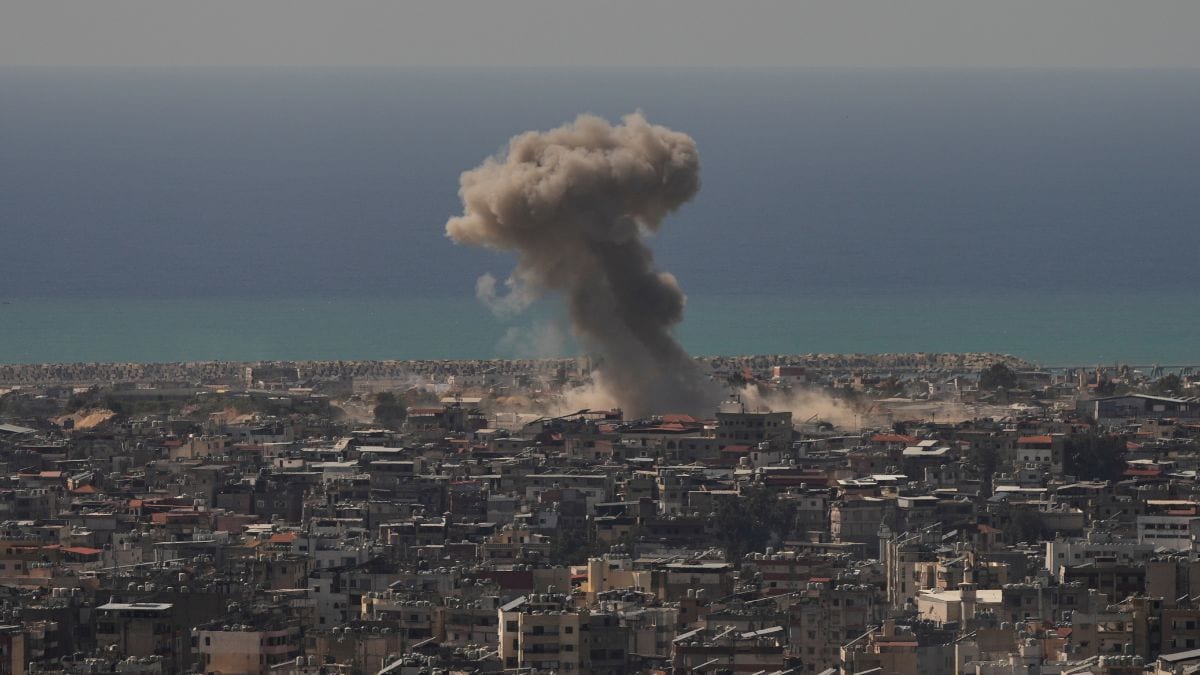
Geopolitical analysts love a good scream. When Iran signals it will "bomb Tel Aviv" if Israel doesn't stop its operations in Lebanon, the mainstream media treats it like a looming apocalypse. They print the maps, they count the missiles, and they speculate on the "escalation ladder" as if we are watching a game of Risk. They are looking at the wrong board.
The headline-grabbing threats coming out of Tehran aren't a sign of impending regional war. They are the frantic signals of a regional power realizing its most expensive insurance policy—Hezbollah—is being liquidated in real-time. To understand why the "Tel Aviv or bust" rhetoric is actually a desperate plea for a status quo that no longer exists, you have to ignore the noise and look at the math of deterrence.
The Myth of the Iranian Deterrent
For decades, the "lazy consensus" among Western intelligence circles was that Hezbollah served as Iran’s ultimate deterrent. The logic was simple: If Israel or the U.S. ever touched Iran’s nuclear facilities, Hezbollah would rain 150,000 rockets down on Israel, turning the Galilee into a scorched wasteland.
This theory just died a messy death in the suburbs of Beirut.
Israel didn't wait for the nuclear strike. They moved first, decapitating Hezbollah’s leadership and dismantling their communication infrastructure with a speed that left the "experts" stuttering. Now, Iran finds itself in a strategic vacuum. If they don't threaten Tel Aviv, they look weak to their proxies (the "Axis of Resistance"). If they actually try to level Tel Aviv, they invite a direct retaliatory strike on their own energy infrastructure and internal stability.
Threatening to bomb a city is the oldest trick in the book when you lack the tactical means to stop your opponent's ground game. It is the bark of a dog that knows the fence is being torn down.
Why a Ceasefire is an Iranian Life Raft
The media frames a ceasefire as a humanitarian necessity or a diplomatic victory for the West. It isn't. In the current context, a ceasefire is a strategic bailout for the Islamic Republic.
Every day the fighting continues in Lebanon, Hezbollah loses more than just fighters. It loses the mystique of invincibility that Iran spent billions of dollars and forty years building. When Iran demands a halt to the firing, they aren't worried about Lebanese civilians. They are worried about the total collapse of their "Forward Defense" doctrine.
If Hezbollah is pushed north of the Litani River and disarmed, Iran loses its seat at the table in the Levant. The threat to Tel Aviv is a distraction. It’s a "Look over here!" tactic designed to force a diplomatic intervention before Israel finishes the job.
The False Premise of Escalation
"People Also Ask" online: Will Iran start World War III? This question is fundamentally flawed because it assumes Iran has the appetite for a high-intensity, direct conventional war. It doesn't. Iran's entire military philosophy is built on the concept of "asymmetric warfare"—fighting through others so the regime in Tehran stays safe.
Directly bombing Tel Aviv breaks the fundamental rule of the regime's survival: never gamble the house on a single hand. The moment a missile from Iran hits a high-rise in Tel Aviv, the regime's oil refineries in Kharg Island become legitimate targets. Without oil revenue, the Iranian economy, already breathing through a straw, collapses. The Revolutionary Guard knows this. The clerics know this.
The threat is the weapon. The use of the weapon is a suicide note.
The Intelligence Failure of the Status Quo
I’ve seen "security consultants" on cable news suggest that the U.S. needs to "restrain" Israel to prevent a regional blow-up. This is the kind of thinking that keeps the Middle East in a cycle of permanent instability.
Restraint at this stage doesn't lead to peace. It leads to a re-armed Hezbollah and a bolder Iran. The hard truth—the one that makes people uncomfortable—is that the current "instability" is actually a massive structural realignment. We are seeing the dismantling of a proxy-state model that has strangled the region for a generation.
By threatening Tel Aviv, Iran is trying to freeze the frame. They want to lock in whatever influence they have left before it evaporates. Accepting their terms for a ceasefire isn't "preventing war"; it’s subsidizing the next one.
The High Cost of the Contrarian View
Is there a risk in ignoring Tehran’s threats? Of course. Iran has thousands of ballistic missiles. They have drones. They have a history of "irrational" moves when backed into a corner.
But there is a higher risk in believing the bluff. If the international community buys into the idea that "Tel Aviv will be bombed" unless Israel stops, they validate the exact hostage-taking diplomacy that Iran has perfected. You are essentially telling a regime that as long as they threaten to kill enough civilians, they can keep their terror proxies intact.
The Logistics of a Hollow Threat
Think about the physical reality of "bombing Tel Aviv." To do it effectively, Iran would need to saturate some of the most advanced air defense systems on the planet—Iron Dome, David’s Sling, and Arrow.
In April 2024, Iran tried a massive drone and missile attack. The result? A 99% interception rate and a single injured civilian. It was a humiliating display of technological inferiority. To actually damage Tel Aviv, Iran would have to launch everything they have, leaving themselves completely defenseless against a counter-attack.
They aren't going to do it. They are going to keep talking about it, hoping that a nervous Western media and a timid diplomatic corps will do the work for them.
The headlines are focused on the "warning." The real story is the silence of a regime that has no moves left except to yell. The Lebanon "ceasefire" debate isn't about peace; it's about whether we allow a failing regional power to reset the clock on its own obsolescence.
Stop listening to what they say they will do. Look at what they are losing.



