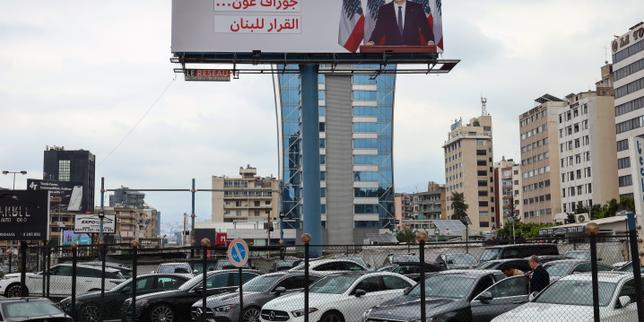
Lebanon is currently trying to play a high-stakes game of poker with half a deck of cards. As the pressure for a ceasefire and maritime or border negotiations with Israel ramps up, the country finds itself in a position that can only be described as a self-inflicted disaster. There’s no president. The caretaker government has limited authority. The political class is more interested in bickering over sectarian quotas than presenting a unified front.
You can't negotiate a sovereign future when the seat of sovereignty is empty. It’s that simple. While international mediators fly in and out of Beirut, the reality on the ground is a mess of conflicting signals and a total lack of constitutional legitimacy. This isn't just about a "political impasse" anymore. It's about whether Lebanon will even exist as a functional state at the negotiating table or merely as a collection of factions waiting for instructions.
The vacuum at the top is killing any chance of a fair deal
Lebanon has been without a head of state since Michel Aoun's term ended in October 2022. Since then, the parliament has failed dozens of times to elect a successor. This isn't an accident. It's a calculated strategy by various blocs to ensure that no one person can make a decision that might disadvantage their specific interests. But here's the kicker. When you don't have a president, you don't have a commander-in-chief. You don't have the person legally empowered to sign international treaties under Article 52 of the Lebanese Constitution.
Negotiating with Israel—a state Lebanon technically considers an enemy—requires more than just a nod from a caretaker Prime Minister. Najib Mikati is doing what he can, but his powers are legally "narrow" in the eyes of the law. If a deal is struck tomorrow, who signs it? If the deal is signed by a caretaker, will the next president simply tear it up? These aren't just legal nerd questions. They’re the reasons why foreign powers don't take Lebanese commitments seriously right now.
I’ve seen this play out before in Lebanese history, but the stakes have never been this high. During the 1980s, the lack of a unified executive led to competing "governments" that signed contradictory agreements. We're heading back to that kind of chaos. When Nabih Berri, the Speaker of Parliament, takes the lead on negotiations, he's doing so because someone has to, but it also blurs the lines between legislative and executive power in a way that makes Western diplomats very twitchy.
Why the border negotiations aren't just about land
Everyone talks about the "Blue Line" and the thirteen disputed points along the border. But the real issue is how Lebanon manages its leverage. Right now, Lebanon has very little. The economy is in a freefall that the World Bank has called one of the worst global crises since the 19th century. The Lebanese Lira is a joke. People have lost their life savings.
In this weakened state, Lebanon is being pushed to accept terms that might not be in its long-term interest. Israel, backed by heavy US diplomatic weight, wants a stabilized northern border. Lebanon wants an end to the war and its sovereignty respected. But without a president to coordinate the military, the diplomatic corps, and the various political parties, Lebanon is basically a ship with five captains all fighting for the steering wheel while the hull is on fire.
- Hezbollah’s Role: The group holds the actual military cards on the ground. Any negotiation that doesn't include their silent (or vocal) approval is dead on arrival.
- The Opposition: Parties like the Lebanese Forces and the Kataeb insist that no negotiations should happen until a president is elected, fearing a deal that cements Hezbollah's domestic dominance.
- The International Community: The US and France are desperate for a win. They’re willing to bypass certain constitutional formalities if it means stopping a wider regional war.
This creates a dangerous "fast-track" environment. When diplomats are in a rush, they cut corners. In Lebanon, cutting corners usually means the people get screwed while the warlords get a new lease on life.
The myth of the neutral mediator
Don't buy the idea that international mediators are just here to help. They have agendas. Amos Hochstein, the US envoy, has been the primary architect of these talks. He’s effective, sure. But his primary goal is regional stability for US interests, not the long-term constitutional health of Lebanon.
If the US can get a signature from a "temporary" authority that stops the rockets, they’ll take it. They won't care if that signature is legally shaky under Lebanese law. This leaves Lebanon vulnerable to future legal challenges and internal strife. Imagine a scenario where a deal is signed, the war stops, and then a year later, a new president is elected and declares the deal unconstitutional. We’d be right back at square one, or worse, back in a shooting war.
Stop waiting for a foreign miracle
The Lebanese political class loves to wait for a "Sini-Sini" (Saudi-Syrian) or a US-Iranian grand bargain to solve their problems. It's a lazy way to govern. They're waiting for a green light from Riyadh or Tehran before they even bother to sit down and vote for a president.
This dependency is pathetic. While the politicians wait for a phone call from a foreign capital, the border is being redrawn and the country’s remaining resources are being drained. There is a massive misconception that the presidency is just a symbolic role for a Maronite Christian. It’s not. It’s the glue that holds the various branches of government together during a crisis. Without that glue, the state is just a collection of ministries that don't talk to each other.
The reality of the 1701 Resolution
UN Security Council Resolution 1701 is the phrase you’ll hear a thousand times. It’s supposed to keep the area south of the Litani River free of any armed personnel except the Lebanese Army and UNIFIL. But let's be real. It hasn't worked as intended for years.
Now, there’s talk of an "enhanced" 1701. This would involve more Lebanese Army deployment and perhaps a wider buffer zone. But who authorizes the deployment of thousands of more troops? Who manages the massive budget increase required for the LAF to take on this role? Again, you need a president and a fully empowered government to make those financial and military commitments. You can't run a national defense strategy on a month-to-month caretaker budget.
What needs to happen right now
The deadlock isn't a puzzle that’s hard to solve. It’s a lack of will. If the Lebanese parliament actually cared about the negotiations, they would stay in the building until a white smoke appears.
- Elect a president before the final map is drawn. No exceptions. A president provides the legal "cover" that makes any border agreement binding and legitimate.
- Empower the Lebanese Army. Instead of relying on non-state actors for "defense," the state needs to actually fund its own military. This requires international aid, which won't flow properly to a leaderless country.
- Separate the presidency from the regional conflict. Stop trying to find a president who pleases every single foreign power. Find someone who can actually run a cabinet and understands the law.
- Demand transparency in the negotiations. The Lebanese public is being kept in the dark about what’s being offered. Is it land? Is it gas rights? Is it a change in the status of the Shebaa Farms?
Lebanon is at a crossroads where one path leads to a stabilized statehood and the other leads to becoming a permanent "no-man's land" managed by external forces. The political class is currently choosing the second path because it’s easier and keeps their personal power intact.
If you're looking for a silver lining, there isn't one right now. The country is being outmaneuvered because its leaders are too busy looking in the mirror to see the wolf at the door. Every day that passes without a president is a day that Lebanon’s seat at the international table gets smaller. Eventually, they’ll be eating on the floor.
Start demanding a vote. Not a dialogue about a vote, or a committee to study the vote, but an actual, physical vote in the parliament. Anything less is just theater while the building burns down. The negotiations are coming whether Lebanon is ready or not. Being unready is a choice. It's a bad one.