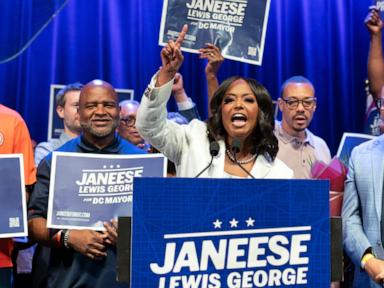
The conventional political media is currently obsessed with a lazy, comforting narrative: a supposed "democratic socialist surge" taking over American cities as a direct, righteous backlash to national conservative populism.
It makes for great headlines. It builds neat, linear storylines about a progressive wave sweeping local elections. Read more on a similar subject: this related article.
But it is completely wrong.
What the talking heads call a political realignment is actually something far more cynical. Left-wing candidates are not staging a hostile takeover of municipal government. They are being handed the keys to a burning house. More analysis by The Guardian delves into related views on this issue.
I have spent fifteen years analyzing urban budgets, municipal bond disclosures, and local election data. I can tell you exactly what happens when the cameras turn off and the victory rallies end. The reality of running a modern American city has almost nothing to do with ideological purity and everything to do with rigid, unyielding balance sheets.
The national press views these mayoral races as ideological battlegrounds. In reality, they are the closing chapters of a decades-long structural trap.
The Mirage of the Municipal Mandate
The argument found in standard political commentary goes like this: highly mobilized, progressive coalitions are winning mayoral seats because voters want a radical transformation of urban policy. They point to shifting rhetoric around housing, policing, and corporate tax incentives as proof of a new dawn.
This analysis misses the entire point of municipal mechanics.
Mayors do not control macroeconomics. They do not set monetary policy, they cannot impose national wealth taxes, and they cannot restrict the free flow of capital across city lines.
When a progressive mayor takes office on a platform of sweeping social democracy, they immediately run into three structural brick walls:
- The Capital Flight Reality: Unlike federal taxpayers, wealthy urban residents and businesses can relocate across county or state lines in a weekend. If a city aggressively spikes local payroll or commercial property taxes, the tax base shrinks faster than the revenue can be collected.
- The Sovereign Debt Stranglehold: Cities rely heavily on municipal bonds to fund infrastructure. Bond rating agencies like Moody’s and S&P do not care about social equity; they care about debt-service coverage ratios. A city that prioritizes ideology over fiscal restraint faces immediate credit downgrades, drastically increasing the cost of borrowing and cannibalizing the funds meant for social programs.
- The State-Level Veto: In the American federal system, cities are legal creatures of their respective states. The moment a progressive city passes aggressive rent control or local wealth mandates, conservative or moderate state legislatures routinely pass preemption laws that render those local ordinances completely illegal.
The "surge" is not a sign of rising ideological dominance. It is a symptom of political sorting. As affluent moderates move to outer-ring suburbs or sunbelt tech hubs, the remaining urban electorate skews further left. They are electing mayors who promise the world, right at the moment the city’s structural capacity to deliver that world is at an all-time low.
The PAA Illusion: "Why don't progressive cities just tax local corporations?"
If you look at public forums or community boards, the most common question asked by enthusiastic voters is some variation of: Why can't a progressive mayor just tax the massive tech, financial, or manufacturing companies headquartered in their city to pay for universal basic services?
The brutal, honest answer is that corporations do not actually pay local taxes—their customers, employees, and local service providers do.
Imagine a scenario where a newly elected progressive administration imposes a steep municipal gross-receipts tax on all companies generating over 50 million dollars within city limits. The intention is to extract capital from multinational giants to fund public housing.
Here is what happens next in the real world:
- The Mid-Tier Exodus: The massive, multi-billion-dollar conglomerates might stay temporarily because their global footprint allows them to absorb the cost or pass it on to a national customer base. However, the mid-tier logistical, engineering, and regional services firms—the actual backbone of the local middle class—immediately relocate to adjacent tax-neutral municipalities.
- The Commercial Real Estate Implosion: As commercial tenants decline or reduce their physical footprint, commercial property values plummet. Because property taxes represent the single largest source of discretionary revenue for most American cities, the mayor is suddenly forced to choose between slashing public services or raising property taxes on working-class homeowners to plug the budget hole.
- The Union Confrontation: The very public-sector unions that organized and funded the mayor’s progressive campaign will demand their scheduled raises. The mayor, faced with a collapsing tax base and rising borrowing costs, is forced to fight the very people who put them in office.
This is not a hypothetical projection. It is the explicit playbook that played out in cities like Seattle with its heavily contested "Amazon Tax" iterations, and in San Francisco's rolling commercial real estate crises. The progressive mayor does not dismantle corporate power; they become the administrative janitor cleaning up the mess caused by capital flight.
The Iron Law of Fixed Costs
The fatal flaw of the current political consensus is the belief that mayoral elections are about policy choice. They are not. Modern urban governance is an exercise in managing legally locked, historical liabilities.
Look at the open-source comprehensive annual financial reports (CAFR) of any major American city currently experiencing a progressive political shift. You will find that anywhere from 60% to 80% of total general fund expenditures are entirely non-discretionary. They are locked into three permanent categories:
- Pensions and OPEB (Other Post-Employment Benefits): Legally protected contractual obligations to retired city workers that must be paid, regardless of current economic conditions or political shifts.
- Debt Service: The mandatory principal and interest payments on outstanding municipal bonds used to build schools, roads, and water systems decades ago.
- Mandatory Public Safety Outlays: Even when progressive administrations campaign on shifting funds away from traditional policing, binding arbitration laws, strong police union contracts, and federal consent decrees almost always prevent significant, rapid reductions in public safety payrolls.
What is left over is a tiny, single-digit percentage of the budget for discretionary programs—the parks, the libraries, the social safety net initiatives, and the progressive pilots that won the election in the first place.
When a contrarian analyst looks at a city, they do not look at the mayor's press releases. They look at the net pension liability. If a city has a multi-billion-dollar unfunded pension liability and a stagnant population, the mayor is essentially acting as a glorified trustee for a legacy retirement fund, not a transformative social engineer.
Dismantling the Anti-Trump Mayoral Theory
The competitor article argues that the rise of these local left-wing leaders is a direct reaction to national right-wing populism—a grassroots fortifying of blue walls.
This is an incredibly lazy reading of national versus local dynamics. It assumes that voters are using local municipal elections to send a message to Washington, D.C.
The reality is far more insular. The rise of democratic socialist candidates in urban primaries is driven by the utter failure of the establishment center-left to solve basic, grinding quality-of-life issues.
For thirty years, moderate Democratic mayors ran American cities using a standard neoliberal playbook: build luxury downtown corridors, court corporate headquarters with tax abatements, rely on tech-driven gentrification to lift property values, and use aggressive policing to keep the peace.
That model completely broke down. It created cities with astronomical housing costs, hollowed-out middle-class neighborhoods, and failing public transit infrastructure.
The left-wing surge is not a tactical counter-offensive against national conservatism; it is an internal civil war within the urban Democratic monoculture. The progressive outsider defeats the establishment insider because the insider's model stopped working for the average renter.
But here is the catch-22 that nobody on the left wants to admit: while the progressive critique of the establishment center-left is entirely correct, their proposed solutions are mechanically impossible within the confines of a single city's geography. You cannot build a isolated Nordic social democracy inside a municipal boundary line.
The Unconventional Reality for Urban Leadership
If you want to actually fix a city, you have to stop treating local government as an ideological theater. The true metric of urban health is structural resilience, not rhetorical alignment.
The mayors who actually save their cities from decline—regardless of their personal ideological leanings—are those who focus on the unglamorous, deeply technical mechanics of municipal survival:
- Aggressive Zoning Deregulation: The only way to lower housing costs without bankrupting the city through massive public subsidies is to completely eliminate single-family zoning restrictions, minimum parking requirements, and lengthy discretionary review processes. This allows private capital to build high-density, infill housing at scale. It infuriates both wealthy suburban NIMBYs and traditional left-wing anti-development activists, which means it is usually the right move.
- Contractual Hardball: True urban leadership requires sitting across the table from powerful municipal unions—including teachers, police, and sanitation workers—and tying wage increases directly to measurable performance metrics and structural pension reform.
- Infrastructure Obsession: Prioritizing the boring, invisible maintenance of water mains, electrical grids, and rapid transit over high-profile, ideologically pure pilot programs. A city with a beautiful equity statement but a failing sewer system is a city that will inevitably face depopulation.
The tragedy of the current political moment is that the candidates winning urban elections are the ones least equipped to execute these harsh, mechanical realities. They are swept into office on waves of rhetorical enthusiasm, only to spend four years trapped in a cage built by bond raters, state legislators, and legacy liabilities.
The national media will continue to report on these mayoral races as if they are the frontline of a grand national ideological struggle. They will track every progressive win as a sign of a changing country.
But if you want to know where those cities are actually heading, stop watching the victory speeches. Go download their municipal bond prospectuses. Read the actuarial reports on their retirement systems. Look at the state preemption dockets. That is where the real power lies, and it does not care who is wearing the mayoral sash.