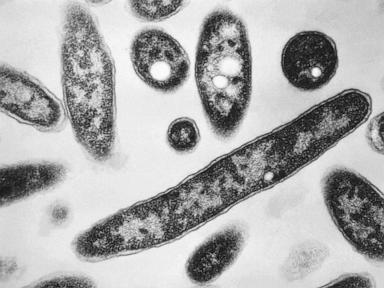
The media has a predictable playbook for bacterial outbreaks. A headline breaks about a Legionnaires’ disease death in New York, and suddenly everyone is terrified of misting machines, hotel showers, and cooling towers. The narrative is always the same: a rare, killer bug has breached our defenses, and we need emergency deep-cleans to save the public.
This reaction is wrong. It focuses on the wrong villain, tracks the wrong metrics, and misdiagnoses a systemic failure as an isolated freak occurrence.
Sensationalizing a single Legionnaires’ death ignores a uncomfortable truth. Legionella is not an exotic invader. It is a predictable byproduct of aging, oversized plumbing infrastructure and a regulatory framework that measures the wrong things. By treating these outbreaks as sudden crises rather than chronic symptoms, public health officials ensure they will keep happening.
The Stagnation Myth: Why New Buildings Are Failing
The common consensus says that old, crumbling buildings are the primary breeding grounds for Legionella pneumophila. The logic seems sound: old pipes have more rust, more scale, and less integrity.
The data tells a completely different story.
New, hyper-efficient commercial properties are frequently more susceptible to colonization than their decades-old counterparts. The culprit is a well-intentioned obsession with water conservation.
Modern green building standards mandate low-flow fixtures and highly efficient systems. When you slash water flow in a massive commercial layout, you radically increase water age. Water age is the amount of time water sits idle inside a plumbing system before exiting a tap.
Legionella does not care about modern architecture. It cares about stasis. When water sits stagnant in a pipe for days because low-flow faucets aren't moving enough volume, three things happen:
- Disinfectant Residual Dissipates: Chlorine or chloramine added by municipal water plants breaks down over time. In stagnant lines, it drops to zero.
- Thermal Gain Occurs: Cold water lines warm up to room temperature. Hot water lines cool down. Both enter the optimal growth window for the bacteria: 20°C to 50°C (68°F to 122°F).
- Biofilm Thrives: Without the physical shearing force of high-velocity water, a sticky layer of microorganisms forms on pipe walls. This biofilm shields Legionella from municipal treatments.
I have audited facility water management plans where multi-million dollar corporate headquarters showed massive colonization within six months of opening. They engineered out the flow, engineered in the stagnation, and essentially built giant petri dishes. The media blames poor maintenance, but the failure was locked in during the design phase.
The Flawed Logic of Shock Chlorination
When an outbreak hits the news, the immediate response is a scorched-earth cleaning approach. Landlords dump massive doses of chlorine into the system or crank the water heaters to scalding temperatures.
This is public health theater. It provides a temporary drop in bacterial counts to satisfy inspectors, but it actually worsens the long-term risk.
[Shock Chlorination Event]
       │
       ▼
[Destruction of Free-Floating Bacteria]
       │
       ▼
[Biofilm Surface Hardening / Pipe Corrosion]
       │
       ▼
[Rapid Recolonization & Increased Resistance]
Hyper-chlorination is highly corrosive. It pits copper and galvanized iron pipes, creating microscopic caverns that offer perfect shelter for biofilm. Furthermore, shock treatments rarely penetrate the deepest layers of biofilm or the amoebae hosts that Legionella infects.
Once the chemical levels drop back to normal, the surviving bacteria reproduce rapidly in an environment completely stripped of natural microbial competition. You haven't cured the system; you have selected for a more resilient strain of bacteria and damaged the infrastructure in the process.
Defeating the Premises of the Panic
The public conversation around water safety is dominated by bad premises. Let's dismantle the questions people usually ask when these outbreaks hit the news.
Are municipal water providers responsible for these outbreaks?
No. The law requires municipal systems to deliver water that is safe at the water main. Once that water crosses the property line into a complex building, it is entirely at the mercy of the building’s internal hydraulics. A city can deliver perfectly treated water, but if a building has dead legs—pipes that were capped off during renovations but left full of stagnant water—the bacteria will multiply. Stop blaming water utilities for building-specific plumbing failures.
Can we eradicate Legionella from our water systems?
Absolutely not. Legionella is a naturally occurring environmental organism. It is present in low levels in most freshwater sources. Eradication is a fantasy baseline driven by a lack of technical understanding. The goal of water safety is not eradication; it is control through consistent temperature management and residual biocide maintenance. Any consultant promising a "zero-detection" guarantee is selling snake oil.
Shifting from Reaction to Hydraulics
Fixing this problem requires abandoning the crisis-response loop and changing how we manage large buildings.
First, we must stop oversizing plumbing systems. For decades, engineers calculated pipe diameters based on peak demand metrics from the mid-20th century. Consequently, most commercial buildings have pipes that are far too large for their actual occupancy. This over-sizing guarantees low velocity and high water age.
Second, building managers must prioritize automated flushing regimes over occasional chemical shocks. If a wing of a building is vacant, the water must be automatically purged daily to maintain disinfectant residuals.
Third, the regulatory focus needs to shift from reactive sampling during a crisis to continuous monitoring of temperature and secondary disinfectant levels. If a facility keeps its cold water below 20°C and its hot water distribution above 50°C, the bacteria cannot proliferate to infectious levels, regardless of its baseline presence.
The New York outbreak isn't a tragic anomaly caused by an unstoppable pathogen. It is the predictable consequence of treating water safety as a janitorial issue rather than a structural engineering discipline. Until we design plumbing for velocity instead of just conservation, the headlines will keep repeating themselves. Stop scrubbing the cooling towers after the fact and start moving the water.