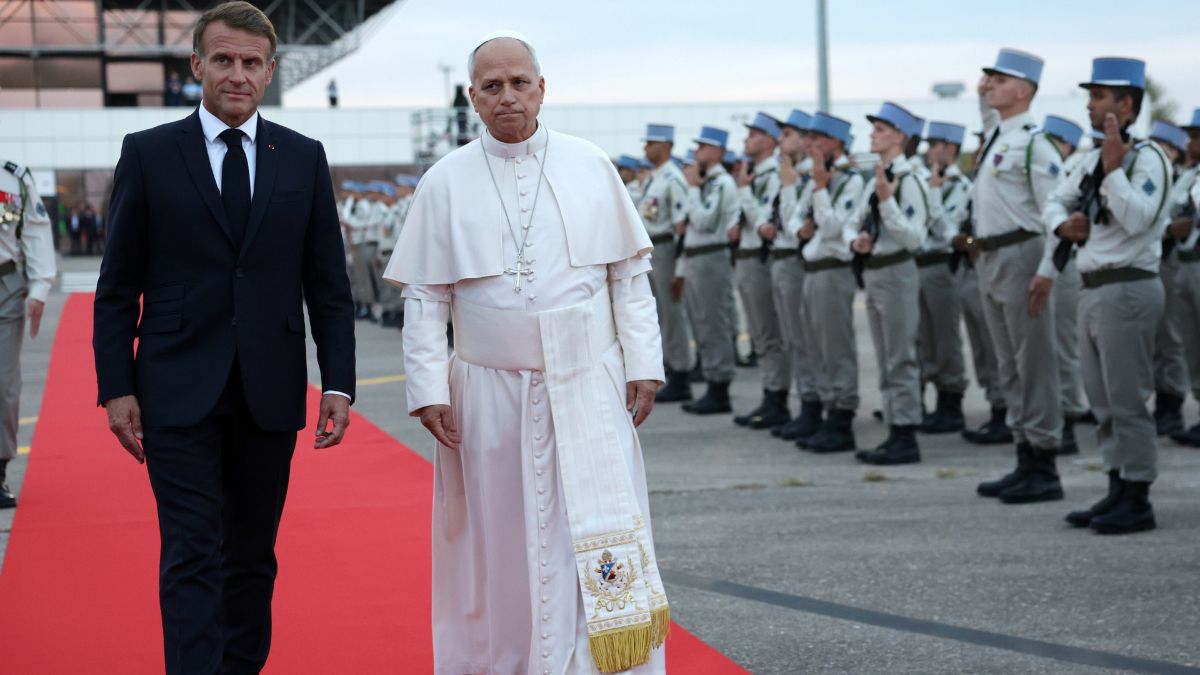
France is arguably one of the most aggressively secular nations on earth. For over a century, the republic has operated under laïcité—a strict constitutional wall separating church and state designed to keep religion strictly out of public life. Yet, when Pope Leo XIV touched down in Paris, something bizarre happened. Hundreds of thousands of people flooded the streets, packed public squares, and turned out in numbers that left political analysts and cultural commentators entirely speechless.
Suddenly, everyone was talking about a phenomenon dubbed the Leo effect.
Is Catholicism actually making a dramatic comeback in a country where churches were once shuttered and clergy guillotined during the revolution? Or was this just a fleeting moment of curiosity fueled by a charismatic pontiff? To understand what happened, you have to look past the dramatic aerial shots of the Place de la Concorde and examine the quiet, tectonic shifts happening beneath the surface of French society.
Deconstructing the Leo Effect and France's Religious Shift
Let's look at the raw numbers from that late-September weekend. Estimates place the crowd at Pope Leo XIV's open-air Mass in Paris at roughly 800,000 attendees. Days earlier, 80,000 young people packed the Stade de France for a high-energy prayer vigil. To put that in perspective, this is a country where regular Sunday Mass attendance has hovered in the single digits for decades, and where half the population identifies as having no religious affiliation whatsoever.
Critics of the event immediately pointed out the friction with laïcité. Turning national landmarks and historic public spaces like the Champs-Élysées and Place de la Concorde into massive open-air cathedrals ruffled feathers among staunch defenders of the republic's secular rules. But the sheer volume of ordinary citizens who showed up—many of them self-proclaimed non-believers or the curious—revealed an underlying cultural hunger that the political establishment didn't see coming.
People weren't just showing up because a famous global figure was in town. They were showing up because modern secularism has left a massive existential vacuum.
The Numbers Behind the Surge
Long before the popemobile rolled down the streets of Paris, church leaders in France were already noticing unusual data points. The French bishops conference released figures showing that adult and adolescent baptisms reached staggering new heights. Over 21,000 people sought baptism at Easter, with adult catechumens surging by roughly 28% in a single year—and sitting at more than triple the figures recorded a decade prior.
Who are these new converts? They aren't just elderly traditionalists clinging to the past. They are overwhelmingly young adults between the ages of 18 and 35.
Take Audrey Bourgès, whose story became emblematic of this shift. After navigating a painful breakup and feeling adrift in the capital, she found herself seeking answers that consumer culture and hyper-individualism simply couldn't provide. She isn't an anomaly. Across France and much of the Western world, Gen Z and Millennials are driving a counter-cultural turn toward structured tradition, liturgy, and ancient community. When Pope Leo spoke directly to the youth at the Stade de France, telling them that "France rhymes with hope," he wasn't just tossing out a catchy slogan. He was validating a growing underground current of young people who are tired of feeling rootless.
Why Secularism Didn't Kill Faith
We often assume that as societies modernize and secularize, religion simply fades away into irrelevance. That narrative works nicely on paper, but human nature refuses to cooperate. Modern life in a hyper-connected, digital-first economy delivers unprecedented comfort alongside staggering isolation. People own more gadgets than ever, yet loneliness rates are skyrocketing.
France's model of laïcité was built to protect public neutrality, but over the years, it curdled into a form of cultural amnesia. Religion was treated as something to be hidden behind closed doors, as if heritage and history could be neatly scrubbed clean.
Pope Leo's visit broke those unwritten rules in broad daylight. When priests started hearing confessions out in the open air without traditional confessionals, and when tens of thousands of young people sang hymns inside a major sports stadium, it sent a powerful signal: being Catholic in France no longer requires whispering.
It has become, strangely enough, an act of rebellion.
When everything in the culture tells you to optimize your productivity, chase status, and dissolve into secular atomization, choosing an ancient, demanding, and counter-cultural faith looks less like a relic of the dark ages and more like an anchor in a hurricane.
Breaking the Mold of Traditional Politics
Another reason the visit resonated so deeply is that Pope Leo sidestepped the predictable culture-war traps that usually alienate modern secular populations. While the Catholic Church in France holds firm on traditional doctrines—clashing sharply with recent French legislation guaranteeing abortion access in the national constitution—the pope's messaging emphasized human dignity, economic justice, peace, and the inclusion of society's most vulnerable.
Secular politicians, journalists, and intellectuals who normally maintain a cold distance from religious institutions found themselves genuinely moved by moments like the pope embracing children and individuals with disabilities. By focusing on universal human longings for reconciliation rather than issuing standard political condemnations, the papacy managed to bypass the usual knee-jerk anticlerical defenses.
Looking Past the Headlines: Is This a Permanent Awakening?
Let's be realistic. A four-day papal tour does not reverse fifty years of church closures, priest shortages, and secular drift overnight. Parishes across rural France remain empty, and the structural challenges facing European Catholicism are immense.
Yet, treating the event as a mere media spectacle misses the point entirely.
The Leo effect is symptomatic of a deeper psychological shift. People are exhausted by cynicism. They are tired of political polarization and economic anxiety that yields no spiritual return. When young adults line up for hours to pray the rosary in Lourdes or pack out cathedrals that survived catastrophic fires, they are voting with their feet. They are looking for something that outlives them.
The challenge for French Catholicism now isn't generating hype—it's staying power. Can local parishes welcome the sudden influx of adult converts and give them meaningful community once the papal flags come down and the international press corps packs up their cameras?
If the church can actually hold onto this momentum, the events in Paris, Marseille, and Lourdes might look less like a temporary flash in the pan and more like the opening chapter of an entirely unexpected European renaissance. The groundwork is already laid. The hunger is real. Now it comes down to execution on the ground.
http://googleusercontent.com/lmdx_content/ZyYqndVuOpppBWGgKuwDlXuTYFRMDbTZQSyVJWlXrafKYtZjnKTpghCVUhnPwhHCqtFBQsGosRoSJEMANpRaEHSTgMMpFILna29404
The video above captures the scale of the crowds and the energy on the ground during the papal journey.