Ink is a dangerous thing when the room you sit in belongs to a prison.
It is not just a fluid made of pigment and water. Behind certain iron bars, ink becomes contraband, a weapon, a lifeline, and a confession all at once. It is smuggled on scraps of paper torn from official forms, wrapped tightly in plastic, hidden in the seams of garments, or passed hand-to-hand in the humid gloom of overcrowded visiting hours. Meanwhile, you can find related stories here: The Architects in the Shadows How Britain Forged an Eastern Shield.
Consider the mechanics of silence. When a government decides to swallow a human being whole, it does not merely lock a heavy door. It constructs an architecture of erasure. Mail is intercepted. Phone calls are monitored, filtered, or cut off entirely. The world outside moves with the frantic noise of commerce, traffic, and elections, while inside, time congeals into a gray, featureless block. The prisoner ceases to be a person with a history, a family, or a voice. They become a docket number, a statistic in an annual human rights report, a pending execution date on a docket that bureaucratic machinery pushes ever closer to reality.
Yet, human beings are stubbornly inconvenient. They refuse to disappear simply because someone drew a line around them and wrote the word "condemned." To understand the complete picture, we recommend the detailed analysis by Reuters.
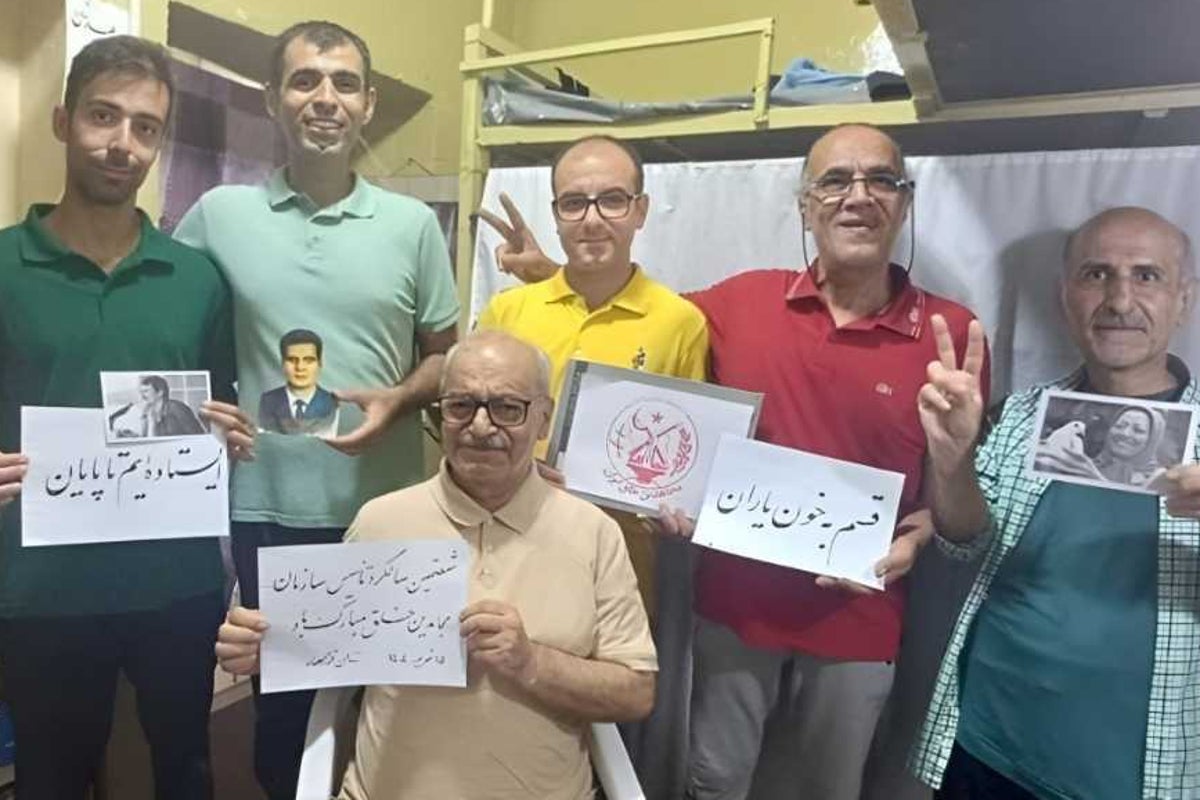
Recently, a piece of paper slipped through that invisible barrier. It crossed borders guarded by armed men and surveillance cameras, finding its way into the hands of journalists and activists who understand that the most urgent news of our time is often written in secret. It is a desperate plea from an Iranian death row prisoner. The message is painfully simple, carrying a weight that should make every free person pause: Do not forget about us.
To understand why a prisoner has to smuggle out a plea for basic remembrance, we have to look past the headlines and examine how the Islamic Republic utilizes capital punishment. Iran is not merely a country that executes criminals; it is a state that relies on the gallows as a primary instrument of political control. According to organizations like Amnesty International and Iran Human Rights, executions in the country have surged in recent years, often hitting hundreds of individuals annually. Many of these cases involve protesters, dissidents, ethnic minorities, and individuals convicted under deeply flawed judicial processes where forced confessions extracted through torture serve as the foundational evidence.
Imagine sitting in a cell measuring six by nine feet. Your primary companion is the ticking clock and the knowledge that your life has been assigned an arbitrary expiration date by an apparatus that does not answer to a fair jury. You know that your family outside is weeping in quiet corners, afraid to speak to the foreign press because doing so might draw retaliation upon the remaining relatives. You know that the international community is distracted by wars, economic crises, and political elections.
And so, you write.
You find a stub of a pencil or a leaking pen. You write on whatever surface remains clean enough to hold letters. You write because being forgotten is a second, more thorough kind of death. Physical execution stops the heart, but oblivion erases the soul before the body has even cooled.
When this smuggled letter reached the outside world, it did not arrive with the pomp of a diplomatic cable. It arrived crumpled, bearing the smudges of hands that had clutched it like a shield. The writer spoke of the deafening silence that settles over death row as the sun goes down. They spoke of the routine of despair, where prisoners listen to the footsteps of guards, wondering whose name will be called next for transfer to solitary confinement—the dreaded prelude to the execution chamber.
I remember talking to an activist years ago who had spent time inside a similar political prison. He told me something that has stayed with me ever since. He said that the worst part of imprisonment was not the cold floor, the meager rations, or the constant threat of violence. It was the absolute, suffocating conviction that the world had simply turned the page. He described looking out a tiny, barred window at a patch of sky and wondering if anyone out there still remembered his name, or if he was already living as a ghost in the minds of his friends.
That is the true target of state terror. It seeks to isolate the victim so thoroughly that resistance feels ridiculous, and solidarity feels impossible.
When we read about these smuggled warnings, our first instinct is often helplessness. We sigh, shake our heads at the cruelty of distant regimes, and scroll down to the next news story about celebrity gossip or local real estate prices. The sheer volume of global suffering numbs us. There are too many crises, too many oppressed populations, too many lines drawn in blood across the map. It is easier to look away because looking requires bearing a fraction of the weight.
But the prisoner is not asking for an army to breach the gates. They are asking for something much more intimate, yet infinitely powerful: witness.
Attention is a form of protection. When a name is known, when a case is amplified on global airwaves, when diplomats are forced to utter a condemned person's name in negotiations, the calculus of the executioner changes slightly. Secrecy is the oxygen of tyranny. Sunlight scorches it. Dictatorships and authoritarian states care deeply about their international image, even as they pretend otherwise. They prefer to carry out their darkest acts in the dark, away from prying eyes and vocal condemnation. Every time a journalist writes a story, every time a human rights defender shares a post, every time an ordinary citizen refuses to let a name slip down the memory hole, a tiny crack appears in the wall of isolation.
The plea smuggled from that Iranian cell is not an isolated cry. It echoes the voices of thousands of others whose names we will never know—dissidents, poets, students, workers, and mothers who found themselves on the wrong side of an autocratic decree. They are caught in a system where justice is a theater and mercy is non-existent.
We live in societies where our voices, however flawed or noisy, still carry influence. We can walk down the street without looking over our shoulders for the secret police. We can post, protest, speak, and write without the immediate terror of a midnight raid. That freedom is not an accident of geography; it is an inheritance bought by the struggles of those who came before us. And with that freedom comes an invisible, inescapable obligation.
We are the ones behind the walls, metaphorically speaking, if we choose to remain locked inside our own comfortable indifference.
The prisoner's letter ends not with a grand political manifesto, but with a simple, aching human truth. They want their families to be safe. They want their stories to be told accurately. They want history not to record them as quiet victims who went meekly to the gallows, but as living souls who loved, resisted, and hoped until the very last breath.
The ink on that smuggled scrap of paper has dried. The hands that wrote it may already be silenced, or they may still be trembling in the dark, waiting for a dawn that hangs by a thread. The choice of whether those words echo or fade into the white noise of the world is not up to the guards holding the keys.
It is up to us.