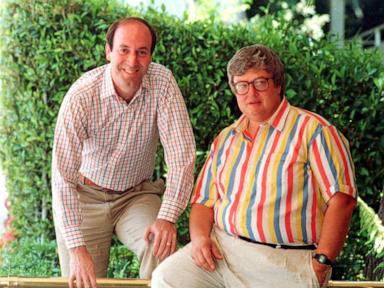
Bronze statues don't save film criticism. They preserve a postcard.
Whenever a city announces a monument to two dead critics—even two as consequential as Gene Siskel and Roger Ebert—the press releases write themselves. Warmth. Hometown pride. A nod to the golden age when two guys in suits argued about movies on television and millions of people actually cared what they thought. Learn more on a similar issue: this related article.
That's the lazy consensus. Everyone claps. Everyone snaps a photo. Everyone pretends a life-size Siskel and Ebert sculpture giving "two thumbs up" is a triumph for cinema culture in Chicago.
It isn't. It's a monument to a format that is already dead, cast in metal to flatter people who miss 1986. Additional reporting by Vanity Fair highlights similar perspectives on this issue.
I've spent years watching cultural institutions, media brands, and civic boosters pour money into backward-looking tributes while ignoring the mechanics of why audiences actually pay attention today. I've seen organizations blow credibility—and real budgets—mistaking recognition for relevance. Put a bronze likeness of two thumbs up on a sidewalk and tourists will pose with it for five minutes. Then they'll walk to a coffee shop, open TikTok or Letterboxd, and read three hundred words from someone who doesn't wear a necktie and has never set foot in a network television studio.
Let's be precise about what Siskel and Ebert actually built, because most people get the history backward.
What "Two Thumbs Up" Really Was (And Wasn't)
People treat the "two thumbs up" rating system as a cute catchphrase or a punchline. That misses the structural genius of what Siskel and Ebert did.
Before Sneak Previews and At the Movies, mainstream film criticism lived mostly in print newspapers, highbrow journals, or brief local news slots that sounded like studio press releases. Criticism was often written for other cinephiles, insiders, or readers who already loved dissecting camera angles and auteur theory.
Siskel and Ebert turned criticism into a televised debate between two distinct sensibilities with real stakes. Siskel looked for craft, structure, and whether a movie fulfilled its own ambition; Ebert brought deep empathy, narrative drive, and a willingness to love a trashy thriller or a sweeping drama if it earned its emotional weight. They disagreed constantly. They interrupted each other. They had actual history, which meant when one of them changed his mind or defended a movie the other hated, the audience felt like they were watching a real argument, not a scripted segment.
The binary thumb wasn't a nuanced rubric. It was a forcing function. It forced two smart, opinionated people off the fence so regular viewers could decide whether to spend their Friday night and ticket money at the theater.
Modern commentators love to romanticize that era as a pure meritocracy of taste. It wasn't. It was a product of scarcity and broadcast monopoly. There were fewer movies competing for attention in a given weekend, far fewer screens and streaming catalogs, and a massive shared monoculture where seeing the same blockbuster or prestige release meant you could talk about it at work on Monday.
A sculpture can't recreate scarcity. Bronze can't bring back the monoculture.
Why Cities Love Bronze More Than Living Culture
If you want to understand why a Siskel and Ebert statue gets greenlit while independent cinemas, local arts journalism, and mid-budget theatrical runs struggle to hold oxygen, look at civic incentives.
Statues are clean. A statue doesn't publish a review that angers a local film festival sponsor. A statue doesn't complain about ticket prices, distribution bottlenecks, or hollowed-out arts beats. A statue gives politicians and tourism boards an easy photo opportunity and a tidy story about Chicago's creative heritage.
There's nothing evil about civic pride. Chicago does have a serious film history—from early silent studios and the Essanay era to Michael Mann, Harold Ramis, John Hughes, and two of the sharpest working critics America ever put on TV. Honoring people who shaped that history isn't a crime.
The problem is substitution. When a city celebrates past icons instead of strengthening the conditions that make sharp cultural criticism and vibrant theatrical spaces thrive right now, the tribute becomes a distraction.
Think about the questions people actually ask when news like this breaks:
- Is a statue good for Chicago tourism? Sure, a little. A recognizable pop-culture landmark gives visitors another stop on an itinerary. Nobody books a cross-country flight solely for a bronze thumb, though. At best, it's a bonus photo op layered on top of existing draws like the lakefront, architecture tours, comedy clubs, and restaurants.
- Does this help keep movie theaters open? Not even slightly. Movie theaters survive on programming, exhibitor economics, projection and sound standards, and audiences actually leaving their couches. A sculpture doesn't sell a single ticket to a repertory screening at the Music Box or a new release downtown.
- Does it revive serious film criticism? No. Serious criticism survives when outlets pay writers fairly, give them editorial room to take risks, and cultivate readers who value rigorous judgment over clickbait listicles and star-rating aggregates.
The Myth of "Good Old Days" Taste
Here is the part that makes nostalgiacs squirm: looking back at Siskel and Ebert often tricks people into thinking audiences used to be wiser and critics used to be braver.
History doesn't back that up. For every classic At the Movies debate over Raging Bull, Do the Right Thing, or Hoop Dreams, there are plenty of moments where both men missed the mark—praising forgettable studio product or panning films that aged into landmarks. That's not a failure of Siskel and Ebert; that's the nature of criticism. Criticism isn't an oracle. It's a documented argument made in real time with incomplete hindsight.
What has changed is the distribution of voices and the economics of attention.
In the broadcast era, gatekeepers were few. If you got two thumbs up, you felt a tangible wave of momentum. Today, a movie can get glowing reviews from top critics and vanish in ten days, or get roasted by critics and blow up on social media because a clip hit the right nerve. Meanwhile, anyone with a microphone, a camera, or a newsletter can call themselves a critic, which makes genuine expertise and independent judgment harder to spot—not less necessary.
Imagine a scenario where a city invested the energy and institutional backing of a major public-art rollout not just in a memorial statue, but in a permanent public program pairing local critics, high school and college students, and neighborhood theaters for weekly screenings and live post-film debates. Suddenly you wouldn't just be looking at two men who argued about movies. You'd be practicing the habit that made them worth watching in the first place.
That doesn't mean a sculpture has zero value. Let's be fair about the trade-offs.
Where This Contrarian Take Can Go Wrong
If I push the "nostalgia is a trap" argument too far, I risk sounding cynical about things that genuinely bring joy to ordinary people.
Public art doesn't have to solve structural media economics to be worthwhile. Sometimes a bronze statue is just a fun, recognizable piece of street furniture that makes a fan smile on a Tuesday morning. When someone grew up watching Siskel and Ebert with their parents and feels a genuine spark seeing those two familiar figures immortalized in Chicago, dismissing that feeling out of hand is cheap.
There's also a real risk in demanding that every cultural gesture be "useful" or "forward-looking." Art and memorials often look backward because memory is part of human identity. If every tribute had to pass a strict policy or business-model test, we'd strip out half the color and warmth in public life.
The mistake isn't honoring Siskel and Ebert. The mistake is pretending the bronze is the mission.
What Actually Keeps Film Culture Alive
If you care about movies—and if you care about the kind of sharp, unvarnished debate Siskel and Ebert stood for—stop treating monuments like momentum. Do things that actually move the needle:
- Support working critics directly. Subscribe to publications, newsletters, and independent outlets that pay writers for real analysis instead of recycled press releases. If you want sharp voices, fund them.
- Show up for theatrical runs early. Movies live or die on opening weekends and early theatrical windows. Waiting months for a streaming drop while complaining that theaters only show sequels is a self-fulfilling prophecy.
- Argue about movies like a grown-up. "Mid" and "slop" are lazy habits, not criticism. Say why a scene worked or failed, what the director was trying to pull off, and where you disagree with someone whose taste you respect.
- Back local screening spaces. Independent and repertory theaters are the closest thing we have left to communal rooms where strangers react together in the dark. Go to them when a weird, risky, or non-franchise movie plays.
A statue in Chicago can remind people of two great critics who knew how to disagree without making it personal. Everything that actually matters about film and criticism happens after you walk past it.