A grain of sand is easy to ignore until it gets in the gears of a jet engine.
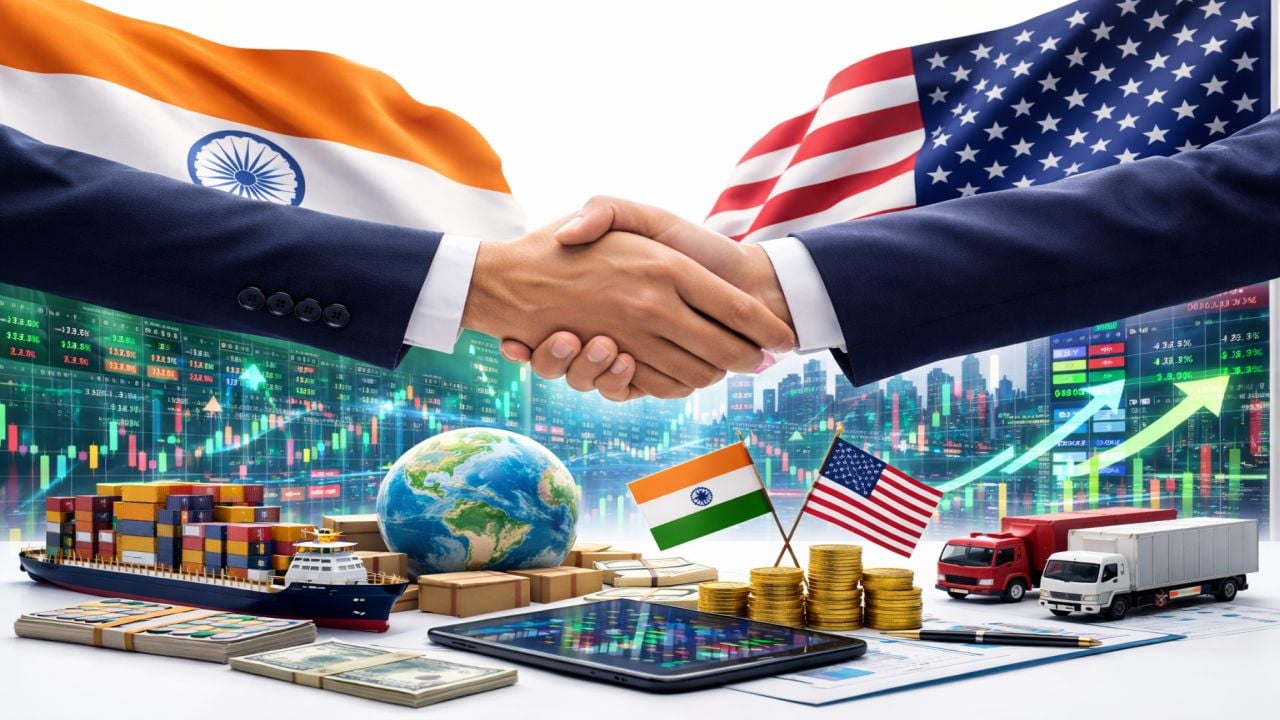
In the high-ceilinged corridors of Washington D.C. this week, the atmosphere wasn’t defined by the usual dry exchange of diplomatic folders. Instead, there was a palpable sense of urgency, the kind felt by a mechanic realization that the car is running on a nearly empty tank while the destination is still miles away. When India’s Foreign Secretary and the Chief of Air Staff arrived in the United States, they weren’t just there for the cameras. They were there because the very bones of the modern world—the minerals in our pockets and the wings over our heads—are currently caught in a global tug-of-war.
Think about the smartphone resting on your nightstand. Inside its sleek frame lies a cocktail of rare earth elements and critical minerals like lithium and cobalt. These aren’t just commodities; they are the fundamental DNA of the 21st century. Without them, the green energy transition is a fairy tale. Without them, the sophisticated defense systems that keep borders quiet don't function.
For decades, we treated these resources as if they existed in a bottomless well. We ignored the reality that the supply lines stretching across the globe are fragile, often passing through hands that don't always wish us well. This week, India and the United States decided to stop pretending that "business as usual" would suffice.
The Weight of a Battery
To understand the stakes, we have to look past the bureaucratic language of "bilateral cooperation." Consider a hypothetical engineer in Bengaluru named Arjun. Arjun is tasked with designing a battery for a new fleet of electric buses meant to clear the smog from the city’s lungs. He has the blueprints. He has the talent. What he doesn’t have is a reliable source of the raw minerals needed to make those batteries a reality.
When the price of lithium spikes or a trade route is blocked, Arjun’s project stalls. The smog stays. The progress stops.
This isn’t just Arjun’s problem; it is a national security crisis. During the visits to the U.S., the discussions centered heavily on the Minerals Security Partnership (MSP). This isn't just another acronym to be filed away. It is a shield. By deepening this connection, India and the U.S. are attempting to build a world where the Arjuns of the world aren't held hostage by the whims of a single dominant supplier.
The move signifies a shift from mere buying and selling to a strategy of co-investment. They are looking at how to extract, process, and recycle these minerals in ways that don't destroy the earth or leave the supply chain vulnerable to political blackmail. It is a slow, difficult process. It requires more than money; it requires a level of trust that takes years to bake into the relationship.
Steel and Shadows
While the Foreign Secretary focused on the guts of our electronics, the Air Chief Marshal was looking at the sky.
There is a specific kind of silence that follows the roar of a fighter jet—a reminder of the sheer physical power required to maintain peace. But that power is increasingly digital. A modern aircraft is less of a mechanical bird and more of a flying supercomputer. The partnership discussed between the two nations isn't just about selling planes from one side to the other. It’s about the "co-production" of engines and the sharing of the "source code" of defense.
In the past, the relationship was transactional. One country built a machine, the other bought it. If a part broke, you waited for a shipment from overseas. In a world moving at the speed of light, that delay is a death sentence.
The current mission aims to change the architecture of this setup. Imagine a factory floor in Hyderabad where Indian technicians and American engineers are working on the same turbine. They aren't just assembling a kit; they are innovating on the design. This level of intimacy in defense technology is rare. It’s a marriage of necessity.
The U.S. needs a stable, technologically advanced partner in the Indo-Pacific to act as a counterweight to rising tensions. India needs the technological leap that only American R&D can provide. They are two giants leaning on each other, not because it is easy, but because the ground beneath them is shifting.
The Invisible Bridge
It’s easy to get lost in the talk of jet engines and mining rights. But the real story is about the people who have to make these deals work.
Diplomacy is often portrayed as a series of grand gestures, but in reality, it’s a marathon of boring meetings. It’s the late-night coffee in a D.C. hotel room where a staffer tries to figure out how to align Indian labor laws with American environmental standards. It’s the Air Chief explaining the specific atmospheric challenges of the Himalayas to a pilot who has spent his life flying over the deserts of Nevada.
These visits represent a bridge being built in real-time. Every time a new agreement is signed on critical minerals, another stone is laid. Every time a joint defense exercise is planned, another cable is tightened.
The tension in the world today comes from a feeling of scarcity—the fear that there isn't enough energy, enough safety, or enough influence to go around. By aligning their orbits, India and the U.S. are betting that they can create their own abundance. They are trying to ensure that the next decade isn't defined by who has the most minerals, but by who has the strongest friends.
The Cost of Hesitation
What happens if these talks fail?
The alternative isn't a return to the status quo. The world is moving toward a fractured reality where tech silos define your destiny. If India cannot secure its mineral supply, its dream of becoming a global manufacturing hub will flicker and die. If the U.S. cannot integrate its defense systems with its allies, its influence will continue to erode, leaving a vacuum that less democratic forces are eager to fill.
The stakes are found in the price of a commuter's ticket, the reliability of a hospital's power grid, and the quiet confidence of a pilot on patrol. These are the human ripples of the decisions made in those air-conditioned rooms this week.
We often talk about "critical minerals" as if they are just rocks. We talk about "defense cooperation" as if it’s just hardware. But at the end of the day, these are the tools we use to build a perimeter around our way of life.
The jet engines will eventually grow cold, and the diplomats will return home. But the work of weaving two massive, complex, and often stubborn democracies together will continue. It is a task that requires the precision of a jeweler and the strength of a blacksmith.
The engine is starting. The gears are turning. And for the first time in a long time, the tank feels like it might just be full enough to reach the horizon.