Most people couldn't point to Vilnius on a map twenty years ago without squinting. Now, that exact corner of Northern Europe holds the keys to the ultra-fast laser market that powers everything from advanced eye surgery to semiconductor manufacturing.
While Silicon Valley grabs headlines for artificial intelligence and Taiwan dominates chip fabrication, a quiet industrial power play has unfolded in the Baltic states. Lithuania isn't just participating in the global photonics race. It's actively building the world's largest ultra-fast laser factory right as diplomatic and trade tensions with China reach a boiling point.
Here's the reality most tech commentators miss. You don't build an empire in precision manufacturing overnight, and you certainly don't do it by accident. Lithuania spent decades cultivating optical physics talent before the rest of the world realized how critical femtosecond and picosecond lasers would become to modern supply chains.
The Quiet Photonics Powerhouse You Probably Overlooked
Walk through the industrial parks around Vilnius and you'll find a concentration of laser engineering talent that rivals Germany and the United States. Companies like Light Conversion, Ekspla, and Šviesos Konversija didn't pop up yesterday. They grew directly out of Vilnius University's Laser Research Center, which started pushing the boundaries of nonlinear optics back in the 1960s and 1970s.
When the Soviet Union collapsed, those physicists didn't abandon their labs. They commercialized their research.
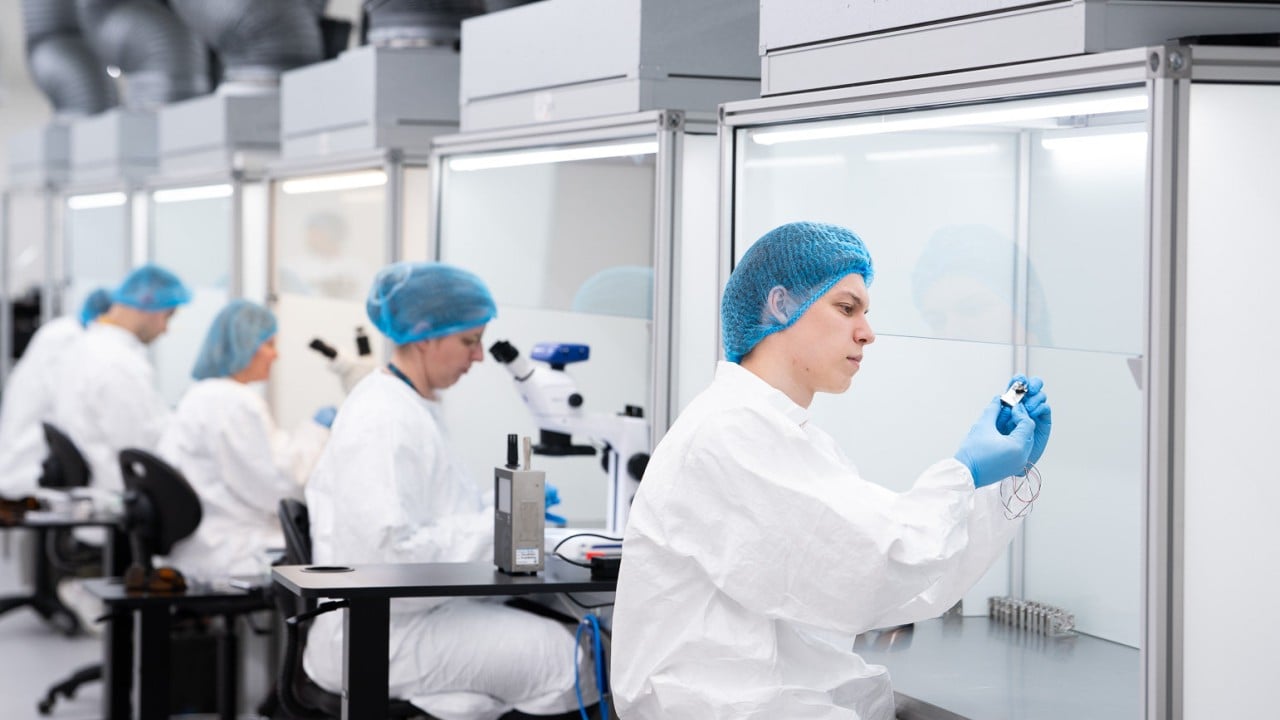
Today, Lithuanian firms control roughly half of the global market for scientific picosecond and femtosecond lasers. Think about that number for a second. A nation of fewer than three million people supplies half the world's high-precision scientific lasers. NASA uses them. CERN relies on them. Nearly every major university physics lab across North America, Europe, and Asia has Lithuanian hardware bolted to its optical tables.
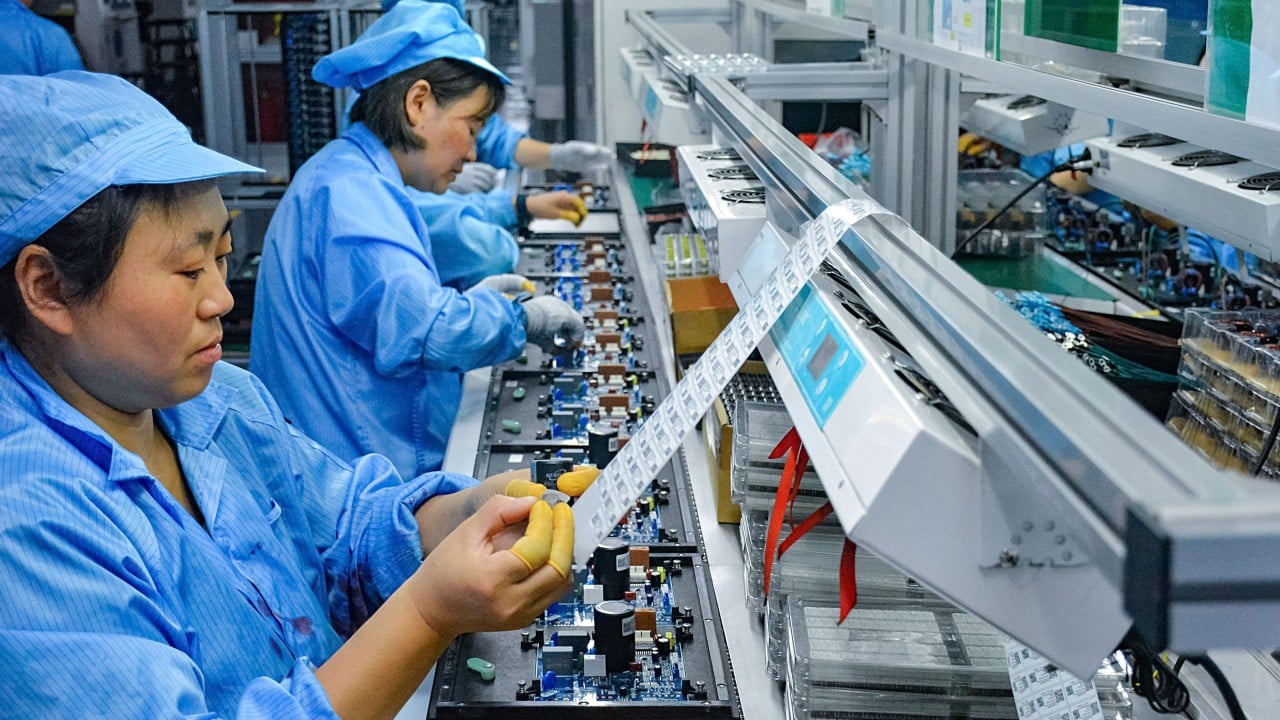
The new mega-factory project scales this dominance from boutique scientific instruments to heavy industrial manufacturing. Ultra-fast lasers fire pulses lasting just quadrillionths of a second—so fast they vaporize material before heat can transfer to the surrounding area. If you want to cut brittle OLED smartphone screens without cracking them, drill microscopic cooling holes in jet engine turbine blades, or etch next-generation microchips, you need ultra-fast lasers.
Why China Tensions Accelerated the Factory Push
Geopolitics always finds its way into high-end manufacturing eventually. For years, European tech companies treated China as both an endless customer base and an easy manufacturing partner. Lithuania broke that consensus hard.
In 2021, Vilnius allowed Taiwan to open a representative office in the capital under the name "Taiwanese Representative Office in Lithuania," rather than using the standard "Taipei" designation Beijing demands. China retaliated immediately. Beijing downgraded diplomatic ties, blocked Lithuanian goods at customs, and pressured multinational corporations to drop Lithuanian suppliers from their supply chains.
It was a brutal economic stress test.
Instead of folding, Lithuania doubled down on technological sovereignty and closer alignment with democratic allies like the United States, Taiwan, and Japan. The push to construct the world's largest ultra-fast laser facility in Vilnius isn't just a commercial expansion. It's an industrial insurance policy.
By keeping manufacturing, R&D, and component assembly concentrated at home—and within friendly European Union borders—Lithuanian laser makers insulate themselves from supply chain coercion. If you're a Western semiconductor manufacturer or defense contractor looking to de-risk your supply chain away from Chinese dependencies, buying optical systems engineered and built inside NATO and EU territory suddenly looks very attractive.
What Ultra-Fast Lasers Actually Do in Modern Industry
Let's strip away the physics jargon for a moment. Why does a factory churning out femtosecond lasers matter to regular consumers and businesses?
Traditional industrial lasers melt or burn through materials. That works fine when you're slicing thick sheets of steel for car chassis, where a tiny bit of melted edge doesn't hurt anything. It fails miserably when you're working at the microscopic scale. Heat spreads, warps delicate circuits, and ruins yields.
Ultra-fast lasers operate on a completely different principle called cold ablation.
- Zero thermal damage: Because each laser pulse lasts only a few femtoseconds, the targeted atoms absorb the energy and turn straight into plasma before they can vibrate and heat up neighboring atoms.
- Microscopic precision: Engineers can carve features smaller than a human hair with clean, sharp edges that require zero post-processing or polishing.
- Universal material processing: These beams cut glass, sapphire, ceramics, polymers, and metals with equal ease.
In practical terms, this technology sits behind the foldable screens in modern smartphones, the stents keeping human arteries open, and the photovoltaic cells powering solar farms. As electronics keep shrinking and tolerances get tighter, mechanical drills and traditional thermal lasers hit physical limits. Ultra-fast photonics becomes the only viable tool left on the factory floor.
The Supply Chain Trap Most Tech Companies Ignore
I've watched plenty of hardware startups and mid-sized manufacturers make the same mistake over the past five years. They obsess over chip shortages while completely ignoring the specialized machinery required to fabricate and test those chips.
You can have the best semiconductor design team in California, and it won't mean much if you can't source the optical lithography tools, wafer inspection lasers, or precision dicing systems needed to produce physical silicon. Photonics is the invisible backbone of the hardware economy.
China understands this better than almost anyone. Through state-backed industrial policies, Beijing has poured billions into domestic laser manufacturing, rapidly capturing the low- and mid-power fiber laser markets. Chinese firms now dominate standard metal-cutting lasers globally by undercutting Western competitors on price.
High-end ultra-fast lasers remain one of the few segments where European and American firms still hold a decisive technological lead. Building massive production capacity in Lithuania protects that lead by driving down unit costs through economies of scale while keeping core intellectual property safely out of reach.
How Lithuania Built an Ecosystem Without Venture Capital Hype
Silicon Valley loves blitzscaling—throwing hundreds of millions of venture dollars at an idea and hoping profitability shows up a decade later. Lithuania's laser sector grew the exact opposite way.
Companies like Light Conversion bootstrapped their growth through profits, reinvesting revenue directly into research and engineering facilities. Because they weren't answering to impatient venture funds demanding quarterly hyper-growth, they could afford to spend five or ten years perfecting optical parametric amplifiers and solid-state laser architectures.
They also built an unusually tight feedback loop with local universities. Undergraduates in Vilnius aren't just reading textbooks about quantum optics; they're interning on production lines, assembling optical cavities, and testing crystal purity before they even finish their bachelor's degrees. When the new mega-factory scales up, it won't face the severe technical labor shortages currently plaguing semiconductor construction projects in Arizona or Germany.
That's a lesson industrial policymakers everywhere should study closely. You can't subsidize a high-tech factory into existence if you haven't spent the previous twenty years training the technicians and physicists who know how to run it.
The Risks Nobody Mentions in Press Releases
Of course, building the biggest ultra-fast laser factory in the world comes with real vulnerabilities. Pretending otherwise would be dishonest.
First, raw materials remain a global chokepoint. Even if you assemble the laser systems in Vilnius, specialized optical crystals, rare-earth dopants, and precision semiconductor pump diodes still rely on complex international mineral and component networks—some of which trace back to Chinese refining operations. True supply chain independence requires securing upstream materials, not just final assembly lines.
Second, competition isn't standing still. German giants like Trumpf and Coherent in the United States are aggressively expanding their own ultra-fast industrial laser divisions. Meanwhile, Chinese photonics firms are climbing the value chain quickly, moving from basic continuous-wave lasers toward higher-precision pulsed systems.
Third, scaling from custom scientific instruments to high-volume industrial manufacturing requires a total cultural shift. Scientific buyers tolerate longer lead times and bespoke configurations. Automotive and consumer electronics manufacturers demand identical units delivered on strict schedules with 99.9% uptime guarantees.
Practical Takeaways for Tech Leaders and Investors
If you work in hardware manufacturing, defense procurement, deep-tech investing, or supply chain strategy, Lithuania's laser expansion sends a clear signal you shouldn't ignore.
- Audit your tier-two and tier-three optical dependencies. Don't just ask where your components are assembled—ask what precision tools cut, inspect, and etch them, and where those tools originate.
- Look beyond traditional tech hubs for deep-tech partnerships. Smaller European nations with specialized academic traditions—like Lithuania in photonics or the Netherlands in lithography—often hold disproportionate control over critical bottlenecks.
- Prioritize sovereign-aligned manufacturing early. Geopolitical friction between Western democracies and China isn't cooling down anytime soon. Locking in supply agreements with manufacturers operating inside stable regulatory environments reduces long-term disruption risk.
- Watch photonics as closely as semiconductors. As Moore's Law slows down and chips hit thermal walls, optical interconnects and laser-based manufacturing are absorbing the R&D budgets that used to go purely into silicon shrinking.
Start mapping your precision manufacturing exposure today before the next diplomatic standoff turns a quiet component bottleneck into a full-blown production halt.