We entrust our lives to strangers every single day. We walk down the jetbridge, hand our boarding pass to an agent with a tired smile, and step into a pressurized aluminum tube hurtling through the stratosphere at five hundred miles per hour. We sleep. We read. We watch movies on glowing screens three inches from our faces. We do this because of an invisible, fragile contract: the cockpit door is locked, and the two people behind it are sane, steady, and entirely devoted to seeing the sun come up on the other side of the horizon.
That contract shattered inside a flydubai flight.
It was supposed to be a routine journey. Flight decks are normally places of quiet, methodical discipline. Checklists are read aloud. Coffee cools in paper cups. The hum of the engines provides a steady backdrop to a world operating on absolute predictability. But high above the clouds, predictability died.
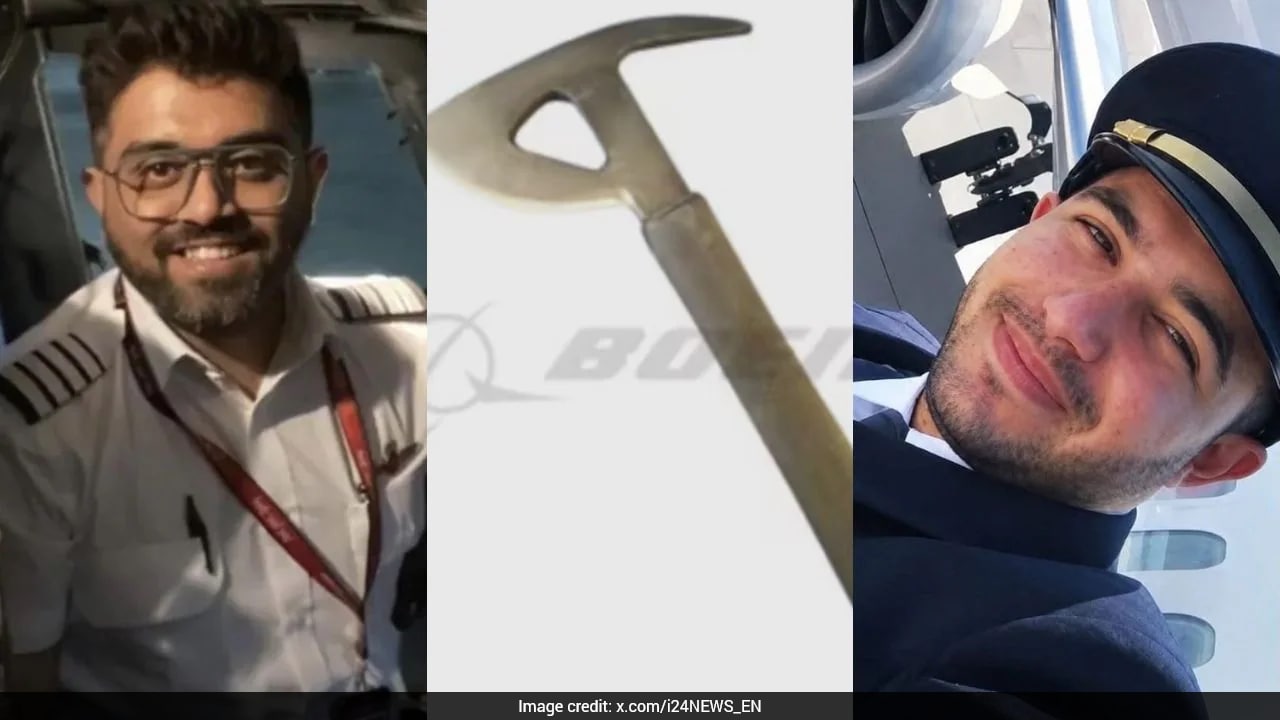
A co-pilot turned on the captain. Not with words, not with a sudden shouting match that escalated over time, but with a weapon. A crash axe. The heavy, utilitarian tool designed to pry open emergency exits or hack through cabin panels became something else entirely in the confined space of a flight deck. It became an instrument of sudden, terrifying chaos.
Imagine the geometry of a modern airliner cockpit. It is remarkably cramped. Knees nearly touch panels. Switches and displays crowd every square inch of available space. There is nowhere to run. There is no fallback position. When violence erupts in a room measuring barely six feet by six feet, surrounded by miles of thin air and freezing temperatures, survival is measured in split-second reactions and sheer, brutal adrenaline.
According to UAE authorities investigating the incident, the co-pilot launched a violent assault on the captain using the aircraft’s emergency axe, categorizing the terrifying event as a terrorist attack.
Let that sink in. A terrorist attack does not always look like a remote-controlled device or a coordinated cell meeting in the shadows. Sometimes, it looks like betrayal from within. It looks like the person sitting right beside you, wearing the same uniform, holding the same commercial license, and sharing the exact same oxygen supply, suddenly deciding that the flight will not land where it was scheduled to go.
The aviation industry likes to talk about redundancies. Dual engines. Triple-redundant flight computers. Backup generators that kick in the moment primary power fails. We engineer safety nets for mechanical failure, electrical surges, and hydraulic leaks. But how do you engineer a redundancy for the human mind? How do you build a fail-safe against a sudden, catastrophic psychological fracture at thirty-thousand feet?
For decades, aviation security focused outward. After the events of September 11, 2001, the entire world locked the cockpit door. Heavy steel, reinforced cores, deadbolts, and camera systems were rushed into service across global fleets. The goal was simple: keep the bad guys out.
We forgot to ask what happens when the bad guy is already inside.
When the alarm was raised and the struggle began, the unspoken psychological weight of the flight deck shifted forever. Passengers in row twelve had no idea. They could not hear the sounds of a desperate struggle happening just feet away behind a reinforced bulkhead. They were listening to the gentle chime indicating the seatbelt sign was turning off. They were waiting for the beverage cart to roll down the aisle.
That disconnect is perhaps the most chilling aspect of modern air travel. Catastrophe can unfold silently behind a closed door while life continues normally just inches away.
Security protocols in commercial aviation now face an impossible paradox. To keep an aircraft safe, you must grant two human beings total, unmitigated control over a multi-million-pound vehicle capable of mass destruction. You must trust them implicitly. Yet human beings are fragile. They carry stresses, hidden mental health struggles, domestic pressures, and internal demons that no pre-flight checklist can measure.
A medical physical can check your blood pressure. An eye exam can confirm your 20/20 vision. A simulator check can verify your ability to handle an engine failure in a crosswind. But there is no blood test for malice. There is no instrument gauge that reads the stability of a human soul.
The fallout from the flydubai attack ripples far beyond a single airline or a specific regional route. It forces aviation authorities, airline executives, and pilots themselves to confront an uncomfortable truth: the psychological screening of flight crews needs a complete reinvention.
We cannot simply rely on the honor system or the outdated notion that someone who has invested years and thousands of dollars into becoming a pilot is immune to psychological collapse. Mental health support in high-stress industries has historically been treated with a punitive hush. Pilots have long feared that admitting to anxiety, depression, or personal crises meant losing their medical certification, their livelihood, and their identity. So they hide it. They push through. They wear the uniform and smile at the gate, keeping the pressure sealed inside until something gives way.
When safety becomes an illusion of locked doors rather than a culture of genuine well-being and open psychological support, everyone on board is vulnerable.
Consider what happens next for the millions of travelers who step onto a plane every single week. We will continue to fly. We have to. The modern world is bound together by these thin aluminum threads crossing oceans and continents. But the next time you board an aircraft and hear the heavy thud of the reinforced flight deck door sealing shut, the sound might carry a different weight.
It is no longer just a barrier protecting us from external threats. It is a boundary line separating the passengers from the unpredictable nature of humanity itself.
The skies are vast, indifferent, and unforgiving. They demand our absolute best technology, our sharpest engineering, and above all, our deepest honesty about the minds of the people we place in command. Until we find a way to look past the uniform and truly care for the person wearing it, that locked door will remain a monument to our greatest vulnerability.