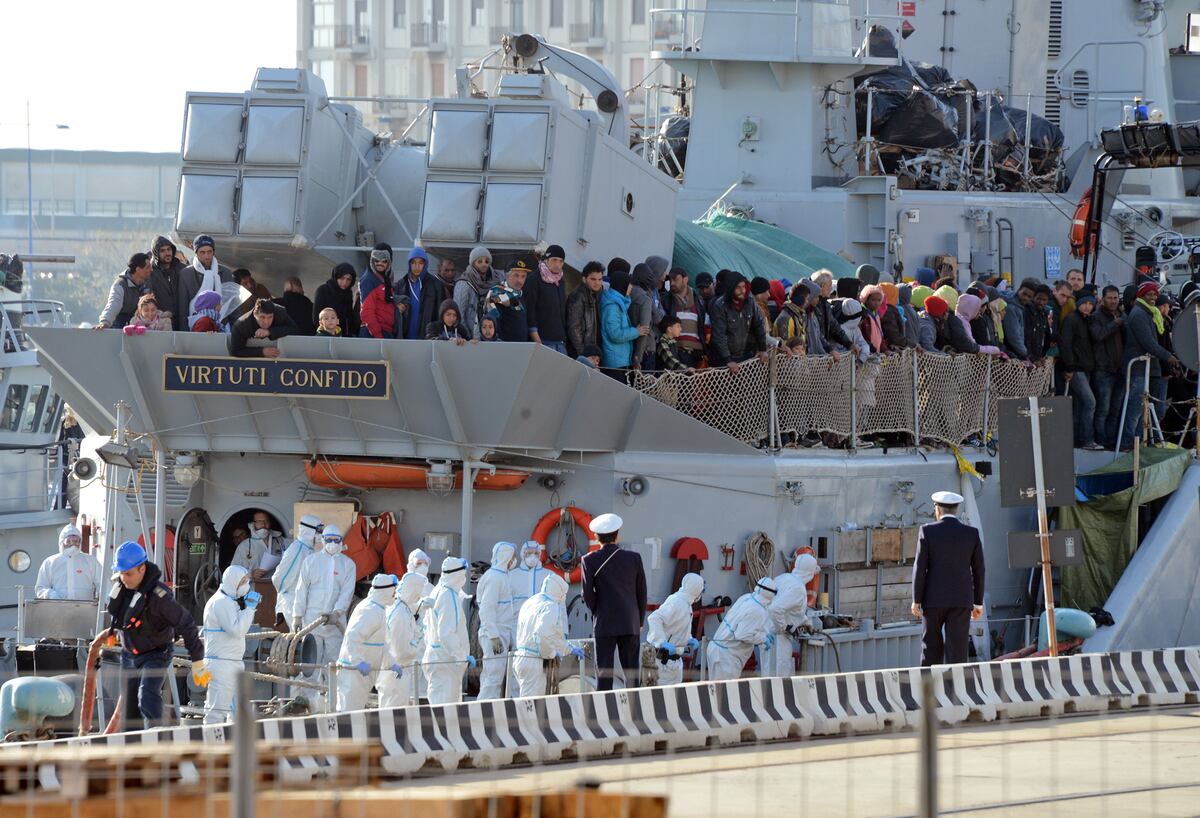
The delivery of humanitarian aid into Iran is not a failure of intent but a failure of financial and logistical throughput. While international law ostensibly protects "humanitarian trade"—specifically food, medicine, and medical devices—the reality is a fragmented corridor where risk-averse financial institutions and complex secondary sanctions create a de facto embargo. Scaling relief shipments requires moving beyond the "aid as charity" mindset and into a "supply chain optimization under extreme constraint" framework. Success in this environment is dictated by three variables: the stability of the humanitarian banking channel, the transparency of the end-user verification system, and the mitigation of the "compliance chill" that halts 90% of potential shipments before they reach a port.
The Tri-Pillar Obstruction Model
The current bottleneck in Iranian aid delivery is defined by three distinct points of failure. Understanding these is the first step in engineering a workaround that maintains regulatory integrity while increasing volume.
1. The Financial Intermediate Gap
The primary barrier is not the physical movement of goods but the movement of capital. Even when a transaction is legally exempt under the Office of Foreign Assets Control (OFAC) General Licenses, global banks frequently refuse to process payments. This stems from a cost-benefit analysis where the modest fees from a humanitarian wire transfer do not offset the systemic risk of a multi-billion dollar fine for a "know your customer" (KYC) oversight.
- The SHTA Precedent: The Swiss Humanitarian Trade Arrangement (SHTA) was designed to solve this by providing a "white channel." However, its utility is limited by the requirement for exhaustive data sharing that many Iranian entities cannot or will not meet, and the lack of liquidity within the channel itself.
- Currency Volatility: The Rial’s fluctuation against the Euro and Dollar creates a "valuation trap." If a shipment is negotiated in January but delivered in June, the local purchasing power may have eroded by 30%, making the delivery economically unsustainable for the local distributor.
2. The Verification Asymmetry
International aid groups face an information vacuum. To satisfy Western regulators, an NGO must prove that the end recipient of a medical shipment is a civilian hospital and not a dual-use facility or an entity tied to the Islamic Revolutionary Guard Corps (IRGC).
- Data Fragmentation: There is no centralized, real-time registry of "cleared" Iranian end-users that is accepted by both the Central Bank of Iran (CBI) and Western treasury departments.
- The Due Diligence Tax: The cost of verifying a single shipment can exceed the value of the goods themselves. This forces smaller aid groups out of the market, leaving only a few large, heavily bureaucratic organizations that move too slowly to address acute crises like drug shortages or localized natural disasters.
3. The Logistical Risk Premium
Shipping lines and insurance underwriters apply a "sanctions premium" to any vessel docking at Bandar Abbas or Imam Khomeini Port.
- Secondary Sanctions Risk: Ship owners fear that if they carry humanitarian corn today, their vessel will be "tainted" and banned from US or EU ports tomorrow, even if the cargo was legal.
- Insurance Scarcity: Protection and Indemnity (P&I) clubs often exclude Iranian waters from standard coverage, forcing aid groups to seek specialized, high-cost "carve-out" policies.
Quantifying the Compliance Chill
The "Compliance Chill" is the psychological and operational withdrawal of private sector actors from legal trade. It operates as a hidden tax on every ton of aid. The mechanism is a feedback loop: as more banks exit the Iranian market, the remaining banks increase their scrutiny, leading to longer delays, which in turn increases the "holding cost" of the cargo.
In a standard international trade environment, the time-to-clearance for a Letter of Credit (LC) is 3 to 5 days. For Iranian humanitarian trade, this timeline stretches to 90 or 180 days. This duration is not just an administrative burden; it is a biological risk when dealing with temperature-sensitive oncology medications or insulin. The degradation of the cold chain during these delays renders a significant percentage of aid useless upon arrival.
Structural Optimization of the SHTA and INSTEX Models
To boost relief shipments, we must move away from the failed INSTEX (Instrument in Support of Trade Exchanges) model, which attempted a "mirroring" system of credits and debits that never reached critical mass. Instead, the focus must shift toward a Liquidity-Injection Framework.
The Centralized Clearing House Hypothesis
The most effective way to scale shipments is to establish a non-profit, third-party clearing house that assumes the compliance liability. This entity would function as a "Regulatory Firebox":
- Pre-Vetting: The clearing house maintains a permanent, audited database of Iranian hospitals and NGOs.
- Liability Shielding: By partnering with a major regulator (such as OFAC or the EU’s DG FISMA), the clearing house issues "Comfort Letters" for specific transactions, providing legal cover for commercial banks.
- Liquidity Buffer: The house holds a reserve of hard currency (Euro or CHF) to pay suppliers immediately, decoupled from the slow and risky Rial-conversion process.
This removes the "First-Mover Disadvantage" where the first bank to process a transaction bears 100% of the audit risk.
The Anatomy of the Pharmaceutical Shortage
The impact of these logistical failures is most visible in the Iranian pharmaceutical sector. While Iran produces approximately 97% of its medicines locally, it imports the Active Pharmaceutical Ingredients (APIs) and the advanced machinery required for production.
The shortage is therefore a "Tier 2" supply chain problem. Aid groups often focus on shipping finished products (pills and vials), which is a high-cost, low-volume strategy. A more efficient play involves the shipment of:
- High-Purity Precursors: Moving the raw chemicals needed for local production.
- Consumables: Vials, stoppers, and specialized filters that are frequently overlooked but are the actual bottlenecks in Iranian factories.
By shifting the focus from "Aid as a Product" to "Aid as an Industrial Input," the same dollar of humanitarian funding can result in a 10x increase in local medication availability.
Navigating the Dual-Use Dilemma
A significant portion of medical equipment—centrifuges, specialized pumps, and certain chemicals—is classified as "dual-use," meaning it has both medical and potential military or nuclear applications. This is where the bid to boost shipments often hits a hard ceiling.
Under current frameworks, a "Specially Designated Global Terrorist" (SDGT) listing can be triggered by even an accidental interaction with a blacklisted firm's subsidiary. To mitigate this, aid groups are adopting Blockchain-Enabled Traceability. By tagging crates with IoT sensors and recording every hand-off on a permissioned ledger, NGOs can provide regulators with an unalterable "chain of custody." This data-driven transparency is the only viable substitute for the trust that is currently missing in the geopolitical landscape.
Operational Limitations and Systemic Constraints
Even with perfect financial channels, the physical infrastructure within Iran presents a hurdle. The "Last Mile" problem in Iran is exacerbated by:
- Diesel Shortages: Despite being an oil producer, Iran's refining capacity is strained, leading to localized fuel crises that stop aid trucks.
- Internal Bureaucracy: The Iranian Ministry of Health and the Customs Administration often have conflicting requirements for labeling and inspection, creating "Port-Side Rot" where food and medicine expire while waiting for a stamp.
Strategic planning must account for these internal friction points by factoring in a 25% "efficiency loss" on all bulk shipments.
The Strategic Path Forward
The objective of increasing aid to Iran cannot be met through traditional advocacy or "raising awareness." It requires a technical overhaul of the trade finance architecture. The following maneuvers are necessary to move the needle:
- Establishment of "Green Port" Protocols: Designating specific berths in Oman or the UAE as dedicated humanitarian transshipment hubs. These hubs would perform all compliance checks before the goods enter Iranian waters, reducing the risk for the primary carrier.
- Standardization of the "Compliance Packet": Developing a universal set of KYC and end-user documents that are pre-approved by the US Treasury, the Swiss government, and the Central Bank of Iran. This eliminates the "Request for Information" (RFI) loops that currently freeze transactions for months.
- Pivot to "Micro-Transactions": Rather than attempting $50 million bulk shipments that trigger every red flag in the banking system, aid groups should move toward high-frequency, low-value shipments. These smaller tranches fit within the "Normal Business" profiles of mid-sized regional banks, bypassing the automated blocks triggered by large-scale transfers.
The future of Iranian humanitarian relief lies in the professionalization of the workaround. It is an exercise in high-stakes compliance engineering where the metric of success is not the amount of money raised, but the reduction in "Days-in-Transit" for life-critical cargo. Success requires accepting that the sanctions landscape is static and building a parallel, hyper-transparent infrastructure that can operate within its narrow margins.