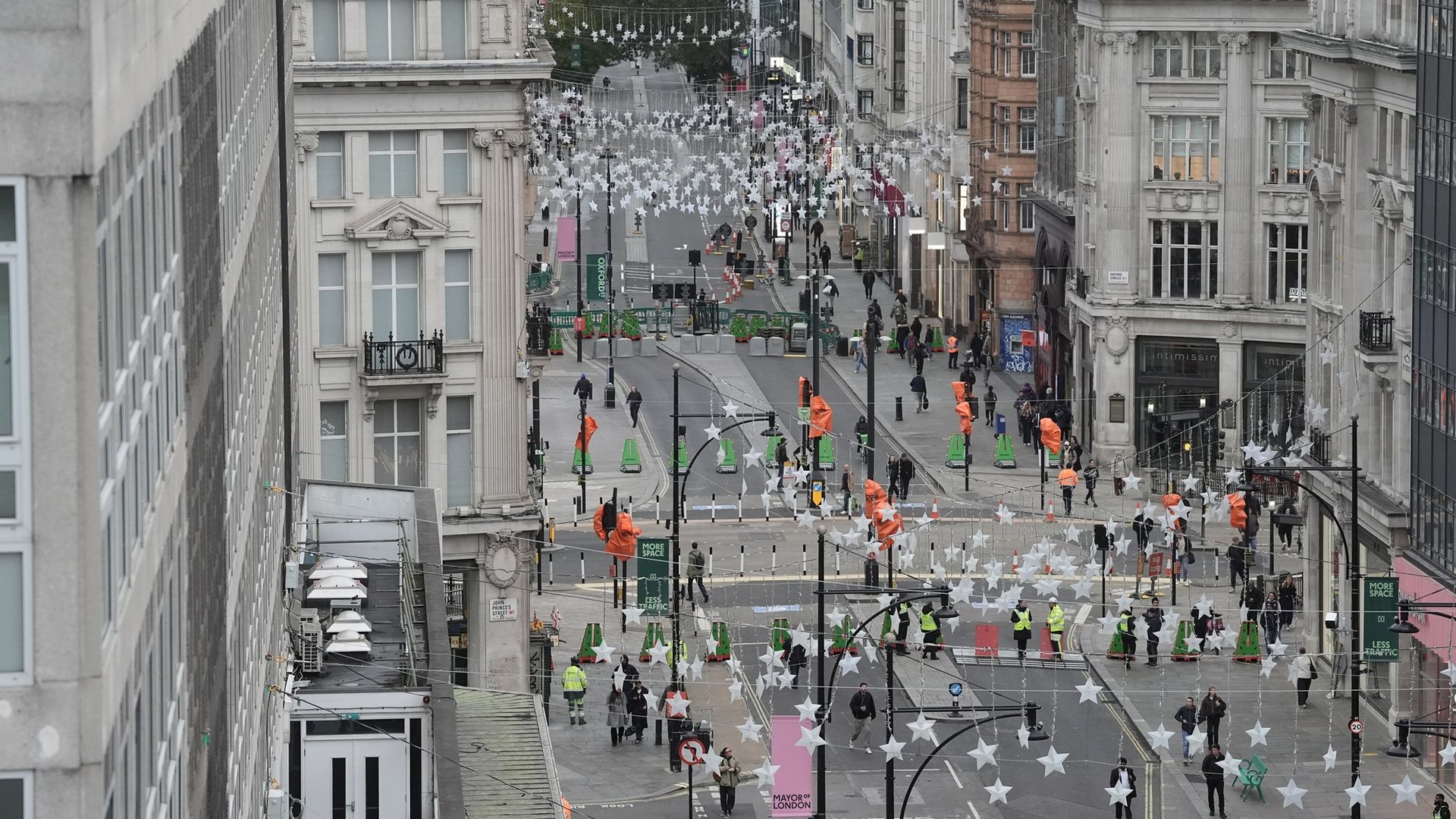
Walk down Oxford Street on a Saturday afternoon in 2024 and you risked losing a shoulder to a double-decker bus. Walk down it today and the diesel fumes are gone.
London has officially pedestrianised its most famous shopping stretch, ending decades of political hand-wringing, council vetoes, and half-baked traffic trials. City leaders called it a "truly momentous occasion for the capital." They're right. Not because removing red buses from a 1.1-mile stretch of tarmac is a miracle of civil engineering, but because London actually managed to push through a major urban overhaul without letting local bureaucracy kill it first. Meanwhile, you can explore similar developments here: What Most Coverage Missed About Trump's Norway Tirade and Nicki Minaj's Rally Appearance.
If you've lived in London or visited regularly over the past ten years, you know the drill. Every few years, a mayor promises to ban cars and buses from Oxford Street. Every few years, Westminster City Council, local residents' associations, and black cab lobbies team up to strangle the idea in its crib.
That gridlock is finally over. To explore the full picture, we recommend the excellent analysis by The Guardian.
Why Oxford Street Pedestrianisation Took Decades to Happen
To understand why this matters, you have to remember what Oxford Street had become by the early 2020s. It wasn't a world-class retail destination anymore. It was a polluted, overcrowded bottleneck where millions of pedestrians squeezed onto narrow pavements while hundreds of buses and taxis crawled past at walking speed.
Safety was a massive issue. Between 2015 and 2020, hundreds of collisions involving pedestrians occurred along the corridor. You couldn't step off the kerb to look in a shop window without hearing an air horn blast two feet behind your ear.
Meanwhile, the retail mix collapsed. Traditional flagship stores like Debenhams and Topshop shut down, replaced by an infestation of low-end American candy stores and souvenir shops. Footfall lagged behind pre-pandemic levels while nearby spots like Regent Street and Covent Garden thrived.
The core problem was governance. Under previous frameworks, Westminster City Council held effective veto power over changes to the road layout, even though Oxford Street functions as a national and international economic artery rather than a quiet residential lane. Local councillors worried about traffic displacement onto surrounding streets in Marylebone and Soho. Those concerns weren't imaginary, yet using them to freeze the entire street in amber was slowly killing the West End.
By establishing a Mayoral Development Area and transferring planning authority directly to City Hall, Mayor Sadiq Khan bypassed the local stalemate. That structural shift is the real reason you can now walk straight across the tarmac outside Oxford Circus without checking left and right three times.
What Actually Changed on the Street
Let's be clear about the geography, because plenty of headlines blur the details. The initial pedestrianisation focuses squarely on the central spine between Oxford Circus and Marble Arch—roughly 0.7 miles of the busiest retail real estate in Europe.
Private cars were already largely restricted during daytime hours, so the big visual shock is the absence of Transport for London (TfL) buses and black cabs. For decades, Oxford Street served as a major east-west bus corridor. Rerouting those lines onto parallel roads like Wigmore Street and Henrietta Place took years of traffic modelling.
Here is what the new layout looks like in practice:
- Zero through-traffic between Oxford Circus and Marble Arch during core operating hours, opening up the full width of the road to foot traffic.
- Pop-up seating, trees, and public art installations replacing the central asphalt lanes while permanent granite paving is phased in.
- Dedicated servicing windows overnight and early in the morning so delivery lorries can still stock flagship stores without blocking daytime shoppers.
- Step-free, level surfaces designed to make the street vastly easier to navigate for wheelchair users, parents with prams, and older Londoners.
Honestly, the immediate difference isn't just visual. It's acoustic. Removing dozens of idling diesel and hybrid buses drops ambient street noise dramatically. You can actually hold a normal conversation outside Selfridges without shouting.
The Winners and Losers of a Car-Free West End
Whenever a city rips up its transport map, somebody pays a price. Pretending otherwise doesn't help anyone.
The obvious winners are the major retailers and hospitality brands along the strip. Footfall analytics from similar European pedestrianisation projects—think Rue de Rivoli in Paris or Gran Vía in Madrid—consistently show that removing motor traffic boosts retail dwell time and spending. When people aren't rushing to escape exhaust fumes and crowded pavements, they browse. They buy coffee. They stay longer.
Major property owners like the Crown Estate and Grosvenor have already poured hundreds of millions of pounds into surrounding West End districts, and a revitalised Oxford Street protects those investments. Big brands like IKEA, which took over the old Topshop flagship at Oxford Circus, suddenly have a front door that matches their ambitions.
Now look at the friction points.
First, bus passengers face longer walks. If you rely on TfL buses to get right to the doorstep of your favourite shop, you now have to alight one or two blocks north or south and walk in. For younger commuters, that's a three-minute stroll. For people with mobility impairments who don't use wheelchairs, those extra hundred yards matter.
Second, black cab drivers are furious. The Licensed Taxi Drivers' Association argued fiercely against losing direct access to Oxford Street, pointing out that taxis provide vital door-to-door transport for disabled passengers who cannot easily use the Tube. City Hall introduced designated drop-off bays on side streets just off the main drag, though cabbies argue those bays fill up fast and add meter time in surrounding traffic.
Third, Marylebone and Fitzrovia residents are watching traffic sensors like hawks. Pushing buses onto Wigmore Street and Cavendish Square inevitably increases vehicle volume on secondary roads. TfL insists signal timing adjustments and low-traffic measures prevent gridlock, yet local community groups remain sceptical.
What Most People Get Wrong About Pedestrianising Major Streets
Whenever a city bans cars from a famous avenue, the same two myths pop up immediately. Both are wrong.
The first myth is that banning traffic kills local retail. Critics always claim shoppers won't visit if they can't arrive right outside in a car or bus. In London's West End, that argument falls apart on contact with reality. Over 90 percent of visitors to Oxford Street arrive via the London Underground, the Elizabeth line, or on foot. Almost nobody drives to Oxford Street to do their weekly shop. In fact, opening the Elizabeth line—which drops tens of thousands of passengers directly at Tottenham Court Road and Bond Street stations—made pedestrianisation essential. Without widening the pedestrian space, the pavements literally couldn't absorb the extra crowds.
The second myth is that pedestrianisation fixes a high street on its own. Taking away buses doesn't magically cure high business rates, online shopping competition, or tacky storefront leases. Westminster City Council spent years fighting rogue candy stores through trading standards raids and landlord pressure. Pedestrianisation gives legitimate retailers a reason to invest in flagship experiences again, though the street still needs strict curation and active management so it doesn't turn into an unregulated gauntlet of street performers and illegal peddlers.
How London Compares to Other Global Capitals
London wasn't ahead of the curve here. It was playing catch-up.
Paris transformed Rue de Rivoli into a bus, bike, and pedestrian corridor years ago, dramatically cutting air pollution and shifting the city's centre of gravity away from private cars. New York famously closed Times Square to vehicles back in 2009 under Mayor Michael Bloomberg; pedestrian injuries plunged and Times Square quickly jumped into the top tier of global retail rents. Madrid's transformation of Gran Vía widened pavements and restricted through-traffic, turning a choked highway into a showcase boulevard.
For a city that prides itself on global competitiveness, London's inability to fix a 1.1-mile shopping street was becoming embarrassing. Tourists stepped off the Elizabeth line at Bond Street expecting a premier European boulevard and walked straight into a wall of double-decker exhaust.
Catching up with Paris and New York wasn't optional if London wanted to keep its crown as Europe's retail capital.
What to Expect If You Visit Oxford Street Right Now
If you haven't been down since the barriers went up, adjust your routine before you head into Zone 1.
Don't check Google Maps for a bus that drops you directly outside Primark or John Lewis—those routes now run parallel to the main street. Use the Tube instead. Bond Street, Oxford Circus, and Tottenham Court Road stations all feed straight onto the pedestrianised zone, with the Elizabeth line offering step-free access from platform to street level at Bond Street and Tottenham Court Road.
Go mid-morning on a weekday if you want to actually see the architectural scale of the street. Oxford Street has stunning Edwardian and Victorian facades above the ground-floor shopfronts that nobody ever noticed before because everyone was staring at their feet to avoid tripping over kerbs.
Expect ongoing construction work over the coming months as temporary barriers and planters give way to permanent stone paving, upgraded lighting, and formal seating zones. Phases extending east toward Tottenham Court Road will follow once traffic data from the western core is reviewed.
If you're a Londoner who gave up on Oxford Street years ago—and plenty of us did—it's worth going back just to walk straight down the middle of the road without looking over your shoulder. Take the Elizabeth line to Bond Street, step out onto the open tarmac, and see how a capital city actually feels when it puts people ahead of traffic.