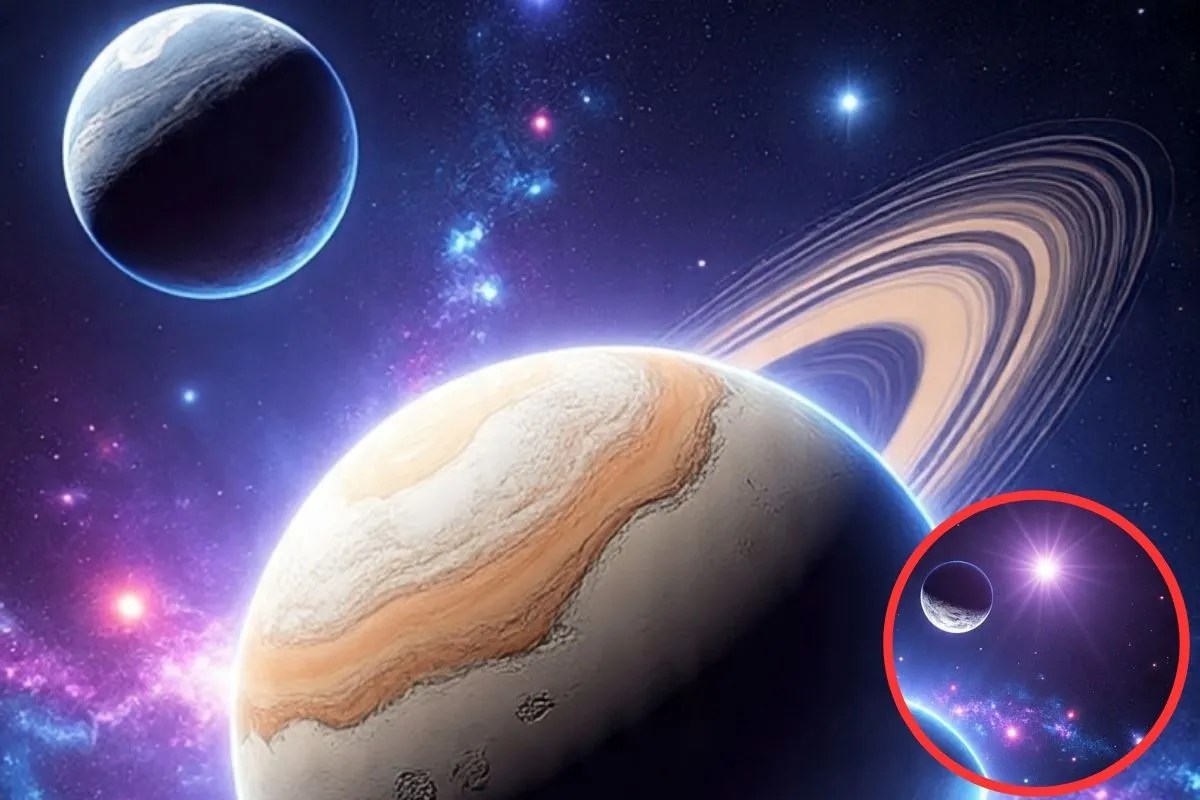
In the summer of 2006, a classroom in a small town looked exactly like every other classroom for the last seventy years. On the wall hung a faded poster of the solar system. At the very edge, past the gas giants and the ringed majesty of Saturn, sat a tiny, purple-shaded dot. Pluto. To the children in that room, Pluto wasn't just a rock; it was the underdog. It was the "little brother" of the cosmos, the icy sentinel guarding the gate to the great unknown.
Then, the world changed.
A group of astronomers met in Prague, raised their hands, and effectively erased that purple dot from the map of major planets. They didn't blow it up. They didn't move it. They simply redefined what it meant to belong. Suddenly, Pluto was a "dwarf." It was a celestial participation trophy.
The shift felt like a betrayal to a generation raised on the mnemonic "My Very Educated Mother Just Served Us Nine Pizzas." Now, she was just serving us nachos. But as the years passed, the scientific community began to realize that the decision to demote Pluto wasn't the end of a debate. It was the start of a quiet, intellectual rebellion that is currently reaching a boiling point at NASA and beyond.
The Day the Neighborhood Got Too Big
To understand why NASA scientists are pushing to bring Pluto back into the fold, we have to look at the mess we made when we tried to organize the universe. The 2006 definition of a planet required three things. A body must orbit the Sun. It must be spherical. And it must have "cleared the neighborhood" around its orbit.
That third rule is the sticking point. It’s a bit like saying a house isn't a house unless the owner has mowed every single blade of grass for three miles in every direction. Pluto lives in the Kuiper Belt, a crowded, chaotic highway of icy debris. Because Pluto shares its path with these cosmic hitchhikers, it failed the test.
But consider the absurdity of this logic. If you moved Earth—our vibrant, life-sustaining marble—out to Pluto’s orbit, Earth would also fail to clear that neighborhood. It wouldn't have the gravitational muscle to sweep away that much junk at such a vast distance. By the current definition, Earth would cease to be a planet the moment it stepped out of its comfortable inner-circle bubble.
A World With a Heartbeat
In 2015, the New Horizons spacecraft finally reached the edge of the map. For nine years, it had streaked through the dark, carrying the ashes of Clyde Tombaugh, the man who discovered Pluto in 1930. When the first high-resolution images beamed back to Earth, the "dry facts" of the mission evaporated.
What we saw wasn't a dead, cratered rock. It was a world of startling, haunting beauty.
There was a massive, nitrogen-ice glacier shaped exactly like a heart. There were mountains made of solid water-ice, towering thousands of feet into a thin, blue atmosphere. There were hints of a subsurface ocean, hidden beneath the frozen crust, whispering the possibility of alien chemistry.
Geologically, Pluto is more active and complex than Mars. It has weather. It has shifting tectonic plates. It has a moon, Charon, so large that the two of them dance around a common center of gravity like a pair of spinning skaters. When scientists like Alan Stern, the principal investigator of the New Horizons mission, looked at these images, they didn't see a dwarf. They saw a planet in every sense that matters to the human soul and the geological lens.
The label "dwarf planet" started to feel less like a scientific classification and more like a linguistic cage. In the minds of the public, and many researchers, "dwarf planet" sounds like "not quite a planet." It diminishes the importance of the world. It suggests that if a place isn't big enough to dominate its zip code, it isn't worth our wonder.
The New Manifesto for the Stars
The current debate isn't just about Pluto. It’s about a fundamental shift in how we perceive the hierarchy of the heavens. A group of planetary scientists is now proposing a "geophysical definition" of planethood. Their argument is simple: if it’s big enough to be round, and small enough to not be a star, it’s a planet.
Under this rule, the solar system wouldn't have eight planets. It wouldn't even have nine. It would have over a hundred.
This sends a shudder through the traditionalists. They worry that if we have 150 planets, the word loses its meaning. They fear a world where schoolchildren can’t memorize the names of the celestial choir. But why is our need for a tidy, eight-item list more important than the physical reality of these worlds?
Imagine a biologist saying, "There are too many types of dogs, so we're only going to call the top eight breeds 'dogs.' Everything else is a 'canine-like subspecies.'" It’s nonsensical. Diversity doesn't diminish a category; it enriches it. By expanding the definition, we acknowledge that the solar system is far more crowded, vibrant, and mysterious than the static posters on our classroom walls suggested.
The Invisible Stakes of a Name
You might wonder why this matters. Why spend years of energy and millions of dollars in research time arguing over a title?
Names are the way we assign value. When a celestial body is labeled a planet, it garners more funding, more public interest, and more spots on the manifest for future space missions. By keeping Pluto and its cousins in the "dwarf" category, we subconsciously relegate them to the "second tier" of exploration.
We are standing on the precipice of an era where we will discover thousands of planets around other stars. Many of them will be small. Many will be in crowded systems. If we cling to an outdated, Earth-centric definition of what a planet looks like, we will miss the forest for the trees. We will ignore the very worlds that might hold the secrets to how life begins in the dark.
The push to reinstate Pluto is a move toward scientific humility. It is an admission that the universe doesn't care about our neat little boxes.
The Long Road Home
There is a certain loneliness in the way we talk about the outer solar system. We treat it as an empty wasteland, a cold graveyard far from the warmth of the Sun. But the data from NASA tells a different story. It tells a story of a distant, frozen kingdom that is very much alive, boasting red snow and hazy sunsets.
If the "Pro-Pluto" faction wins this tug-of-war, the purple dot on the poster gets its dignity back. But the real victory won't be for Pluto. It will be for us. It will be a sign that we are finally ready to accept the universe as it is—vast, messy, and infinitely more populated than we ever dared to dream.
The debate continues to flicker in the halls of power and the observatories of the world. Each side has its charts and its logic. But every time someone looks up at the night sky and wonders what lies beyond the last visible light, they aren't looking for a "cleared neighborhood." They are looking for a world.
Somewhere, five billion miles away, a heart-shaped glacier is turning slowly in the dark, indifferent to our definitions, waiting for us to catch up.