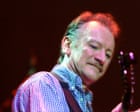
Macklemore launching a tour while loudly chanting free Palestine puts a spotlight on a tension that has simmered in the live music business for years. Artists who use a tour kickoff to take a hard geopolitical stand face a sharp trade-off between fan loyalty, promoter risk, and commercial reach. In a touring market driven by thin margins, advance ticket guarantees, and corporate sponsorships, public advocacy from the stage is rarely just a moral statement. It is a business calculation played out in real time across arenas, festival bills, and fan feeds.
Anyone who has spent decades watching the music industry knows that live performance has never existed in a vacuum. When an artist steps onto a stage at the start of a new run, every word spoken into the microphone carries weight far beyond the front row. Clips travel faster than setlists. A single chant or speech can define an entire leg of dates before the tour bus even clears the first city.
Why Tour Kickoffs Turn Political Fast
Tour launches are engineered for momentum. Promoters, booking agents, publicists, and crew members spend months lining up routing, production, insurance, and marketing spend so opening night feels like an event. When a high-profile act opens that cycle by shouting a political slogan like free Palestine, the moment immediately competes with—or overtakes—the music itself.
That dynamic has become more pronounced as social media algorithms reward outrage and certainty over nuance. A thirty-second clip pulled from a live show does not carry the full context of an evening. It strips away the song that came before it, the crowd's reaction in the room, and whatever broader message the artist intended.
Fans rarely experience a tour in isolation anymore. Many arrive having already seen debate online about the artist's stance. Some come specifically to see solidarity voiced out loud. Others stay home or sell tickets because they want escapism, or because they hold opposing views on the conflict. For an artist like Macklemore, whose catalog has long mixed mainstream pop appeal with socially charged themes, that split can be especially visible.
The Mechanics of Live Advocacy
Speaking from a stage differs sharply from posting a statement on social media. A post can be edited, deleted, or softened if backlash grows. A live vocal declaration happens in front of thousands of paying customers and dozens of working staff, with cameras and phones already recording.
From an industry standpoint, live advocacy introduces friction into a supply chain built on predictability. Independent and major promoters alike look at risk through numbers: advance sales, city-by-city demand, local community reaction, and potential pushback from venues or sponsors. A political flashpoint does not automatically derail a tour, yet it can make routing harder in certain markets or prompt brands to keep their distance.
At the same time, artists have long argued that silence is its own choice. Music history is filled with performers who used stages to protest wars, policy, and injustice, often taking heat in the moment even when later generations viewed them more kindly. The friction comes from the clash between artistic conviction and a commercial ecosystem that prefers smooth, friction-free rollouts.
How Fans Read Political Statements at Concerts
Audience reaction to political speech at a concert is rarely uniform. Even within a single arena, people buy tickets for different reasons. One listener may view a chant for a free Palestine as an urgent call for human rights and accountability. Another may feel alienated, exhausted by constant political division, or convinced the artist is oversimplifying a deeply contested conflict.
This divide creates a tricky balancing act for performers. If an artist backs down under pressure, core supporters may view the retreat as hypocrisy or cowardice. If an artist leans in harder, casual fans or brand partners may drift away.
Consider a hypothetical example to see how a promoter might weigh the math on a mid-sized theater run. Suppose a tour has twenty dates projected to average 2,500 tickets at an average gross of $65 per ticket. That puts gross ticket sales around $3.25 million before expenses. If a prominent political stance lifts die-hard demand by 8 percent in progressive markets but trims sales by 12 percent in more polarized cities, the net shift in ticket revenue alone could swing by tens or hundreds of thousands of dollars—before factoring in merchandise, VIP packages, or sponsorship pullbacks.
Numbers like that explain why behind-the-scenes conversations around tour messaging can get tense. Even when an artist fully funds their own production and accepts financial risk, other livelihoods are tied to the road. Lighting techs, sound engineers, drivers, openers, and local stagehands all depend on dates staying booked and venues staying full.
Authenticity Versus Performance
Audiences have sharp radar for what feels real and what feels performative. When an artist brings up a cause only when a tour starts or a release drops, critics often question the timing. When an artist has a longer track record of speaking out, supporters tend to treat the moment as consistent with their identity.
Still, consistency does not shield an artist from criticism. On topics as painful and polarizing as the Israeli-Palestinian conflict, almost every public statement draws pushback from multiple angles. Some critics argue that celebrity slogans flatten complex history into soundbites. Others argue that celebrities with large platforms have a responsibility to use their visibility regardless of pushback.
In the end, the crowd decides what a show feels like. A room where thousands of people chant together in unison can feel electric and unified to participants. Outside that room, the same moment can spark fierce arguments that follow the tour from city to city.
The Business Reality Behind the Mic
To understand why moments like Macklemore's tour kickoff draw so much industry attention, look at how modern touring actually makes money. For many recording artists today, live touring is the primary engine of income, far outweighing streaming royalties. That reality makes tour health critical to an artist's career and financial stability.
Ticket prices have climbed steadily over recent years, while production costs—trucks, buses, insurance, crew wages, and venue fees—have risen right alongside them. Margins are tighter than casual fans often realize. A tour does not need to be a catastrophe to hurt; even soft ticket movement in a handful of markets can squeeze profitability.
Against that backdrop, anything that polarizes the audience carries real weight. Brands that might otherwise back a tour with co-marketing, hospitality, or gear partnerships often hesitate when a campaign could become tied to geopolitical debate. Corporate risk committees prefer safe territory.
What Promoters and Venues Watch
Promoters and venues pay close attention to practical details once an artist makes a high-profile political statement. They look at advance ticket velocity after the news breaks. They watch whether local advocacy groups organize protests outside venues or praise the booking. They also consider security and crowd management if tensions run high in a given city.
Venues themselves occupy a middle ground. Most municipal arenas and commercial theaters operate under policies designed to keep events running safely and smoothly while avoiding unnecessary legal or political battles over speech. Unless an act crosses contractual or legal lines, venues generally let the artist perform and manage operations around it.
What changes more quickly is the marketing narrative. Instead of focusing primarily on new music, stage design, or album milestones, press coverage and online chatter zero in on the political clash. For a tour publicist, that can be a double-edged sword: massive earned media reach, paired with coverage that may alienate potential buyers who do not share the artist's view.
Why This Moment Resonates Now
A chant of free Palestine at the start of a tour hits a nerve precisely because global conflict and domestic polarization are colliding inside pop culture more visibly than ever. Fans no longer separate an entertainer's politics from their art the way some once tried to do. Buying a ticket or streaming a song is increasingly treated by listeners as a signal of alignment or tolerance.
That shift puts artists in a bind. Staying quiet invites accusations of indifference from activists and fans who demand moral clarity. Speaking out invites backlash, boycotts, and accusations of grandstanding from detractors. There is no neutral ground left once an artist steps into the spotlight on a contested issue.
For Macklemore, opening a tour with that message sets the tone before the opening riff even lands. It tells the audience where he stands and forces everyone watching—supporters, skeptics, promoters, and rivals—to react to a show that is already politically charged on night one.
Anyone tracking where live music goes next should watch the ticket sales and crowd dynamics across the first five to ten cities rather than the opening-night headlines alone.