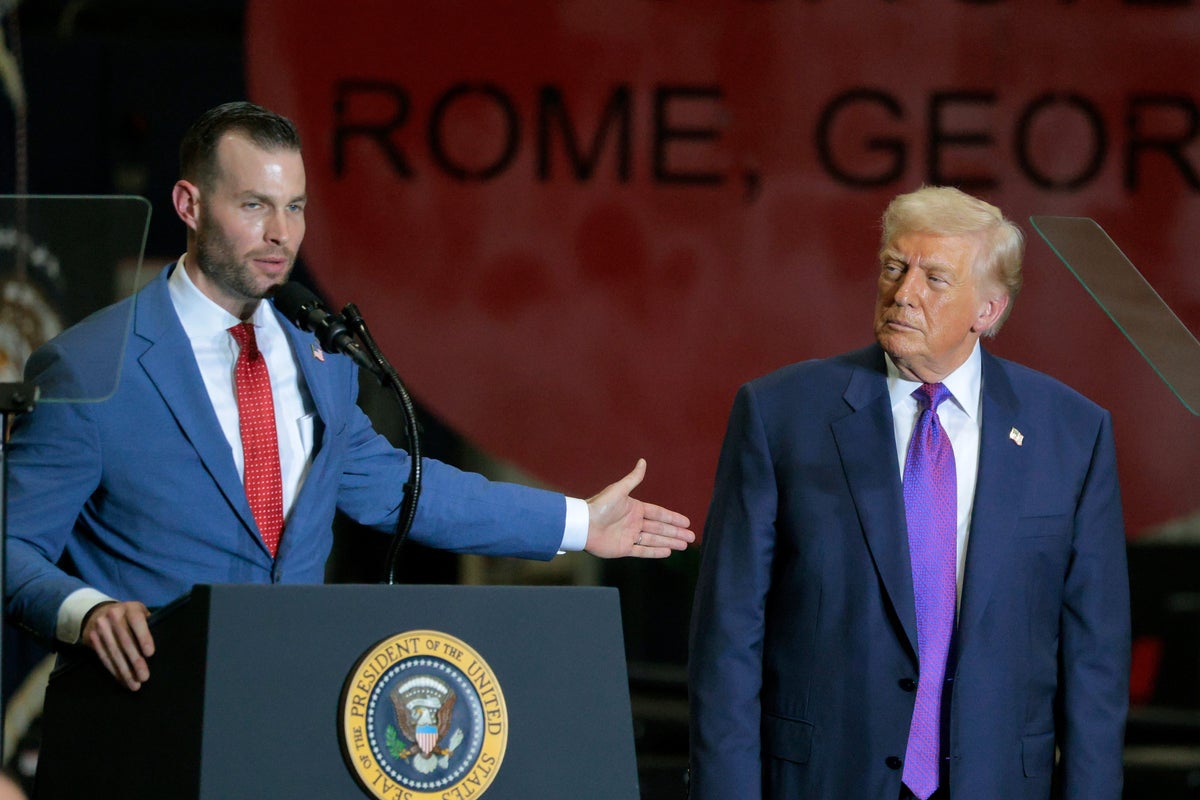
Republican Clay Fuller won the special election runoff for Georgia’s 14th Congressional District on Tuesday night, securing the seat vacated by Marjorie Taylor Greene. His victory over Democrat Shawn Harris provides the GOP a much-needed, if razor-thin, 218-seat majority in the House. While the immediate result keeps northwest Georgia in Republican hands, the story behind this transition reveals a fundamental shift in the party’s internal mechanics. This was not just a routine special election; it was the final chapter of a high-profile divorce between Donald Trump and one of his most loyal firebrands.
Fuller, a former district attorney and Air National Guard lieutenant colonel, will now serve the remaining months of Greene’s term. To keep the seat through 2027, he must pivot immediately to a May 19 primary. His win confirms that while the 14th District remains a deep-red stronghold, the appetite for the specific brand of "bomb-throwing" politics championed by Greene has hit a ceiling, even among the MAGA faithful. For a closer look into this area, we suggest: this related article.
The Breaking Point Of A Political Alliance
To understand why Clay Fuller is now a Congressman-elect, one must look at why Marjorie Taylor Greene is not. For years, Greene was the unofficial avatar of the Trump movement in Congress. That relationship dissolved with surprising speed over the winter of 2025.
The friction began with policy disagreements that grew too loud to ignore. Greene’s vocal criticism of Trump’s foreign policy stances and her public agitation regarding the release of the Jeffrey Epstein files created a rift that the former president eventually found intolerable. By January 2026, the alliance was dead. Trump withdrew his support, signaled he would back a primary challenger, and Greene resigned shortly thereafter. To get more information on this topic, in-depth analysis can be read on TIME.
This created a vacuum in a district that stretches from the suburban edges of Atlanta up to the Tennessee line. It is a region that demands conservative purity but, as the results suggest, is becoming weary of the constant internal friction that Greene’s tenure invited.
The Trump Endorsement As A Filter
In the crowded initial field of 17 candidates in March, the race was a chaotic scramble for the "America First" mantle. Trump’s endorsement of Fuller in February functioned as a powerful filter. By tapping a candidate with a background as a prosecutor and a military officer, Trump wasn't just picking a winner; he was selecting a different archetype of loyalty.
Fuller is a White House Fellow alumnus who served under the first Trump administration. He is a man of the system who pledges to fight for the movement from within the rules, rather than by burning the rulebook. During a March 23 debate, Fuller stated he found "no issue" on which he disagreed with the president. This total alignment was his primary selling point to a base that felt burned by Greene’s recent "apostasy."
Shawn Harris, the Democratic challenger, attempted to capitalize on this by painting Fuller as a man who had "sold his soul." Harris, a retired general and cattle farmer, ran as a "dirt-road Democrat," hoping to peel off moderate Republicans who were tired of the national circus.
Shrinking Margins In Red Territory
Despite Fuller’s victory, the data from Tuesday night contains a warning for the GOP. Harris lost to Greene by nearly 30 percentage points in 2024. In this special runoff, while official tallies are still being finalized, the margins have tightened significantly.
Democrats are already framing the narrowed gap as a "moral victory," suggesting that the post-Greene GOP is vulnerable in ways it hasn't been in a decade. Harris’s performance suggests that a segment of the electorate in northwest Georgia is looking for stability over grievance.
Fuller’s campaign dismissed this narrative bluntly. In a statement following the projected win, the campaign noted that there are no moral victories in a House where every single vote is required to pass legislation. With a 218-214 split, Fuller is not just a freshman representative; he is a vital component of the Republican leadership’s ability to govern.
The Long Road To January
Clay Fuller’s celebration will be brief. Because this was a special election to fill a vacancy, he is essentially jumping onto a treadmill already moving at top speed.
- May 19: Fuller faces a party primary for the full two-year term.
- June 16: A potential primary runoff if no candidate clears the 50% threshold.
- November: The general election where he will likely face Harris again.
The district’s 10 counties—including Floyd, Whitfield, and Polk—are among the most conservative in the country. However, the fatigue of constant campaigning and the memory of the Greene-Trump fallout may impact turnout in the coming months.
Fuller’s challenge is to prove he can be the "America First" fighter he promised to be without the theatrical baggage that led to his predecessor’s exit. He enters a House where the Republican majority is so slim that a single defection or a missed flight can tank a floor vote.
The era of Marjorie Taylor Greene in the 14th District has ended, replaced by a prosecutor who promises the same goals with a very different set of tactics. Whether the voters of northwest Georgia stay energized for this more disciplined version of the movement will be the defining question of the 2026 midterms.
Fuller heads to Washington this week to be sworn in. He carries the weight of a party that cannot afford to lose another seat and a president who expects absolute, unwavering concurrence.