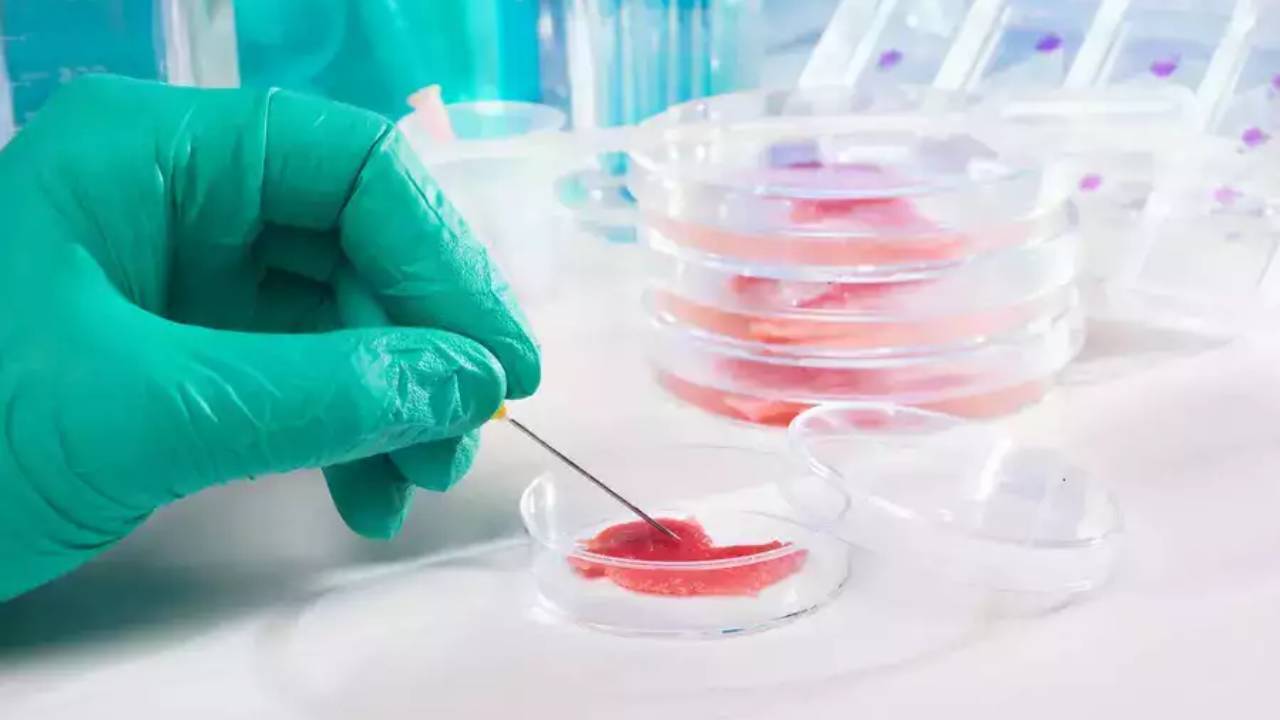
Scientists make cells from an 80-year-old donor appear young in a petri dish every week now. Headlines scream about reversed clocks. Investors wire checks. And biology does not care about a single press release.
Let's be honest about what happened when researchers coaxed aged human cells back toward a youthful profile in vitro. They changed how the cells looked and behaved on a clock assay or transcriptional readout. They did not turn an 80-year-old body into a 25-year-old body. Conflating an in vitro youthful phenotype with systemic human rejuvenation is the oldest con in longevity biotech. You might also find this related story interesting: Chinese Households Are Not Spending Like Americans on Healthcare.
I have watched venture syndicates light tens of millions of dollars on fire chasing a biomarker that moved three percent on a microplate. Founders present a slide with a downward-sloping methylation curve and talk like they just bottled Ponce de Leon's spring. Meanwhile, the organism holding those cells still has stiffened arteries, calcified valves, chronic low-grade inflammation, degraded extracellular matrix, and a lifetime of somatic mutations.
You cannot spreadsheet your way out of thermodynamics by smoothing one wrinkle on the curtain. As extensively documented in recent reports by National Institutes of Health, the results are significant.
The Lazy Consensus Around Cellular Age Reversal
The lazy consensus goes like this: aging is driven by information loss or epigenetic drift, reset the epigenetic clock or restore a youthful gene expression signature in old cells, and voila—you have cracked aging.
That story is clean. It fits on a pitch deck. It is also dangerously incomplete.
First, define your terms before someone sells you a fairy tale. Cellular rejuvenation in a lab dish usually means shifting a set of markers—such as DNA methylation clocks, transcriptomic age predictors, mitochondrial membrane potential, or clearance of senescence markers—toward values typical of younger cells. Sometimes it uses partial reprogramming via Yamanaka factors (OCT4, SOX2, KLF4, MYC), chemical cocktails, or targeted gene expression tweaks. Sometimes it simply selects or restores a more proliferative, energetic state in culture.
Systemic longevity, by contrast, is the extension of healthy lifespan—healthspan—in a complex, multi-organ organism with an immune system, vascular network, microbiome, and mechanical load-bearing tissues.
A cell sitting in warm, nutrient-rich media bathed in controlled oxygen and growth factors is not a fibroblast wedged inside the fibrotic heart of an octogenarian. In the dish, you remove the neighborhood. In a living human, the neighborhood is half the disease.
Consider what happens in an 80-year-old donor's body even if you make every parenchymal cell transcribe genes like a college sophomore. Advanced glycation end-products cross-link collagen fibers in the arterial wall. Elastin breaks down and rarely rebuilds cleanly over decades. Amyloid or tau aggregates disrupt neural circuits. Thymic involution has already shrunk naive T-cell output over decades, leaving an immune repertoire skewed toward exhaustion and inflammaging.
Rewinding a cell's transcriptional profile does not magically un-crosslink decades of glycated matrix or restore a shrunken thymus on its own. Calling a youthful cellular readout "advancing aging research" is fair only if you mean basic mechanistic discovery. Calling it a bridge to human age reversal next Tuesday is pure theater.
Why "Appearing Young" Is a Trap in Aging Biology
Here is the part most coverage skips because nuance kills click-through rates: appearing young is not the same as functioning safely over time.
Take partial cellular reprogramming. When you push mature cells backward along the developmental gradient using reprogramming factors, you are tugging on the same machinery that builds embryos—and drives tumors if pushed too far or too long. Even transient expression carries real risks: loss of specialized cell identity, dedifferentiation, genomic instability, or oncogenesis if a subset of cells slips past the guardrail.
Think about that trade-off. A cell that looks younger because it turned on developmental or proliferative programs might divide faster or clear debris better in a dish. Inside a human liver, lung, or brain, an improperly reset cell can lose its day job or become a seed for pathology.
Imagine a scenario where a partial reprogramming therapy successfully resets the epigenetic clock of aged hepatocytes in a mouse by 40 percent. On paper, the clock says the liver is middle-aged. Yet if ten percent of those cells transiently lose metabolic specialization during the reset, lipid handling wobbles, or a single mutated clone gains a growth advantage over two years, your "younger" organ just traded long-term stability for short-term biomarker cosmetics.
Biomarkers are maps, not territory. When Goodhart's law hits biology—when a metric becomes a target—it ceases to be a good metric. If an intervention moves a methylation clock without improving functional resilience, stress resistance, or disease-free survival in a whole organism, celebrate the lab finding and keep your wallet closed.
People Also Ask: The Questions Everyone Gets Wrong
"Does making old cells look young mean humans will soon reverse aging?"
No. That is a category error. Moving an aging clock or restoring a youthful gene signature in isolated cells—or even in a specific tissue in a short-lived rodent—is miles away from safe, durable, multi-system rejuvenation in humans. Mouse lifespans are roughly two to three years; human lifespans span eight to ten decades with vastly more complex tumor suppression, vascular remodeling, and immune history. Anyone promising human age reversal from an 80-year-old donor cell assay is selling hope on credit.
"Are epigenetic clocks proof that aging is reversible?"
Epigenetic clocks—pioneered and popularized by figures like Steve Horvath alongside contributions from researchers such as Morgan Levine, Vadim Gladyshev, and epigenetic reprogramming pioneers like Shinya Yamanaka and Juan Carlos Izpisua Belmonte—are remarkable statistical and biological tools. They show that DNA methylation patterns correlate strongly with chronological age and mortality risk, and that certain interventions can shift those patterns.
They are not a master switch that controls every axis of aging. Many clocks are trained to predict chronological age or all-cause mortality statistical risk, not direct causal mechanisms of every tissue failure. A clock moving backward tells you a correlated pattern shifted. It does not automatically prove that causal damage across all hallmarks of aging was repaired.
"Why do headlines always exaggerate cell rejuvenation studies?"
Because "Researchers observe transient shift in age-associated methylation signatures in cultured primary fibroblasts from elderly donors" doesn't pay salaries. "Scientists turn back the clock on old cells" does. Media incentives reward certainty over calibration, and founders rarely correct inflated headlines when those headlines raise valuations.
Where the Heavy Hitters Actually Agree (And Where They Clash)
If you strip away the hype, serious geroscientists—from cell biologists studying senescence and proteostasis to evolutionary biologists tracking comparative longevity across species—share more common ground than Twitter threads suggest.
Most agree that aging is multi-factorial. You have genomic instability, telomere attrition, epigenetic alterations, loss of proteostasis, disabled macroautophagy, mitochondrial dysfunction, cellular senescence, stem cell exhaustion, altered intercellular communication, chronic inflammation, and extracellular matrix stiffening. Pick any single axis and claim it explains everything, and you will run into a wall in another organ system.
Where the real debates live is causal hierarchy and intervention timing:
- Upstream vs. downstream: Is epigenetic information loss a primary driver that can be reset, or is epigenetic drift largely a downstream readout of metabolic stress, DNA damage, and inflammatory signaling? If it is mostly downstream, resetting the clock without fixing the upstream stressor is like wiping soot off a sensor while the stove keeps smoking.
- Transient reset vs. permanent identity: How narrow is the therapeutic window for partial reprogramming across different cell types? Neurons, cardiomyocytes, hematopoietic stem cells, and epithelial cells do not all tolerate dedifferentiation pressure equally.
- Cell-autonomous vs. systemic: Even if you rejuvenate a cell's internal state, does its microenvironment—cytokines, metabolites, mechanical stiffness, vascular perfusion—immediately pull it back toward an aged state once treatment stops?
I have seen teams treat a transient pulse of reprogramming like a permanent upgrade, only to watch cells drift right back to their baseline profile once the stimulus ended. Biology has inertia. Fighting inertia takes sustained, well-titrated engineering—or fixing the environment alongside the cell—not a single flashy experiment.
The Downsides of Taking a Contrarian Stance
Being contrarian in longevity isn't a free pass. It carries real blind spots if you get smug.
First, dismissing early mechanistic work as "just a biomarker" can blind you to a real breakthrough. Every transformative medicine once looked like a narrow lab trick with caveats. Sometimes a weird cellular shift is the first clue to a pathway nobody thought to touch.
Second, over-indexing on complexity can breed nihilism. If you argue that extracellular matrix, immunity, mutations, and epigenetics are all entangled, it is easy to conclude nothing can move the needle meaningfully. That is false. Preventive cardiology, lipid lowering, blood pressure control, smoking cessation, vaccination, metabolic health, and resistance training already move human healthspan and survival far more reliably than any experimental cellular clock trick on the market today.
Third, skepticism toward hype does not excuse ignoring genuine progress in basic cell biology. Understanding how an 80-year-old cell retains plasticity—or why certain cells resist reprogramming—teaches us how human tissues hold onto identity across a lifetime. That knowledge has real value even if it never delivers a fountain of youth.
What You Should Actually Do Instead of Chasing Clock Headlines
If you care about living longer and staying sharp, stop reading cell-rejuvenation headlines like they are investment memos or personal health protocols. Treat them as basic science curiosity.
- Audit the claim for function, not just youth markers. Whenever you read about "rejuvenated" cells, ask three questions: Was this in vitro or in vivo? Did actual physiological function improve? And what happened to safety, tumor risk, or durability after stopping the intervention?
- Prioritize high-evidence levers that already bend curves. ApoB/LDL control, blood pressure management, glycemic stability, cardiorespiratory fitness, progressive strength training, sleep regularity, and avoiding tobacco or heavy alcohol are boring. They also have decades of human outcome data behind them.
- Watch clinical translation, not pre-clinical metaphors. Real progress in geroscience will show up in rigorous safety data, functional endpoints in aging models, and carefully designed human trials targeting specific age-related pathologies—not in a viral graphic of a smiling cell.
- Keep your skepticism calibrated. Do not fall for miracle cures sold in clinics or supplement stacks claiming "cellular reprogramming." Equally, don't sneer at foundational lab work that is simply trying to map how aging works under the hood.
Making old cells look young in a dish proves cells have more plasticity than dogmatists once believed. It does not prove we are curing aging. Until a therapy proves it can safely restore function in living, complex organisms without trading one disease for another, the clock on the wall is still ticking.