Artificial intelligence cannot teach a child how to think, and Malaysia’s aggressive push to wire its public schools with generative software is running straight into the brick wall of cognitive reality. While policymakers in Putrajaya celebrate hardware rollouts, digital learning portals, and vendor partnerships as proof of regional leadership, the actual mechanics of human learning remain stubbornly analog. Critical thinking requires friction, struggle, and the slow, uncomfortable process of connecting disparate ideas without a safety net—the exact cognitive effort that modern AI tools are engineered to eliminate.
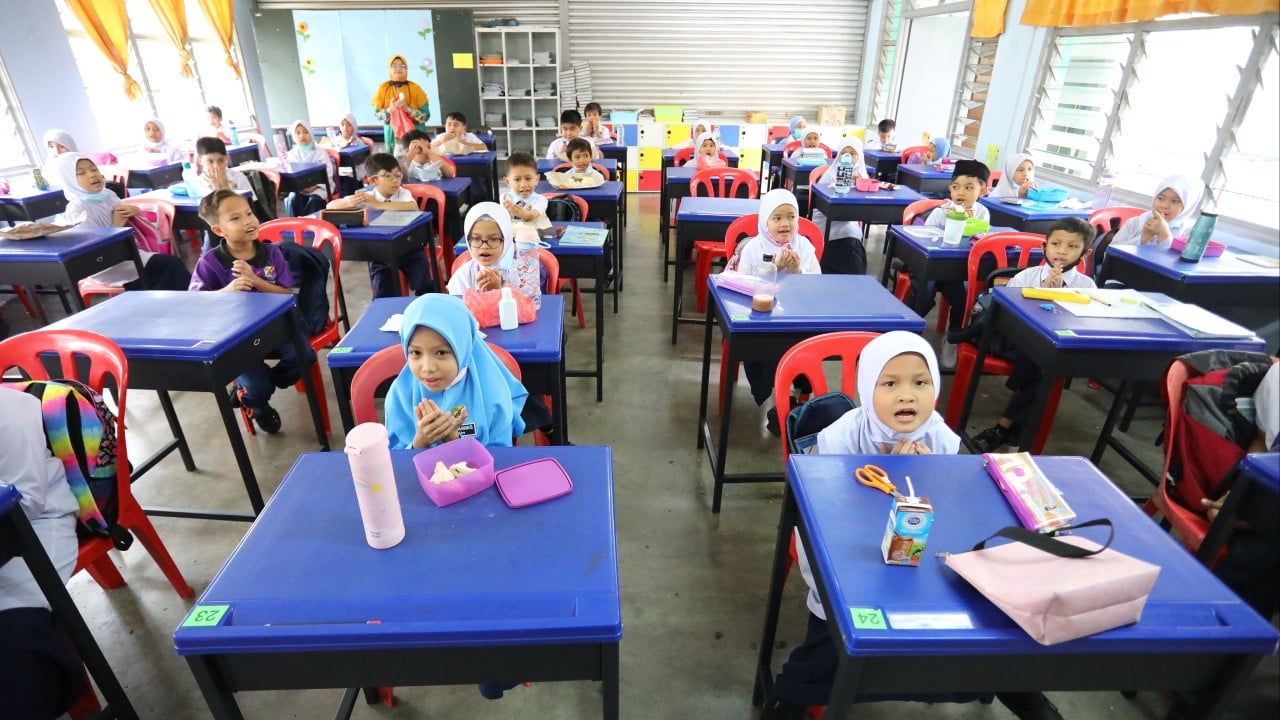
This disconnect is not merely a philosophical debate for academic conferences. It is playing out in real time across thousands of Malaysian classrooms, from urban secondary schools in the Klang Valley to rural primary outposts in Sabah and Sarawak. The Ministry of Education has staked enormous political capital and public funds on its Digital Education Policy, betting that early exposure to artificial intelligence will future-proof the national workforce and pull the country out of the middle-income trap. Yet beneath the glossy press releases and ribbon-cutting ceremonies lies a familiar, troubling pattern that has haunted education technology for three decades. Hardware arrives before pedagogy. Software licenses are signed before teachers are trained. And the fundamental question of whether these tools actually improve student reasoning gets buried under metrics measuring screen time and login rates.
The Architecture of Cognitive Offloading
To understand why Malaysia’s classroom tech push faces such a steep uphill climb, you have to look at what large language models actually do when placed in front of a thirteen-year-old. They do not tutor. Unless strictly constrained by custom software architecture, a standard generative AI model acts as an answer engine.
Consider a hypothetical example of a Form 3 student in Penang assigned to analyze the economic factors behind the decline of the Malacca Sultanate. In a traditional classroom, that student has to read primary or secondary texts, weigh conflicting historical interpretations, structure an argument, and wrestle with grammar to express it. With an unguarded AI tool open on a browser tab, the student types a single prompt and receives a structured, five-paragraph essay in four seconds. The task is complete. The teacher gets a clean submission. Cognitive offloading has occurred, and the student’s brain has bypassed the exact neural heavy lifting required to build analytical stamina.
Education researchers have documented this phenomenon across earlier waves of classroom technology, from graphing calculators to search engines, yet generative AI operates on a completely different scale. Previous tools automated calculation or information retrieval. Generative models automate synthesis and expression. When a machine handles the synthesis, the student never learns how to spot a logical fallacy, how to evaluate weak evidence, or how to tolerate the frustration of not knowing an answer right away. You do not build muscle by watching a forklift carry the weights.
The Ghosts of 1BestariNet and Frog VLE
Veteran observers of Malaysia’s education sector view the current AI enthusiasm with a heavy dose of skepticism because they have seen this movie before. In 2011, the government launched the massive 1BestariNet project, a multi-billion-ringgit initiative designed to bring high-speed internet and the Frog Virtual Learning Environment to roughly 10,000 schools nationwide. The vision was intoxicating. Every student and teacher would inhabit a unified digital ecosystem, collaborating across borders and modernizing Malaysian pedagogy overnight.
The reality was far messier. By the time the project came under scrutiny from the Public Accounts Committee and the Auditor-General, the gap between ambition and execution had become impossible to ignore. Rural schools struggled with spotty connectivity that rendered cloud-based platforms useless. Teachers, already buried under administrative paperwork, treated the virtual learning environment as another bureaucratic box to tick rather than an organic teaching aid. Devices sat locked in storage rooms because schools lacked the technical support staff to maintain them or the spare budgets to replace broken screens.
When the current administration pivots toward AI integration, it inherits the exact same structural bottlenecks. Connectivity across East Malaysia remains deeply uneven, creating a two-tier system where urban students experiment with advanced cloud tools while rural peers wait ten minutes for a basic webpage to load. Furthermore, the DELIMa (Digital Educational Learning Initiative Malaysia) platform, which serves as the current backbone for digital resources and AI integrations, still relies heavily on the willingness and digital fluency of individual educators. Without solving the foundational issues of bandwidth, device maintenance, and teacher workload, layering sophisticated AI tools onto the system is like installing a jet engine on a chassis with flat tires.
The Teacher Bottleneck Nobody Budgets For
Ask any seasoned educator in Kuala Lumpur or Johor Bahru about the AI rollout, and the conversation quickly shifts from technology to time. Malaysian teachers already shoulder one of the heaviest non-teaching administrative loads in the region, juggling data entry, co-curricular reporting, and constant curriculum adjustments. Expecting them to suddenly become prompt engineers, AI ethics moderators, and custom-bot builders without stripping away existing bureaucratic duties is pure fantasy.
Training programs offered during rollout phases often suffer from a fatal flaw. They focus on tool mechanics rather than pedagogical redesign. A two-day workshop might show a teacher how to generate a multiple-choice quiz or a lesson plan using a commercial AI assistant. That saves the teacher thirty minutes of prep work, which is genuinely useful. However, it does nothing to teach that educator how to redesign an assignment so that students cannot simply cheat their way through it with a chatbot, nor does it show how to use AI as a Socratic sparring partner that forces students to defend their reasoning.
There is also a quiet, understandable anxiety among the teaching ranks. Many educators do not feel confident evaluating the accuracy of AI outputs, particularly when dealing with localized Malaysian context, Bahasa Melayu nuances, or specific historical curricula. Large language models routinely hallucinate facts, flatten cultural subtleties, and default to Western-centric framing. If a teacher lacks the deep subject-matter mastery or the confidence to challenge a confident-sounding AI summary, the machine becomes the ultimate authority in the room. That dynamic erodes the human mentorship at the heart of real education.
The Illusion of Personalized Tutoring
Proponents of Malaysia’s edtech push frequently lean on a seductive promise. They argue that AI will finally deliver personalized learning at scale, acting as a patient, one-on-one tutor for every child in a crowded classroom of forty students. On paper, the logic seems airtight. A struggling student gets extra practice problems tailored to their exact weak spots, while an advanced student moves ahead without waiting for the rest of the class.
In practice, this vision collides with the messy psychology of adolescence. Personalized tutoring software only works when the learner possesses high intrinsic motivation and self-regulation. An adult software developer learning a new coding language will happily use an AI tutor to debug their own mistakes because they want to master the skill. A fifteen-year-old who is bored, distracted, or anxious about failing the Sijil Pelajaran Malaysia (SPM) examination has a completely different incentive structure. Their immediate goal is rarely deep conceptual mastery. Their goal is getting the homework done so they can go play mobile games or talk to their friends.
When you hand an unmotivated student an infinitely patient AI assistant, the student quickly figures out how to game the system. Even specialized educational wrappers—bots explicitly instructed not to give away the final answer—can be bypassed with simple conversational nudges. Worse, adaptive learning algorithms often narrow a student's intellectual diet, feeding them bite-sized, gamified micro-tasks that optimize for short-term test scores while starving them of the sustained, deep reading required to comprehend complex arguments.
What the Data Actually Says About Classroom Tech
The global track record for massive classroom technology interventions should give Malaysian policymakers serious pause. Across multiple international assessments, including studies analyzed by the OECD using PISA (Programme for International Student Assessment) data, the correlation between heavy classroom device usage and improved academic performance is weak at best, and frequently negative. Countries that poured billions into one-to-one laptop or tablet initiatives without fundamentally upgrading teacher quality and curriculum rigor saw flat or declining reading and math scores.
Look at Sweden, a nation that aggressively digitized its classrooms over the past decade, replacing physical textbooks with tablets and digital learning portals from primary school onward. By 2023, Swedish authorities reversed course, halting mandatory digital testing for young children and allocating millions of euros to bring physical books and handwriting back into schools. Neuroscientists and educators there realized that reading on screens encourages skimming rather than deep comprehension, and that typing notes bypasses the motor-memory pathways activated by writing with a pen on paper.
Malaysia risks repeating Sweden’s mistake at the exact moment the rest of the developed world is beginning to hit the brakes. In international benchmarks, Malaysian students already face well-documented challenges in foundational literacy, numeracy, and higher-order thinking skills (KBAT). Introducing generative AI into classrooms where students have not yet mastered basic reading comprehension or structured writing is fundamentally backward. You cannot use AI to augment critical thinking if the baseline thinking skills were never built in the first place.
The Vendor Trap and Sovereignty Risks
Follow the money behind any major education technology push, and you will find aggressive lobbying from global tech giants and local systems integrators. For multinational corporations, getting proprietary AI ecosystems embedded into a national school system is the ultimate customer acquisition strategy. If millions of Malaysian students spend their formative years inside a specific company’s cloud workspace, using its AI assistants and file formats, those students become locked-in enterprise customers for life.
This creates a subtle but profound distortion in national education policy. Tech vendors sell software licenses, cloud credits, and hardware bundles. They do not sell smaller class sizes, higher teacher salaries, or better school libraries, even though decades of empirical research show those factors move the needle on student outcomes far more reliably than any piece of software. Policymakers love tech partnerships because they produce tangible, photogenic deliverables within a single election cycle. Fixing teacher training pipelines and overhauling rote-memorization exam cultures takes ten to fifteen years of unglamorous, politically difficult work.
Beyond the budget distortion lies a deeper question of linguistic and cultural sovereignty. Most foundational AI models are trained overwhelmingly on English-language internet data. While performance in Bahasa Melayu has improved, these systems still struggle with regional dialects, indigenous languages in Borneo, and the nuanced socio-historical context of Malaysia’s multi-ethnic society. Outsourcing educational content generation and student feedback to algorithms trained primarily on Western data corpora subtly reshapes how the next generation frames its own history and identity.
Where AI Actually Belongs in Malaysian Schools
Dismissing artificial intelligence entirely is just as naive as treating it like a magic wand. The technology is permanently embedded in the modern economy, and shielding students from it until they graduate would leave them unprepared for university and the workplace. The mistake lies in deploying AI as a student-facing crutch rather than a teacher-facing diagnostic tool and a subject of critical inquiry.
If Malaysia wants its tech push to survive contact with reality, the deployment strategy needs a radical inversion:
- Keep generative tools away from foundational years. Primary school students need physical books, handwriting, mental arithmetic, and face-to-face social negotiation. Screens and AI assistants have zero cognitive benefit before a child has built solid baseline literacy and numeracy.
- Deploy AI behind the scenes for teachers. Use machine learning tools to automate administrative reporting, analyze anonymized assessment data to spot learning gaps across districts, and help educators draft differentiated reading materials. Give teachers their time back so they can actually teach.
- Teach AI literacy without relying on AI dependency. Secondary school students should learn how large language models work under the hood—probabilistic token prediction, training data bias, hallucination mechanics, and copyright ethics. Understanding the machine’s flaws makes a student a skeptical user rather than a passive consumer.
- Bring back oral assessments and blue-book exams. If take-home essays can be effortlessly generated by a smartphone app, schools must shift high-stakes evaluation back to supervised, analog environments. Viva voce oral defenses, in-class handwritten essays, and live problem-solving force students to own their thoughts in real time.
The Uncomfortable Truth About Learning
Technology has always promised to make education effortless, from educational radio broadcasts in the 1930s to instructional television in the 1970s and interactive whiteboards in the 2000s. Every single time, the dream collided with an immutable biological fact. Human cognition does not scale like software.
A student learns to think by wrestling with ambiguity, making bad arguments, getting corrected by a demanding mentor, and slowly refining their mental models over thousands of hours of deliberate practice. Artificial intelligence is an extraordinary tool for accelerating work once you already know how to think, because you possess the judgment required to audit the machine’s output and catch its subtle nonsense. Handing that same tool to a novice who has not yet developed intellectual judgment does not accelerate their education—it short-circuits it, leaving behind a generation that looks fluent on a screen while remaining helpless the moment the Wi-Fi drops.