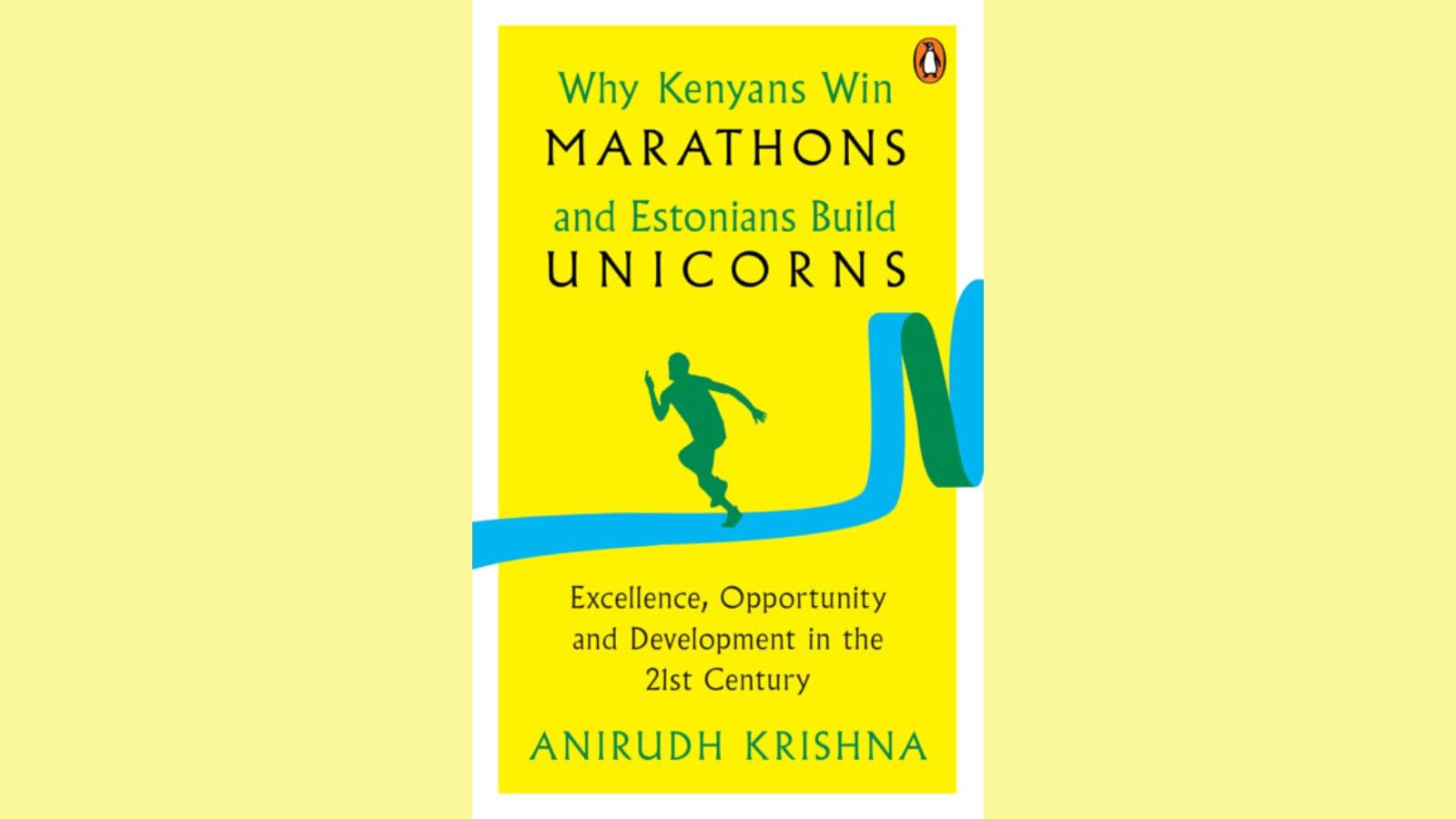
The global obsession with explaining extreme human performance through the lens of genetics or cultural exceptionalism is a collective intellectual failure. When a tiny cluster of towns in Kenya dominates global marathons, or when Estonia, a nation of just over one million people, produces a staggering density of tech billion-dollar companies, observers default to mythology. They claim Kenyans possess unique lungs and Estonians possess a unique digital DNA. New institutional research by public policy expert Anirudh Krishna dismantles this lazy determinism, proving that these phenomena are entirely engineered through deliberate systems of massive grassroots participation and structural pipelines.
The truth is far less mystical than the public wants to believe. Nations do not stumble into specialized dominance because of ancestral luck. They build it.
The Easy Deception of Born Superiority
For decades, sports scientists and technology analysts have looked at anomalous centers of excellence and concluded that nature must have selected these populations for specific tasks. It is an argument that sounds scientific but functions as a cop-out. By attributing extraordinary outcomes to genetic variants or inherent cultural traits, governments and organizations excuse their own structural failures to cultivate talent.
Consider the standard narrative surrounding the Kalenjin tribe in Kenya's Rift Valley. Observers point to high altitudes, thin ankles, and childhoods spent running to school as an unreplicable recipe for distance running dominance. But this narrative collapses under rigorous scrutiny. Genetically similar populations live across the globe at identical altitudes without producing a single Olympic medalist. The genetic explanation is a placeholder for a reality that requires a deeper, more mechanical examination of how opportunities are structured.
The same intellectual laziness applies to the technology sector. The common refrain is that Estonia developed an innate, cultural affinity for software development after the collapse of the Soviet Union. This narrative treats a highly coordinated, state-funded administrative apparatus as an accidental mood swing. When you look beneath the surface of both East African running and Baltic software engineering, you do not find superior biological or cultural traits. You find highly functional, brutal, and effective sorting machines that ensure no talent is left undiscovered.
The Kenyan Assembly Line From Grassroots to Gold
To understand why the Rift Valley produces marathon champions, one must look at the economics of survival rather than DNA. Running in Kenya is not a recreational pastime. It is a highly competitive, industrialized escape route from rural poverty. The infrastructure that supports it is not made of state-of-the-art stadiums, but of an incredibly dense network of informal training camps, talent spotters, and a culture of total, unyielding group accountability.
In towns like Iten, running is the dominant economic engine. At any given sunrise, hundreds of athletes fill the dirt roads, pushing each other to the brink of collapse. This is not an elite gathering of pre-selected genetic anomalies; it is a massive, self-funding dragnet. The sheer volume of participants ensures that even if the probability of finding a world-class runner is low, the sheer number of attempts guarantees a steady stream of champions.
- Universal Sorting: Thousands of children are exposed to intense physical conditioning early, not because of a grand plan, but because of rural necessity. This creates a massive baseline population of highly conditioned prospects.
- The Camp System: Unregulated, highly competitive training camps act as private micro-incubators. If an athlete cannot keep up with the grueling pace of the pack, they are instantly replaced by another hungry hopeful.
- Economic Off-Ramps: Successful athletes return to their villages, build houses, and buy land, serving as vivid, physical proof that the system works. This visual incentive keeps the pipeline flooded with fresh talent.
The system relies on a radical, democratic availability of entry. Anyone with a pair of cheap shoes, or even no shoes at all, can enter the sorting machine. The western world attempts to find athletic talent through expensive elite academies, specialized coaching, and high-tech metric tracking. Kenya finds it by throwing thousands of highly motivated individuals into a meat grinder of communal training and letting the natural survivors emerge at the top. It is an infrastructure of opportunity built on absolute volume.
How Estonia Engineered a Digital Elite Out of Post-Soviet Ruin
In 1991, Estonia emerged from the collapse of the Soviet Union with a ruined economy, practically nonexistent infrastructure, and a population smaller than most major European cities. There was no historical precedent to suggest that this Baltic nation would become the birthplace of Skype, Wise, and Bolt. Yet, by 2026, Estonia boasts one of the highest numbers of tech startups per capita in the world.
This was not an accident of geography or a sudden mutation in the intellectual capacity of its citizens. It was the direct result of a calculated political gamble known as the Tiger Leap project (Tiigrihüpe), launched in the mid-1990s. The government realized it could not compete in traditional manufacturing or heavy industry. Instead, it chose to completely digitize its entire educational and administrative architecture.
[Post-Soviet Collapse (1991)] ──> [Tiger Leap Initiative (1996)] ──> [Total Bureaucratic Digitization] ──> [Mass Tech Startup Pipeline]
Every single school in the country was connected to the internet. Computer literacy was made mandatory. The state stripped away the bureaucratic friction of starting a business, eventually introducing a system where a company could be fully registered online in a matter of minutes. By removing the administrative barriers that choke entrepreneurship in larger western economies, Estonia created an environment where tech experimentation carried zero penalty.
The creation of Skype in the early 2000s acted exactly like a Kenyan runner winning an Olympic gold medal. It provided the country with an undeniable proof of concept. The capital generated by Skype's acquisition did not vanish into luxury real estate; it was systematically reinvested into the local ecosystem by its early employees, creating an endless cycle of self-funding software engineering. The country did not have a special relationship with code. It simply had a system where every citizen was given a computer, a frictionless legal framework, and a vivid example of a multi-billion-dollar success story next door.
The Universal Blueprint for Manufacturing Modern Miracles
When you align the mechanics of Kenyan running with Estonian technology, the shared structural blueprint becomes undeniable. Both systems succeed because they solve the hardest problem in human capital: the identification and promotion of hidden talent. Most societies fail because their talent pipelines are exclusionary, expensive, or restricted to elite geographic pockets.
To build a self-sustaining ecosystem of world-class excellence, a nation or an organization must deploy a clear framework that replicates what these two anomalies discovered by chance.
Step 1: Universal Exposure and Participation
Excellence is a numbers game. You cannot find the best software engineers or the fastest runners if only the top ten percent of the population has access to computers or running tracks. The base of the pyramid must be as wide as possible. Estonia achieved this by putting computers in every school; Kenya achieved this because physical movement is deeply integrated into the daily survival of its rural population.
Step 2: The Eradication of Systemic Friction
In traditional systems, moving from an amateur level to a professional level requires navigating a maze of gatekeepers, fees, and credentials. The Kenyan running ecosystem bypasses this completely; an unknown runner can simply show up to a training group in Iten and prove themselves on the dirt road. Estonia did the same by automating its entire legal and financial system, making the act of launching a company as simple as sending an email.
Step 3: High-Visibility Retaining Walls and Role Models
A pipeline requires visible proof that the sacrifice is worth the effort. The presence of wealthy, successful running champions living and training in the same Kenyan villages keeps the local youth motivated. In Estonia, the founders of early tech giants stayed in Tallinn, invested in local talent, and mentored the next wave of founders. The success must remain visible to the grassroots layer to prevent the pipeline from drying up.
Step 4: Sturdy Systems for the Also-Rans
A critical, often overlooked aspect of any highly competitive talent pipeline is what happens to those who do not make it to the absolute top. In a healthy ecosystem, the individuals who fail to reach elite status must still find viable pathways that enrich the broader community. In Estonia, those who do not build a unicorn still form a highly skilled technical workforce that stabilizes the entire corporate economy. In Kenya, the runners who fall just short of international stardom become coaches, pacers, and local athletic administrators, strengthening the infrastructure for the next generation.
The Cost of the Natural Born Myth
The persistence of the genetic myth is dangerous because it breeds institutional complacency. When a school district, a corporation, or a government convinces itself that a certain group is naturally gifted at mathematics, athletics, or leadership, it stops investing in the underlying infrastructure required to build those skills across the board. It treats talent as a resource to be mined rather than a product to be manufactured.
Relying on the illusion of natural talent ensures that vast reserves of human potential remain permanently locked away. If a child in a rural village or an underfunded urban center is never given access to the specific arena where their latent capabilities can flourish, the talent effectively does not exist. The success of Kenya and Estonia is not a lesson in biology or cultural mystique. It is a harsh, data-driven reminder that world-class excellence is a resource that can be systematically cultivated by anyone willing to build a wide enough ladder.