Morning arrives not with a fanfare, but with the quiet friction of skin against pillowcase. Maya sits at the edge of her mattress, her toes finding the cold hardwood floor before her mind fully catches up to the hour. She reaches for the small ceramic dish on her nightstand, her fingers brushing past a row of amber glass bottles.
She is thirty-four. She does not feel thirty-four. Until she catches the reflection in the dark glass of her turned-off phone screen.
There, tracing a delicate crescent beneath her left eye, is a shadow. Not a bruise, not a smudge of mascara from yesterday's rain, but a map. A topography of late nights spent staring at glowing spreadsheets, of worry lines etched by deadlines, of skin losing its quiet elasticity.
We spend our lives looking at everyone else's faces, reading expressions like newspapers, yet we rarely stop to examine the quiet changes happening on our own terrain. The skin around our eyes is thinner than a page torn from a Bible. It lacks the oil glands that keep the rest of our face plump and protected. It is fragile. It moves twenty-two thousand times a day just as we blink, smile, squint against the sun, or narrow our gaze at a screen.
Twenty-two thousand movements. Every single day.
Is it any wonder that the map starts to show creases?
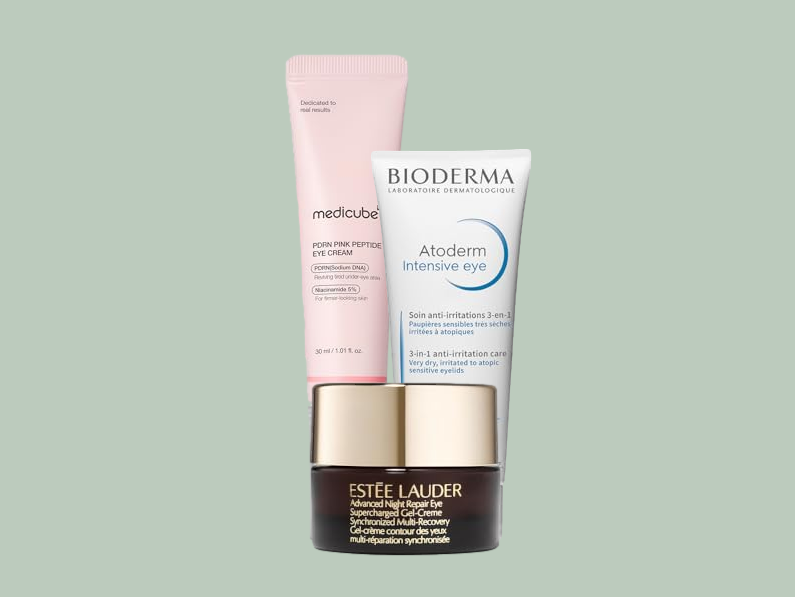
Maya looks down at the tiny glass jar in her palm. The label reads like a foreign recipe: peptides, ceramides, hyaluronic acid, retinol. The beauty industry has spent decades trying to sell us magic in a jar, shouting from glossy magazine pages and endless scrolling feeds about the eight best formulas to turn back the clock. But formulas are just chemistry until they touch human skin. They are just inert compounds waiting for a story.
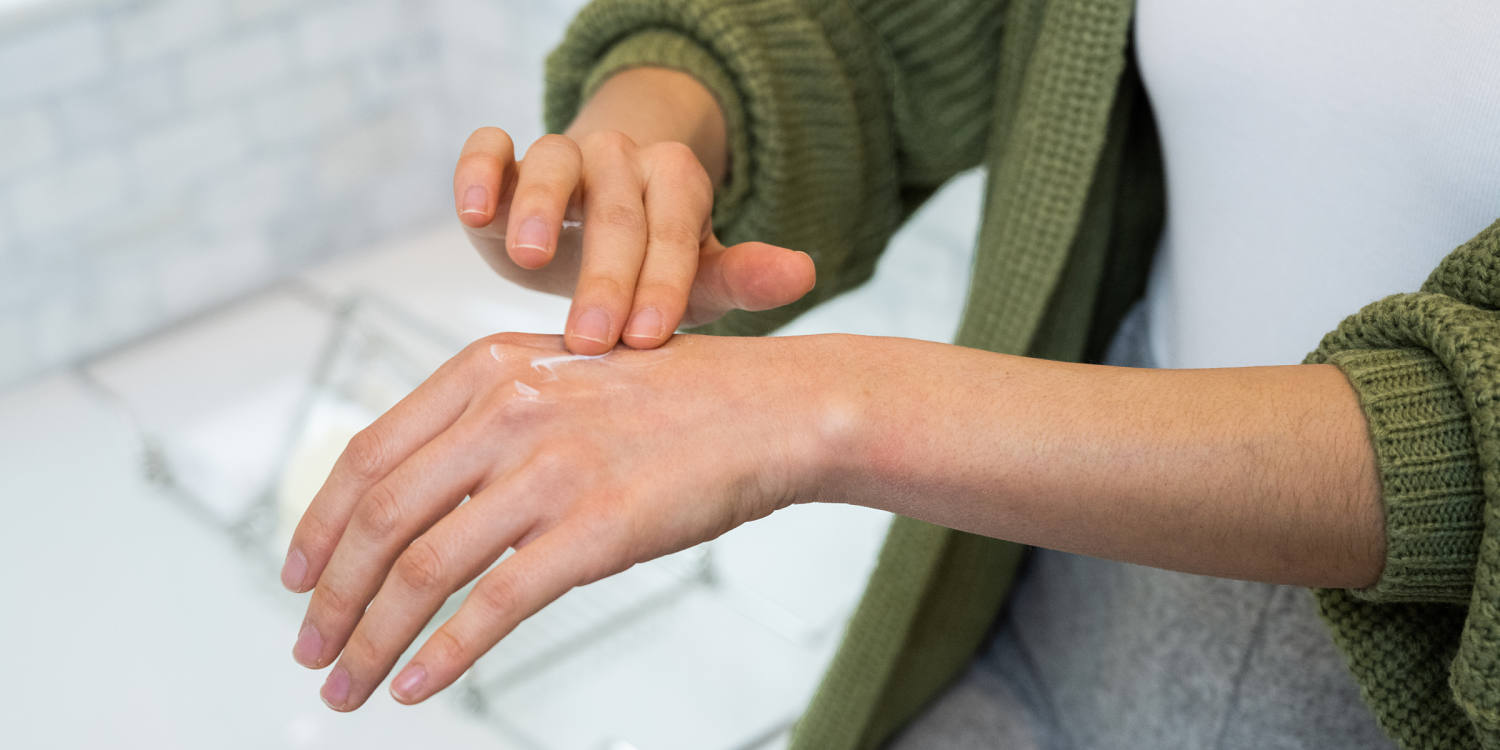
Consider what happens next. Maya dips the tip of her ring finger into the cream—never the index finger, because the index carries too much brute force. The ring finger is the weakest digit on the hand, and therefore the kindest.
She taps a single, microscopic dot beneath her eye.
Science tells us that the stratum corneum, the outermost layer of our skin, acts as a fortress. Most things we put on our face bounce right off. But the right molecular weights slip through the mortar. Hyaluronic acid acts like a sponge, pulling moisture from the damp air and anchoring it deep within the tissue, plumping the dry riverbeds of expression lines. Peptides send whispered instructions to the cellular machinery beneath, reminding protein structures how to knit themselves back together tighter.
And then there is caffeine. Not the kind that rattles your nerves in a morning espresso, but a topical vasoconstrictor. It shrinks the tiny, dilated blood vessels pooling fluid beneath the lower lid. It is the architectural equivalent of draining a flooded basement.
We buy these pots of cream looking for youth, but what we are really paying for is a moment of suspension.
Think of Elena, an ICU nurse who works twelve-hour night shifts where time loses its linear shape. Her eyes tell the story of monitors beeping in the dark and the heavy weight of exhaustion. For Elena, applying a restorative eye cream infused with niacinamide at seven in the morning isn't about vanity. It is a ritual of reclamation. It is the physical act of wiping the night's heavy air off her face before she crawls into bed. It says: I am still here. I am taking care of the vessel that carries me.
Or consider Marcus, a high school history teacher who spends his afternoons grading essays under harsh fluorescent lights, his forehead permanently furrowed in concentration. When he dabs a peptide-rich formula under his eyes before parents-evening conferences, he isn't trying to look twenty-one. He wants to look rested enough to listen.
The market tells us we are broken and need fixing. That is the oldest trick in commerce. They show us magnified pores and hyperpigmentation under studio lighting, panic-buying induced by high-definition lenses.
The truth is much quieter.
Skin changes because we live. Every line is an archive of laughter at a dinner table that went on too late. Every shadow is a testament to working hard for something you believe in. Eye creams are not erasers. They are not time machines. They are simply maintenance for the machine of expression.
When you survey the crowded pharmacy shelves or scroll through endless lists of top-rated formulations, the noise can be deafening. You see terms like squalane, retinol alternatives like bakuchiol, antioxidant-rich green tea extracts, and vitamin C serums designed to brighten stubborn pigmentation. But the magic isn't in the ingredient list alone. It is in the habit.
Consistency beats perfection every single time. A basic, unglamorous moisturizer applied faithfully every night will always outperform a hundred-dollar miracle potion left sitting untouched on a shelf because its gold-plated packaging was too intimidating to open.
Maya presses her ring finger gently along the orbital bone, moving from the inner corner outward, encouraging the lymphatic drainage to flow toward her temples. The cream is cool against her skin. The tension in her jaw loosens just a fraction.
She sets the jar back down on the ceramic dish. The reflection in her phone screen hasn't magically transformed into a porcelain doll. The map is still there. But the light in the room has shifted, catching the fine grain of her skin not as a flaw to be eradicated, but as a map of a life fully inhabited, gently tended to, and quietly loved.