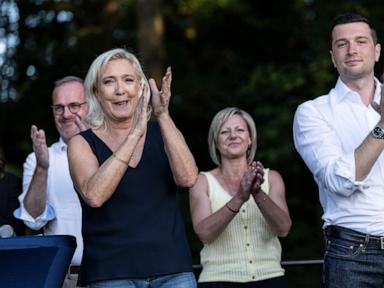
Marine Le Pen spent more than a decade executing a ruthless political remodeling. She kicked her own father out of the party he founded, abandoned unpopular economic positions like dropping the euro, and dressed her radical right platform in mainstream clothing. By 2024, the strategy seemed flawless. Her party, the National Rally (RN), dominated the European elections, forced a panicked President Emmanuel Macron into a chaotic snap election, and locked down the largest single-party presence in the National Assembly.
But you don't beat the establishment just by pretending to look like them.
Just as her lifelong ambition of capturing the Élysée Palace in 2027 felt within reach, the entire project slammed into a legal wall. A Paris criminal court convicted Le Pen for embezzling European Parliament funds. The real blow wasn't the fine or the house arrest. It was a mandatory five-year ban from public office enforced with immediate effect. Her defense team dragged the case into the Paris Court of Appeal, aiming for a final decision.
This legal crisis isn't an isolated mishap. It’s the ultimate consequence of a multi-decade arc where the French far right moved from the erratic fringes of the political map straight into the heart of the institutions they always swore to destroy.
The Toxic Inheritance and the Great Purge
To understand how Le Pen reached this brink, you have to look at the family business she inherited. Her father, Jean-Marie Le Pen, founded the National Front (FN) in 1972. He didn't want to govern. He wanted to shock. The older Le Pen built his brand on casual antisemitism, colonial nostalgia for French Algeria, and provocations that drew headlines but kept him firmly isolated on the radical fringe.
When he pulled off a political earthquake in 2002 by making the presidential runoff against Jacques Chirac, the country revolted. Millions of voters from the left and right formed a "republican front" purely to keep him out. He was crushed.
Marine Le Pen watched that defeat and realized a basic truth. Shock value gets you noticed, but it doesn't get you power.
When she took the party reins in 2011, she launched an aggressive process she called dédiabolisation—de-demonization. The strategy was simple. Keep the core anti-immigration, nationalist agenda but strip away the overt racism, the skinhead associations, and the offensive historical revisionism.
The strategy required a public execution. In 2015, after Jean-Marie repeated his infamous claim that the Nazi gas chambers were a mere "detail" of history, his daughter kicked him out of his own party. It was a cold, calculated move. It told French voters that the new National Front was serious about power, even if it meant breaking family ties.
Rewriting the Script to Capture the Working Class
Marine Le Pen didn't just change the party's faces; she fundamentally flipped its economic script. Under her father, the National Front championed a Reagan-style, free-market, small-government platform. Marine looked at the rust belts of northern France, the abandoned industrial towns like Hénin-Beaumont where she eventually won a seat, and saw an open market of angry, left-behind voters.
She pivoted hard toward protectionism. She began promising to defend state pensions, lower the retirement age, and protect French workers from globalization. By mixing strict anti-immigrant rhetoric with a generous welfare state stance, she stole the traditional base of the French Communist and Socialist parties.
The Evolution of the Right-Wing Electorate
- 2004–2010: Marine builds her profile as a Member of the European Parliament (MEP), using Brussels as a taxpayer-funded launching pad.
- 2012: Her first presidential run yields 17.9% of the vote. A solid third-place finish.
- 2017: She reaches the final runoff against a young Emmanuel Macron. She stumbles badly in a televised debate, looking out of her depth on technical monetary policy, and loses with 33.9%.
- 2018: She rebrands the toxic "National Front" name to the more consensus-sounding "National Rally" (RN).
By the time the 2022 presidential election arrived, she corrected her previous debate disasters. She stopped talking about leaving the European Union or abandoning the euro—policies that terrified elderly French voters who worried about their savings. She focused instead on the cost of living. It worked. She lost to Macron again, but scored an unprecedented 41.5% of the vote. Weeks later, her party surged from eight seats in parliament to a stunning 89.
The Protégé and the Trap of Success
If you want to understand the modern National Rally, you have to look at Jordan Bardella. Picked by Le Pen to take over the formal party presidency in 2022, Bardella represents the final stage of the rebranding. He’s young, impeccably dressed, and a TikTok phenomenon. He has no personal ties to the toxic old guard of the 1970s.
With Bardella running the daily operations, Le Pen positioned herself as the elder statesman in waiting. The strategy delivered its biggest prize in the summer of 2024. The RN swept the European elections, winning over 31% of the vote. Macron gambled on a snap legislative election to stop them.
The gamble backfired. While a hasty alliance of left-wing and centrist parties blocked the RN from winning an absolute majority, Le Pen’s party emerged with more than 140 seats. They became an unavoidable gravitational force in French legislative politics. They could make or break governments at will.
But structural success brings structural scrutiny.
The Brussels Funding Scheme That Broke the Momentum
The ultimate irony of Le Pen's political life is that the system she used to build her nationalist movement is the exact system that might end her career. For years, the National Front used a blatant trick. They took European Parliament funds meant to pay for Brussels-based legislative assistants and used that money to pay the salaries of party operatives working directly on nationalist party business inside France.
The European Parliament noticed. French prosecutors moved in.
The trial exposed a systematic, decade-long operation directed from the very top. Prosecutors proved that assistants weren't doing any European parliamentary work at all. They were running domestic social media accounts, managing party headquarters, and organizing French campaigns, all while being paid by the EU.
The legal fallout was devastating:
- A conviction for embezzling millions in public funds.
- A four-year prison sentence, with two years converted to house arrest under electronic monitoring.
- A €100,000 personal fine.
- A five-year ban on running for public office, applied immediately.
Le Pen immediately claimed she was the victim of a judicial coup, calling it a political decision designed to steal the 2027 election from the French people. Her lawyers rushed to the Paris Court of Appeal, trying to dismantle the verdict before the presidential race begins in earnest.
The Immediate Playbook for the French Right
If you think a legal conviction instantly kills a populist movement, you haven't been paying attention to global politics. The National Rally is already turning this crisis into a campaign weapon. They are using the verdict to fuel a classic anti-establishment narrative, telling their base that the Parisian elites and corporate judges are trying to subvert democracy because they know they can't win at the ballot box.
If the appeal fails and Le Pen stays barred from the ballot, the movement shifts instantly to Jordan Bardella. He is waiting in the wings, untainted by the embezzlement trial, ready to step in as the replacement candidate.
The real lesson here isn't that the law caught up with a politician. It’s that the National Rally has built an ideological machine that no longer depends on a single person or a single family name. The French far right didn't just rise; it normalized itself so deeply into the social fabric that even a historic criminal conviction of its leader can't push it back to the fringes.
If you are tracking the future of European politics, stop watching the courtroom drama and start watching the regional economic indicators. The voters who switched to the RN over inflation, declining public services, and cultural anxieties aren't going to change their minds because of an administrative fraud case in Paris. The battle for France isn't being decided by judges; it's being decided by a political class that still hasn't figured out how to answer the grievances that made Marine Le Pen powerful in the first place.
French far-right leader Marine Le Pen's appeal trial ends with her presidential bid at stake
This news report provides a direct look at the legal proceedings and courtroom atmosphere in Paris as Le Pen fights the embezzlement conviction that threatens her 2027 presidential ambitions.