The sawdust always smells like pine, even when the world outside smells like bleach and burning rubber.
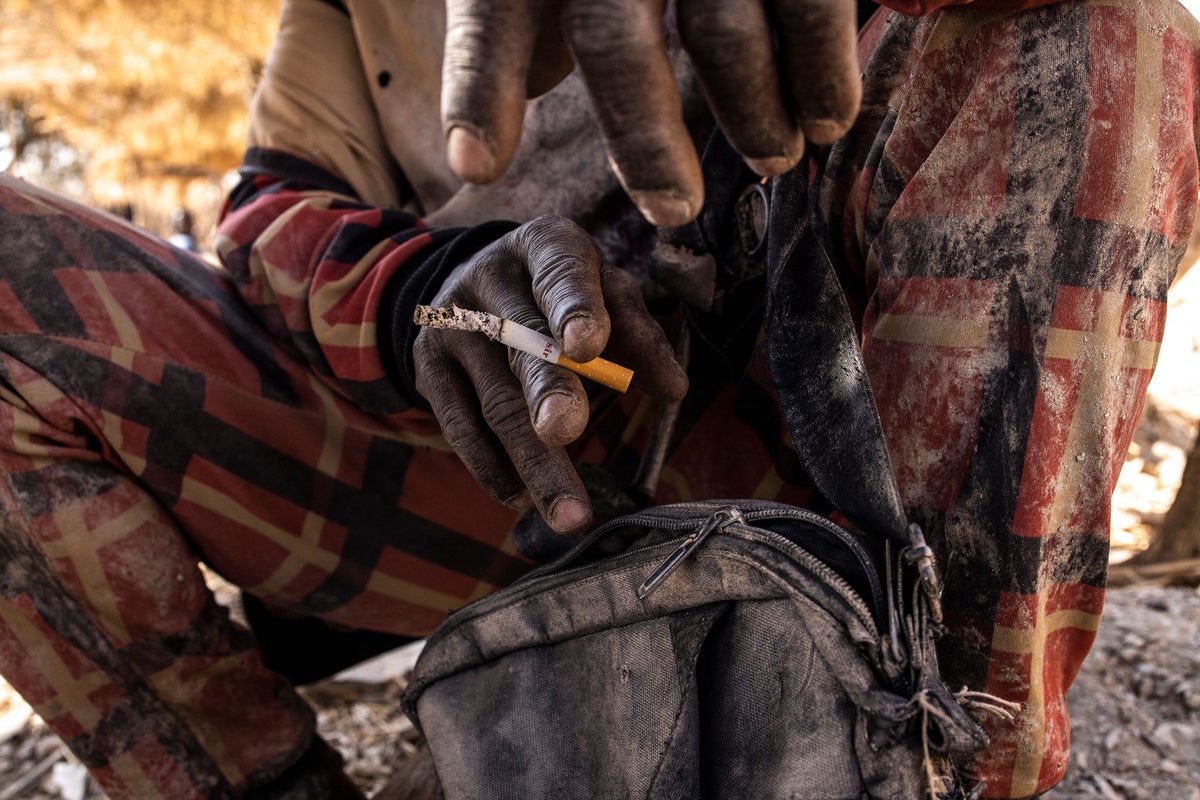
In a small workshop tucked behind a rusted corrugated fence in Beni, the rhythmic whine of a hand-saw cuts through the humid morning air. Wood dust settles like gray snow on the carpenter’s eyelashes. He does not wipe it away. He measures, cuts, glues, and hammers. He is building six boxes today. Standard dimensions. Six feet by two feet by twenty inches. Nothing ornate. No velvet lining. No polished brass handles.
Just pine boards, galvanized nails, and a brutal kind of urgency.
We rarely talk about the architecture of an epidemic. We talk about vectors, R-nought values, viral loads, containment zones, and monoclonal antibodies. We look at logarithmic curves on CNN and color-coded maps of Central Africa that bleed red. But epidemics do not happen on maps. They happen in rooms. They happen in families. And when they end in the worst possible way, they require logistics. Someone has to build the containers.
To understand the true weight of an outbreak like Ebola, you have to look at the workshop floor.
During the height of the outbreaks in the Democratic Republic of Congo, the demand for coffins was not a statistic; it was a race against the clock. The virus does not stop replicating because it is Sunday. It does not pause for grief counseling. The body of someone who has died from Ebola remains intensely contagious—sometimes more so in the hours immediately following death, as the viral particles actively seek a new host from a cooling shell. In traditional Central African cultures, death is a communal passage. It is washing the body, dressing it in Sunday best, holding an all-night vigil, and touching the skin one last time to say goodbye.
Ebola stole the goodbye.
Worse, it weaponized the funeral. In the early days of past outbreaks, traditional burials—where families washed their loved ones—became superspreader events. The virus leapt from the dead to the living with terrifying efficiency. Public health officials faced an agonizing paradox: to save the living, they had to break the ancient, sacred rituals of the dead.
Enter the safe and dignified burial teams. And behind them, the carpenters.
Imagine what it takes to stand at that workbench day after day. Let us be entirely clear: the carpenter in this hypothetical scenario represents the collective reality of hundreds of local artisans contracted by humanitarian agencies across outbreak zones. He is not a symbol; he is a man with a family to feed and calloused hands that ache by noon. He knows why he is building them. He hears the ambulance sirens wailing on the tarmac road outside. He hears the weeping from the treatment center down the hill.
Every plank he fastens is a barrier. Every nail driven is a shield between an active virus and a grieving village.
There is an eerie geometry to mortality during a health crisis. The thickness of the plywood matters. The sealant matters. If a coffin leaks fluids during transport to the cemetery, the disaster compounds. So the work must be precise. There is no room for a sloppy corner or a split board. The carpenters work in silence, broken only by the shriek of the blade and the dull thud of the mallet.
Fear is a quiet roommate in that workshop. At first, the neighborhood stayed away. People crossed the street to avoid the stacks of raw timber outside the gate, whispering that the wood itself might carry the contagion. The carpenter remembers the stones thrown at his corrugated tin roof during the first month. People were terrified of the disease, and by extension, terrified of anyone who touched its physical remnants.
He kept hammering.
Because what is the alternative? If you do not build them, where do the bodies go? How do you maintain a shred of human dignity when an invisible enemy turns every loved one into a biohazard?
This is the invisible labor of public health. We fund the vaccines—and thank God we do—but vaccines are only the finish line. The marathon is run by people wearing heavy yellow plastic suits in 90-degree heat, spraying chlorine, tracing contacts who ran into the jungle, and local men in dusty aprons measuring pine boards in the dim light of a tin-roofed shack.
Consider what happens when a community is stripped of its mourning rituals. When a family cannot touch their mother, cannot wash her feet, cannot bury her in the ancestral plot behind the banana trees, something inside the community breaks. Grief requires a physical anchor. Without a body to mourn, trauma hangs in the air like smoke.
The safe burial teams understood this psychological devastation better than anyone in Geneva or Washington. They didn't just show up with body bags and bleach. They learned to negotiate. They worked with local elders to adapt the rituals. They allowed family members to lead prayers from a safe distance, to witness the lowering of the pine box, to say their final words over the wood instead of the skin.
The pine box became the compromise between safety and soul.
When the sun dips low over the hills of Kivu, the workshop finally goes quiet. The sawdust settles over the day’s production: a row of six pale, unpainted wooden boxes standing in the dusk like quiet sentinels. The carpenter washes his hands in a bucket of chlorinated water, scrubbing hard beneath his fingernails until the skin is raw. He packs his tools. He walks home along the red dirt road, past children playing soccer with a ball made of plastic bags and twine, past women balancing baskets of cassava on their heads.
Nobody thanks him. There are no medals for building coffins in an epidemic. There is only the quiet knowledge that tomorrow, the saw will start screaming again at dawn, and he will be right there, measuring out six feet of pine to hold a life that ended too soon.