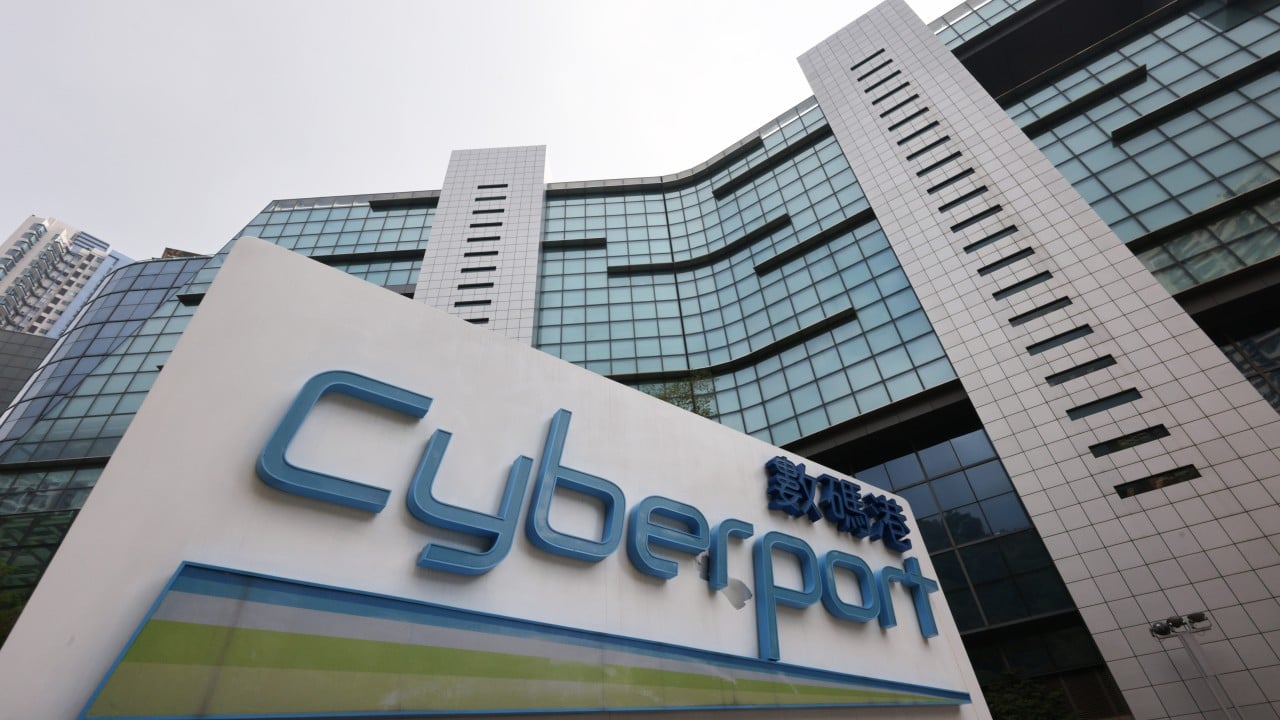
Commercial real estate performance within state-backed innovation districts relies on absorption velocity, tenant clustering efficiency, and infrastructure monetization. The leasing milestone achieved by Cyberport Phase Five, which secured commitments for half of its available commercial footprint through major anchor entities like Lenovo and BrainCo, offers a clear dataset for evaluating public-sector technology park economics.
Evaluating this performance requires moving past superficial occupancy statistics to examine the underlying structural variables dictating tenant acquisition, space utilization, and regional competitiveness.
The Tenant Acquisition Funnel In Public Innovation Parks
Commercial leasing in government-supported technology clusters does not follow standard market pricing models. State-backed infrastructure projects operate under dual mandates: generating financial yield and executing regional industrial policy.
The initial absorption phase of Cyberport Phase Five highlights three distinct operational drivers governing tenant commitment:
- Regulatory signaling and compliance alignment
- Physical asset specialization versus general commercial space
- Ecosystem density and supply chain proximity
When enterprises such as Lenovo relocate regional registered offices or establish specialized research hubs within new state development phases, the decision reflects a calculated trade-off between operational expenditure and institutional access. The concentration of early tenancy among high-validation firms reduces perceived occupancy risk for subsequent market entrants, compressing the sales cycle for remaining floor plates.
Infrastructure Capital Expenditure Versus Tenant Unit Economics
The economic viability of Phase Five rests on specialized digital infrastructure rather than raw square footage. Modern hardware and artificial intelligence development firms require heavy capital investments in low-latency connectivity, dedicated fiber optics, and multi-cloud server integration.
Standard commercial buildings suffer from a digital capability deficit, often forcing tenants to shoulder expensive retrofitting costs. Cyberport's integration of high-speed subsea cable landing access and modular data architecture shifts the capital expenditure burden from the tenant to the landlord.
This infrastructure-as-a-service model alters the cost function for incoming firms:
$$\text{Net Tenant Savings} = \text{Retrofitting Capital Expenditure} - \text{Base Rental Premium}$$
When the infrastructure provision eliminates upfront structural modifications, tenants absorb higher base rents in exchange for immediate operational readiness. This dynamic explains how specialized tech parks maintain yield stability during broader commercial real estate downturns.
The Clustering Effect And Knowledge Spillover Variables
The presence of anchor tenants like BrainCo, specializing in brain-computer interfaces, alongside enterprise hardware giants like Lenovo, creates an asymmetric spatial economy. Innovation districts succeed or fail based on the friction of exchange between disparate technical disciplines.
Traditional commercial real estate treats tenants as isolated revenue units. Innovation districts operate on a network-effects model where the value of the real estate scales non-linearly with the diversity of the tenant roster:
$$V = n + k(n^2 - n)$$
In this framework, $V$ represents total ecosystem value, $n$ represents the number of distinct technology firms, and $k$ represents the collaboration coefficient enabled by shared physical architecture. By securing hardware manufacturers, artificial intelligence developers, and neurotechnology research teams simultaneously, the management entity maximizes cross-pollination between product development cycles.
Hardware firms require testing grounds, artificial intelligence startups require compute resources, and research entities require commercialization channels. Proximity within Phase Five minimizes the transaction costs associated with cross-industry partnerships.
Structural Bottlenecks In State-Subsidized Real Estate Expansion
Despite the initial absorption velocity reaching the fifty percent threshold, structural vulnerabilities persist within the expansion model. State-backed technology parks face distinct operational constraints that private commercial landlords typically avoid.
First, the occupancy profile remains vulnerable to macroeconomic shifts in venture capital availability. Early-stage tenants occupying subsidized or policy-favored spaces often experience cash flow volatility, creating potential counterparty risk during economic contractions.
Second, the specialization of physical architecture creates a re-leasing hazard. Facilities engineered explicitly for hardware testing, wet labs, or high-density server configurations possess lower fungibility than open-plan administrative offices. If an anchor tenant defaults or downsizes, the landlord faces extended vacancy periods while trying to locate a similarly specialized replacement.
Third, transportation infrastructure and spatial isolation historically constrain the broader Cyberport district. While Phase Five incorporates enhanced waterfront public spaces, smart amenities, and improved transit links, the geographical limitation relative to central financial districts requires deliberate commuter incentive structures to maintain daily workforce presence.
Strategic Capital Allocation For Subsequent Leasing Phases
Achieving full absorption for the remaining footprint of Phase Five requires a pivot from anchor tenant acquisition to ecosystem densification. Management must target vertical integration plays, securing component suppliers and regulatory advisory firms that service existing anchors like Lenovo and BrainCo.
Pricing strategies for the remaining fifty percent should deploy dynamic tiering, linking rent adjustments to verified research output or local job creation milestones rather than flat market rates. This aligns tenant success with district performance, insulating the asset class from regional office supply gluts while cementing its role as a primary regional innovation nexus.