Severe weather events expose the structural vulnerabilities of regional power distribution grids, shifting political and public scrutiny toward utility operations, capital allocation, and regulatory oversight. When extreme winds and heavy precipitation compromise transmission lines, the economic and operational fallout tests the boundaries of regulated monopoly service models. Examining these infrastructure failures requires moving beyond political rhetoric to evaluate the mechanics of grid hardening, vegetation management efficiency, and the efficacy of state utility commission oversight.
The Economics of Regulated Monopoly Utilities
Northern Indiana Public Service Company operates as an investor-owned, franchised monopoly within its designated service territory. In exchange for exclusive operating rights over a geographic grid, the utility submits to economic regulation by state authorities, such as the Indiana Utility Regulatory Commission. This regulatory compact guarantees the utility a fixed rate of return on capital investments provided it maintains safe and reliable service. Discover more on a connected issue: this related article.
Under this model, system upgrades, asset hardening, and operational expenditures must be approved through formal rate cases. Ratepayers fund these improvements through monthly tariffs with the explicit expectation that capital expenditures translate directly into network resilience. When widespread and prolonged outages occur following severe weather, questions arise regarding capital allocation efficiency. The core regulatory question centers on whether funds authorized for infrastructure modernization were deployed to maximize system durability or absorbed into general corporate overhead.
Vegetation Management and Right-of-Way Maintenance
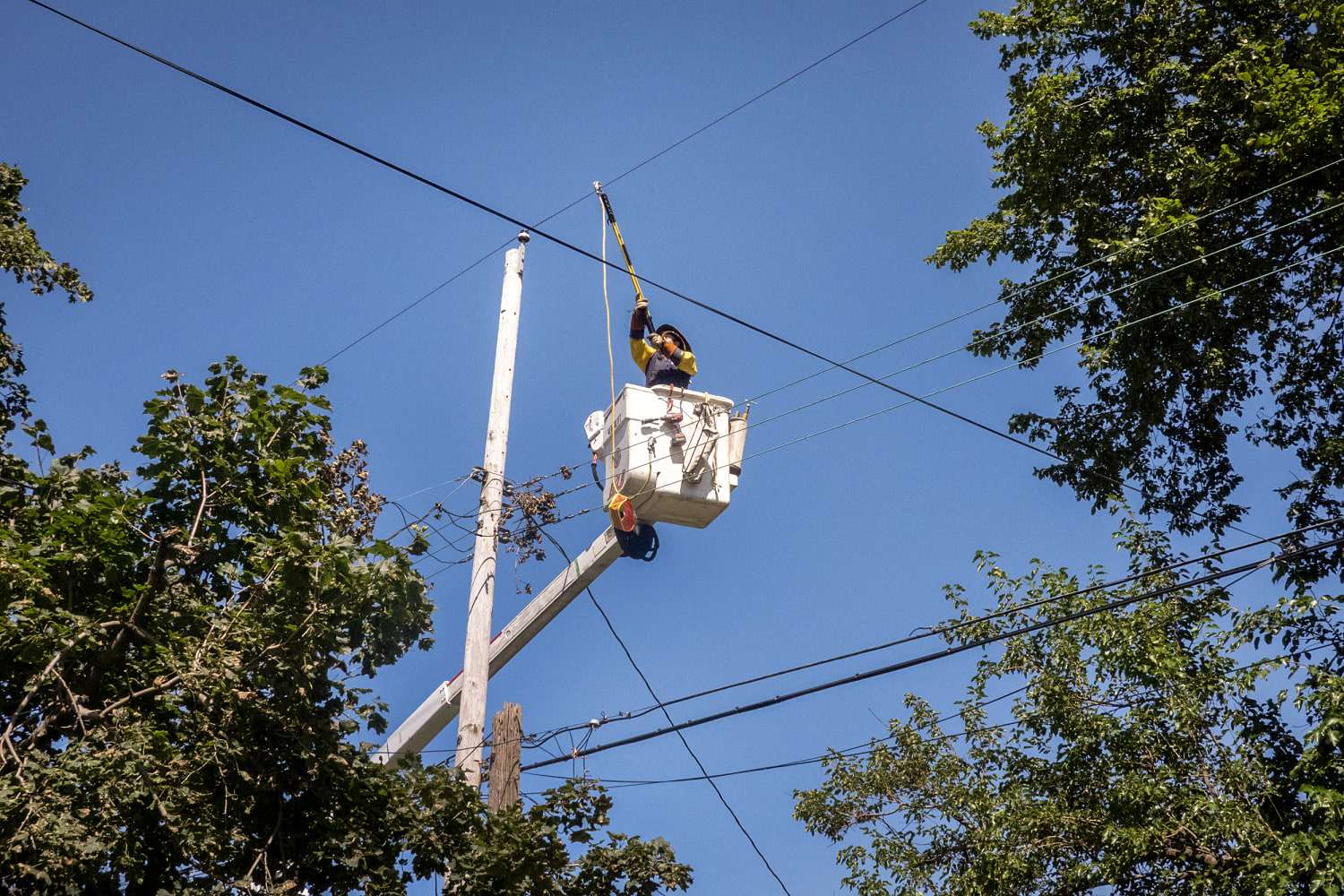
Overhead distribution lines remain vulnerable to falling trees and canopy encroachment during high-velocity storm events. Vegetation management represents the single largest recurring operational expenditure required to mitigate this risk. Utility operators establish cyclical trimming programs designed to maintain clearance zones between high-voltage lines and surrounding flora. Additional analysis by The Guardian delves into comparable views on the subject.
Evaluating the effectiveness of a utility's vegetation management strategy involves analyzing three operational variables:
- Trim Cycle Frequency: The interval at which crews clear specific corridors, typically measured in years. Shorter cycles reduce tree-contact incidents but increase annual operational costs.
- Right-of-Way Width: The physical buffer cleared around distribution assets. Wider corridors diminish the probability of structural compromise from uprooted trees outside immediate property boundaries.
- Hazard Tree Removal: The identification and felling of diseased or structurally compromised trees located beyond standard right-of-way boundaries that retain enough mass to reach conductors upon failure.
When storms generate sustained winds capable of uprooting mature trees, distribution failures often reflect gaps in hazard tree identification rather than routine clearance. Legal challenges and regulatory complaints frequently target these maintenance practices, alleging that deferred right-of-way investments directly amplify storm restoration timelines.
Regulatory Investigation Mechanisms and Consumer Advocacy
State governance structures provide specific mechanisms to investigate utility performance when catastrophic service failures occur. Executive directives calling for state intervention typically involve two primary regulatory bodies:
- The State Consumer Counselor: An agency tasked with representing the interests of residential, commercial, and industrial ratepayers in utility proceedings. This office initiates formal complaints to challenge utility practices or rate structures.
- The Utility Regulatory Commission: A quasi-judicial administrative body possessing statutory authority to audit utility performance, review expenditure records, and mandate operational changes or financial penalties.
Formal investigations initiated by these entities examine the correlation between historical capital spending and system performance metrics such as System Average Interruption Duration Index and System Average Interruption Frequency Index. If an audit reveals that allocated infrastructure funds were mismanaged or that preventive maintenance standards were compromised, regulators possess the authority to disallow recovery of certain costs or penalize the utility.
Operational Constraints in Disaster Response Logistics
Beyond pre-storm hardening, restoration efficiency depends on tactical logistics during crisis response. When thousands of distribution poles are downed and local infrastructure is compromised, repair velocity is governed by crew mobilization capacity, material availability, and staging coordination.
Investor-owned utilities rely on mutual assistance agreements to scale manpower during catastrophic events, importing line workers and technical crews from neighboring non-affected utilities. However, deployment bottlenecks frequently emerge when debris obstruction prevents physical access to damaged assets. Clearing roadways and alleyways must precede electrical reconstruction, creating interdependencies between municipal public works, state emergency management agencies, and private utility contractors. Communication failures compound these operational friction points; when public outage tracking systems fail to provide granular restoration estimates, consumer trust deteriorates independently of physical repair progress.
File a formal petition through the Office of Utility Consumer Counselor to mandate an independent audit of historical capital expenditure accounts, specifically isolating funds designated for grid hardening and right-of-way maintenance from general corporate ledgers.