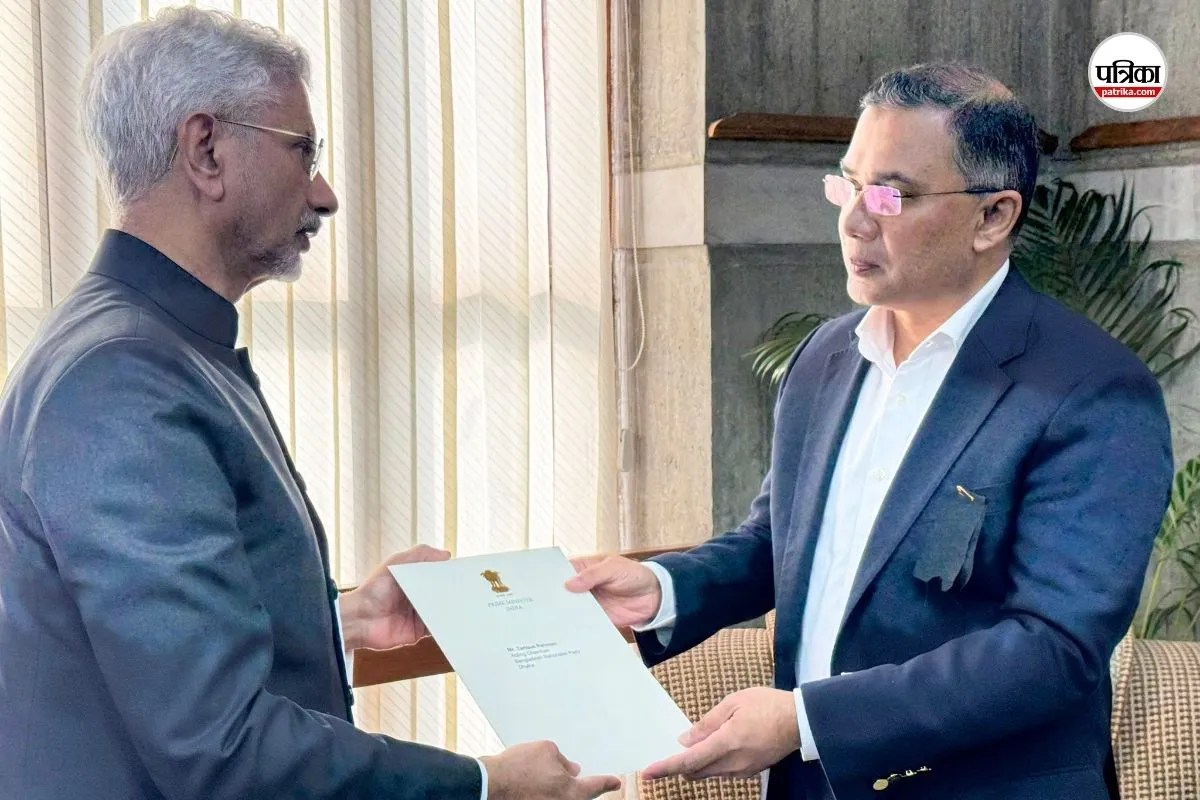
Standard diplomatic reporting treats an ambassadorial arrival as a ceremonial formality, reducing complex geopolitical maneuvering to a timetable of airport receptions and credential presentations. When Sudhakar Dalela landed in Kathmandu to assume the role of India’s Ambassador to Nepal, routine coverage captured the surface event while missing the structural shift occurring beneath it. Dalela’s appointment is not a routine bureaucratic rotation; it represents a deliberate recalibration of New Delhi’s operational doctrine in the Himalayas, moving from reactive political management to structured economic, infrastructural, and institutional integration.
To evaluate the real impact of this transition, one must strip away diplomatic pleasantries and examine the appointment through three analytical lenses: the institutional pedigree of the envoy, the structural bottlenecks in India-Nepal bilateral relations, and the strategic asymmetric competition defining South Asia.
The Institutional Pedigree of Sudhakar Dalela
In diplomatic systems, personnel selection is policy. The Ministry of External Affairs (MEA) does not assign career officers randomly to sensitive neighborhood posts; it matches specific administrative skill sets to perceived strategic deficits. Sudhakar Dalela, a 1993-batch Indian Foreign Service (IFS) officer, brings an operational profile distinctly different from traditional regional specialists whose primary currency is political crisis management.
Dalela’s career trajectory reveals three core competencies tailored to Nepal’s current developmental and political phase:
- Multilateral Trade and Economic Architecture: Prior to his Kathmandu posting, Dalela served as Deputy Chief of Mission at the Indian Embassy in Washington, D.C., and held senior roles in the Prime Minister’s Office (PMO) and the MEA’s Americas and North divisions. His background is heavily weighted toward trade negotiations, investment frameworks, and complex economic coordination rather than purely traditional political liaison work.
- Direct PMO Alignment: Serving in the Prime Minister’s Office during critical policy formulation windows gives an envoy direct interpretive authority. In bilateral negotiations with Kathmandu—where bureaucratic delays frequently stall approved projects—an ambassador with established channels to New Delhi’s central executive core reduces the latency between agreement and execution.
- Neighborhood Institutional Memory: Having previously worked in the MEA’s North Division (which oversees Nepal and Bhutan) and served in regional missions, Dalela understands the micro-politics of the Kathmandu Valley without being exclusively tethered to legacy political networks.
This specific combination signals that India’s primary objective in Nepal has shifted from managing coalition arithmetic in Singha Durbar to de-risking and accelerating physical and financial connectivity.
The Structural Bottlenecks in India-Nepal Relations
Understanding why Dalela’s skill set matters requires diagnosing the precise friction points that have historically degraded India-Nepal bilateral efficiency. Standard media narratives blame vague "trust deficits" or "historical baggage." In operational terms, the relationship suffers from four quantifiable structural bottlenecks.
The Execution Gap in Infrastructure Delivery
India is Nepal’s largest trade partner and a primary source of foreign direct investment, yet the bilateral relationship has long been penalized by an execution deficit. Projects announced with high political visibility—such as cross-border rail links, integrated check posts (ICPs), and road upgrades—frequently encounter multi-year delays.
The mechanism behind this failure is asymmetric bureaucratic friction. Indian executing agencies operate under rigid public-sector procurement rules, while Nepali counterparts face frequent administrative reshuffles, land acquisition disputes, and environmental clearance bottlenecks. When delivery timelines slip, political capital erodes in Kathmandu, creating an opening for competing external actors to offer faster, albeit often debt-heavy, alternatives.
The Hydropower Monetization Paradox
Nepal possesses vast theoretical hydropower potential, estimated at over 80,000 megawatts, with roughly 42,000 megawatts considered economically viable. However, generation capacity without guaranteed cross-border transmission and market access is a stranded asset.
For years, energy cooperation was trapped in a circular dependency: Indian developers hesitated to invest without clear power trade agreements, while Nepali policymakers resisted long-term off-take commitments due to domestic political sensitivities over water sovereignty. Recent breakthroughs—such as India’s approval for Nepal to export surplus power into the Indian Energy Exchange (IEX)—have shifted the paradigm from theoretical potential to active grid integration. Managing this transition requires an envoy fluent in regulatory frameworks, tariff structures, and tripartite energy diplomacy (specifically extending Nepal-India grid connectivity to Bangladesh).
Asymmetric Trade and Transit Costs
As a landlocked state, Nepal’s economic competitiveness is dictated by transit logistics through Indian territory. While bilateral treaties grant Nepal access to Indian ports like Kolkata and Visakhapatnam, non-tariff barriers, customs procedural delays, and inadequate multimodal transport infrastructure impose a hidden tax on Nepali exports and imports.
Reducing this cost function is not a matter of high-level political speeches; it requires granular operational synchronization—implementing electronic cargo tracking systems, harmonizing phytosanitary standards, and upgrading border warehousing. Dalela’s background in trade and commercial diplomacy directly addresses this technical layer of the relationship.
The Boundary and Treaty Revision Deadlock
Territorial disputes—most notably regarding the Kalapani, Limpiyadhura, and Lipulekh regions—and long-standing demands in Kathmandu to revise the 1950 Treaty of Peace and Friendship represent high-visibility political tripwires.
When these issues dominate the bilateral agenda, they create a zero-sum framing that paralyzes cooperation in non-controversial sectors. The strategic challenge for an incoming Indian ambassador is compartmentalization: maintaining formal diplomatic channels (such as the Foreign Secretary-level mechanism) to address boundary questions without allowing them to hold economic, digital, and energy integration hostage.
The Geopolitical Competition Matrix
No analysis of diplomatic deployments in Kathmandu is complete without accounting for external systemic pressures. Nepal occupies a critical buffer position between India and China, and over the past decade, the Himalayan republic has become an active theater for competing regional infrastructure and governance models.
Beijing’s engagement in Nepal has expanded rapidly through the Belt and Road Initiative (BRI), characterized by state-backed infrastructure financing, telecommunications penetration, and active political outreach across Nepal’s fractured communist parties. Simultaneously, Western actors—led by the United States through instruments like the $500 million Millennium Challenge Corporation (MCC) compact—have reasserted strategic presence to counterbalance Chinese influence.
In this tri-polar environment, India’s traditional advantages—open borders, deep cultural ties, currency pegs, and shared religious heritage—are necessary but no longer sufficient. Cultural proximity does not automatically translate into commercial preference when rival powers offer rapid capital deployment.
Dalela’s appointment reflects New Delhi’s recognition that it must compete on execution speed and tangible economic utility. Rather than attempting to block third-party engagement in Nepal through overt political pressure—a tactic that historically backfires by stoking Nepali nationalism—India’s current doctrine relies on creating irreversible structural interdependence.
This interdependence operates through three distinct vectors:
- Digital Public Infrastructure (DPI): Exporting India’s Unified Payments Interface (UPI) and digital identity frameworks to Nepal’s financial sector, embedding Indian technological standards into everyday Nepali commerce.
- Cross-Border Energy Grids: Integrating Nepal’s seasonal hydro-surplus into India’s massive energy market, making New Delhi the indispensable buyer and grid stabilizer for Kathmandu’s primary export commodity.
- Sub-Regional Connectivity (BBIN): Linking Nepal into broader sub-regional transport and trade networks alongside Bangladesh and Bhutan, shifting the framing from bilateral dependence to multilateral regional growth.
Limitations and Systemic Risks of the Current Approach
While an economy-first, execution-focused diplomatic strategy is logically sound, it is not immune to failure. Practitioners managing bilateral systems in South Asia must account for three persistent structural vulnerabilities that no single ambassador can eliminate.
First, domestic political volatility in Kathmandu remains an exogenous shock that routinely disrupts policy continuity. Nepal’s proportional representation electoral system produces fragile coalition governments where cabinet portfolios—including Foreign Affairs, Energy, and Physical Infrastructure—change hands frequently. Every ministerial turnover resets institutional memory and forces the Indian mission to rebuild consensus on ongoing projects.
Second, the nationalist reflex in Nepali domestic politics creates an asymmetric incentive structure. For Nepali political actors facing domestic governance failures or economic stagnation, invoking anti-India rhetoric remains a low-cost, high-yield distraction mechanism. Even well-intentioned Indian infrastructure or energy initiatives can be weaponized in local media and parliamentary debates as infringements on sovereignty.
Third, bureaucratic inertia within Indian state-owned enterprises poses an internal execution risk. Many flagship Indian projects in Nepal are implemented by public sector undertakings (PSUs) that lack the agility and risk appetite of private-sector contractors. If New Delhi’s embassy cannot enforce strict project management discipline on its own executing agencies, diplomatic commitments will continue to lag behind ground realities.
Operational Roadmap for the Kathmandu Mission
Given these constraints, the effectiveness of Sudhakar Dalela’s tenure will not be measured by the frequency of high-level state visits, but by measurable shifts in bilateral throughput metrics. To convert strategic intent into durable leverage, the Indian mission in Kathmandu must execute four specific operational plays over the next 24 months:
- Institutionalize Joint Project Monitoring Mechanisms: Move away from ad-hoc diplomatic interventions by establishing permanent, technical-level joint task forces with pre-authorized dispute resolution mandates for every major cross-border rail, road, and ICP project. Tie disbursements directly to verified physical milestones.
- Accelerate Long-Term Power Trade Frameworks: Transition Nepal’s electricity exports from short-term, day-ahead market approvals on the Indian Energy Exchange to multi-year bilateral power purchase agreements (PPAs). Concurrently, finalize the regulatory protocols enabling Nepal to wheel power through Indian transmission lines to Bangladesh, demonstrating that Indian infrastructure unlocks third-country markets for Kathmandu.
- Standardize Digital and Financial Rails: Complete the full operational rollout of cross-border UPI merchant payments and remittance corridors. Reducing transaction costs for the millions of Nepali citizens working in India—and Indian tourists visiting Nepal—creates a decentralized, grass-roots constituency invested in seamless bilateral integration.
- Enforce Strict Message Discipline on Political Disputes: Maintain steady, low-profile engagement across the entire Nepali political spectrum—avoiding perceived favoritism toward any single party or faction—while keeping boundary and treaty discussions strictly confined to designated institutional tracks.
By anchoring the bilateral relationship in hard infrastructure, grid synchronization, and financial interoperability, New Delhi raises the economic opportunity cost of political friction for any government in Kathmandu. The success of this doctrine rests entirely on disciplined, unglamorous execution.