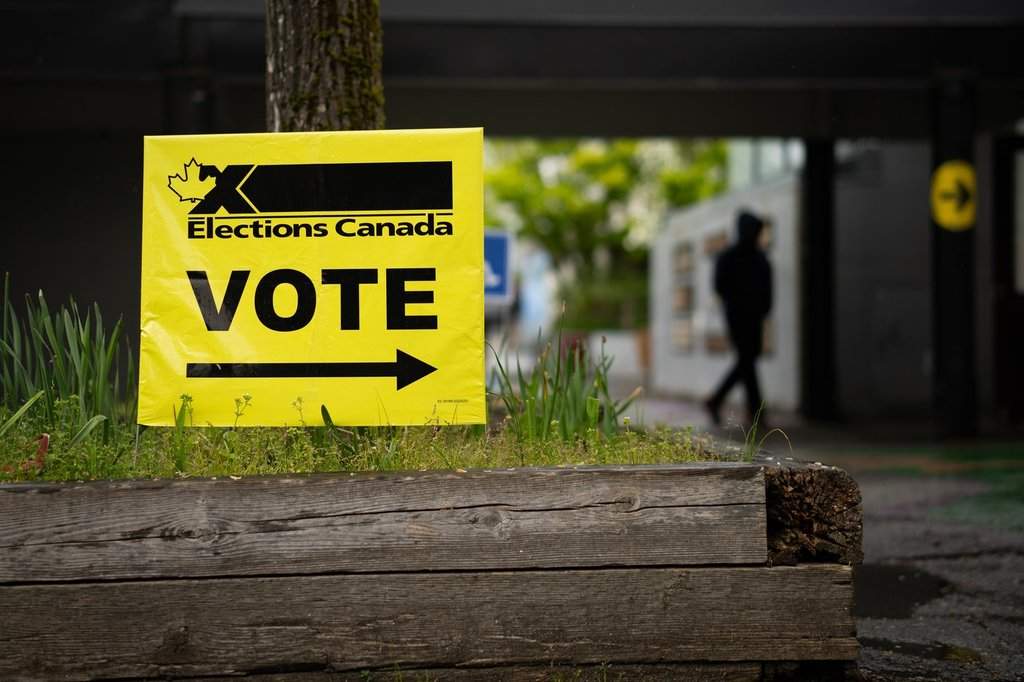
Calling six federal byelections simultaneously for a December vote across Ontario, Quebec, and Saskatchewan represents a calculated deployment of executive timing rather than a routine administrative housekeeping measure. Prime Minister Mark Carney’s decision to trigger concurrent contests in distinct regional battlegrounds operates as a multi-variable optimization problem designed to control parliamentary arithmetic, compress opposition mobilization windows, and test voter elasticity under winter turnout constraints. Standard political reporting treats these announcements as isolated local horse races. In reality, synchronizing six distinct electoral districts into a single December calendar window creates systemic knock-on effects across party financing, ground-game logistics, and legislative survival.
The Structural Logic of Simultaneous Electoral Compression
Under the Parliament of Canada Act and the Canada Elections Act, a prime minister holds discretionary authority within a strict statutory window to issue writs for vacant seats. Specifically, the Chief Electoral Officer must receive a warrant of vacancy, after which the government has between 11 and 180 days to announce the byelection, followed by a minimum 36-day campaign period. By clustering six vacancies across Ontario, Quebec, and Saskatchewan into a single December date rather than staggering them over successive quarters, the executive branch alters the resource allocation equation for every national party. Recently making waves in related news: The Mechanics of Election Forecasting and Why Exit Polls Fail.
This clustering executes three distinct operational objectives:
- Capital Dilution Across Opposition Infrastructure: National parties maintain centralized war rooms, digital ad-buying teams, and senior field organizers. Running one byelection allows an opposition party to concentrate its elite operational talent and maximum legal spending limits into a single geographic footprint. Running six simultaneously forces opposition headquarters to fracture their attention, split senior staff across three time zones, and manage six separate compliance and fundraising pipelines concurrently.
- Narrative Containment: Staggered byelections create a recurring cycle of media vulnerability. If a governing party loses three byelections sequentially in October, November, and January, it suffers three distinct news cycles of perceived decline. Consolidating six contests into a single December decision night compresses the political risk into one 24-hour media event, preventing a prolonged attrition narrative from bleeding into the winter parliamentary recess.
- Turnout Friction as a Filtering Mechanism: December elections in Canada introduce predictable meteorological friction. Short daylight hours, sub-zero temperatures, and pre-holiday consumer distraction suppress marginal voter participation. In low-turnout environments, electoral outcomes depend less on broad persuasion and more on database accuracy and get-out-the-vote (GOTV) execution.
Regional Asymmetries and the Three-Province Matrix
Grouping ridings in Ontario, Quebec, and Saskatchewan into a single analytical bucket obscures the radically different electoral mechanics governing each jurisdiction. Each province represents a separate strategic theater with unique baseline voter behaviors, incumbent vulnerabilities, and third-party interference patterns. Additional insights regarding the matter are covered by NPR.
Ontario: Suburban Elasticity and Vote-Splitting Thresholds
In Ontario federal ridings, electoral outcomes hinge on the volatility of suburban swing voters and the efficiency of progressive vote distribution. Unlike rural districts where partisan identification remains rigid across cycles, Ontario’s urban-suburban corridors exhibit high elasticity based on macroeconomic indicators—specifically interest rate trajectories, housing affordability, and consumer inflation.
The primary mechanism at work in an Ontario byelection is the efficiency gap between the Liberal and New Democratic Party (NDP) voter bases. When governing party enthusiasm drops, progressive voters rarely defect directly to the Conservative column in large numbers; instead, they either stay home or park their votes with the NDP. If the NDP maintains a baseline floor of 15% to 20% in a contested Ontario riding, the Conservative candidate can secure a plurality with roughly 38% to 41% of the vote. Consequently, the governing party’s operational goal in Ontario is not to win over hardened Conservative voters, but to suppress NDP viability by framing the December contest as a binary choice.
Quebec: Linguistic Framing and Nationalist Consolidation
Quebec byelections operate under an entirely separate set of rules driven by the presence of the Bloc Québécois. In English Canada, elections generally function as a two-and-a-half-party competition. In Quebec, the Bloc acts as a structural shock absorber that captures anti-government sentiment without requiring voters to endorse a federalist conservative platform.
Three dynamics dictate outcomes in Quebec districts:
- The Incumbency Penalty on Linguistic and Jurisdictional Files: Any federal friction regarding immigration caps, transfer payments, or provincial autonomy immediately penalizes the governing party in Quebec. During a byelection, voters use the ballot as a low-cost referendum on federal overreach because the outcome will not immediately topple the government in Ottawa.
- Candidate Localization: More than in Ontario or the West, Quebec ridings reward hyper-local candidate recognition. A star candidate with municipal roots or regional media visibility can outperform national party polling averages by 5 to 8 percentage points.
- Asymmetric Bloc Mobilization: The Bloc Québécois does not need to maintain national infrastructure across ten provinces. During a multi-province byelection cycle, while the Liberals and Conservatives divide their senior strategists across Ontario, Quebec, and Saskatchewan, the Bloc can deploy 100% of its institutional machinery exclusively into the Quebec contests.
Saskatchewan: Structural Majorities and Turnout Benchmarking
Saskatchewan represents a fundamentally different strategic exercise. Federal seats in Saskatchewan have historically exhibited overwhelming conservative majorities, often exceeding 50% to 65% of the popular vote outside of specific urban cores in Regina and Saskatoon. For the governing Liberals, pouring scarce financial capital into a rural Saskatchewan riding with the expectation of an outright victory violates basic return-on-investment principles.
Instead, Saskatchewan serves as a diagnostic stress test. Political analysts and party strategists use these contests to measure three specific metrics:
- Margin Compression: If a Conservative incumbent or replacement candidate wins a traditionally safe Saskatchewan seat by 15 points instead of 35 points, it signals structural fatigue within the conservative base or unexpected traction from smaller populist alternatives.
- Donor Fatigue: Measuring grassroots fundraising velocity in safe opposition territory reveals whether the opposition’s core supporters remain financially engaged or are experiencing contribution burnout ahead of a general election.
- Machine Readiness: Even in a losing effort, a governing party uses a Saskatchewan byelection to audit its local riding association’s voter-identification software and volunteer recruitment pipelines before the next national writ drop.
The Economics of Compressed Campaign Windows
A December election calendar imposes severe operational constraints on campaign finance and physical logistics. Under the Canada Elections Act, third-party advertisers and registered political parties face strict spending ceilings indexed to the number of electors in each district and the length of the campaign period. When six campaigns run simultaneously over a standard 36-to-40-day minimum writ period, the marginal cost of voter contact increases sharply.
First, media buying inefficiencies emerge immediately. Digital advertising platforms (Meta, Google, programmatic display) operate on real-time bidding auctions. When multiple campaigns target overlapping demographic segments within Ontario and Quebec during the peak November-December retail advertising season, cost-per-thousand-impressions (CPM) rates spike. Political campaigns are forced to bid against major retail corporations running Black Friday and holiday campaigns, eroding the purchasing power of every donated dollar.
Second, physical canvassing productivity degrades. In October, a trained volunteer can knock on 25 to 30 doors per hour in a suburban neighborhood between 5:00 PM and 8:00 PM. By late November and early December, sunset occurs before 5:00 PM across most of Ontario, Quebec, and Saskatchewan. Voters are less willing to open their doors in the dark during freezing temperatures, cutting physical contact rates by roughly 30% to 40%. Campaigns must compensate by shifting resources toward automated telephone town halls, peer-to-peer SMS texting, and direct mail—channels that carry higher per-contact costs and lower persuasion conversion rates than face-to-face interaction.
Third, advance polling takes on disproportionate weight. In summer or autumn elections, Election Day accounts for the vast majority of cast ballots. In December, rational campaigns aggressively push their identified supporters to vote during the four-day advance polling window (typically held 10 to 7 days before Election Day). Locking in a supporter’s ballot early insulates the campaign against a sudden December blizzard on Election Day that could depress turnout by 10% in specific precincts.
Parliamentary Arithmetic and Minority Governance Risk
The timing of six byelections directly impacts legislative operations in the House of Commons. Every vacant seat represents a missing vote in confidence motions and committee divisions. However, the strategic value of those six seats depends entirely on the baseline parliamentary math prior to the writ drop.
If the governing party relies on an informal confidence-and-supply arrangement or case-by-case issue support from smaller parties, losing even two or three previously held seats shifts the bargaining power in Ottawa. Each lost seat reduces the government’s margin for error during routine legislative votes, forcing the Prime Minister’s Office to offer larger policy concessions to opposition parties to prevent an accidental government defeat on a money bill.
Conversely, capturing an opposition-held seat in a December byelection provides an outsized psychological and procedural return. It signals to restless backbenchers within the governing caucus that the leadership’s brand remains viable, temporarily suppressing internal caucus dissent over polling numbers or policy direction. In Canadian parliamentary politics, byelections rarely alter the fundamental balance of power in the House, yet they routinely dictate the survival timeline of a party leader.
Limitations of the December Clustering Strategy
While synchronizing six byelections into a December window solves several administrative problems for the Prime Minister’s Office, the strategy carries built-in structural vulnerabilities that cannot be engineered away:
- Zero Isolation of Local Scandals: When six contests share a single campaign calendar, a severe candidate misstep or local controversy in one riding cannot be quarantined. National political reporters cover the six races as a unified package, meaning an unforced error by a candidate in Ontario immediately dominates press availabilities for the candidates in Quebec and Saskatchewan.
- Volunteer Cannibalization: In contiguous regions—such as multiple ridings within the Greater Toronto Area or southern Quebec—adjacent campaigns compete for the exact same pool of experienced campaign managers, scrutineers, and sign-installation crews. A party cannot easily bus volunteers from a safe riding to a swing riding if both ridings are actively fighting simultaneous campaigns.
- The Incumbency Drag Coefficient: Byelections historically punish governing parties regardless of the season. Without the existential stakes of choosing a prime minister, frustrated voters treat byelections as a consequence-free mechanism to register dissatisfaction. Compressing six races into December creates the statistical probability that the government will suffer net seat losses on a single night, delivering opposition leaders a unified victory narrative heading into the winter break.
Strategic Execution for Campaign Directors
To extract maximum value from a six-riding December sprint, national campaign directors must abandon traditional general-election playbooks and execute a segmented resource allocation model based on riding-level return on investment:
- Front-Load Capital Into Advance Poll Conversion: Allocate 65% of local field budgets toward identifying confirmed supporters and driving them to the advance polls in late November. Treat Election Day strictly as a mop-up operation for residual high-propensity voters rather than a broad persuasion window.
- Triage Ridings Into Three Strict Tiers: Categorize the six districts immediately into Defense, Offense, and Data-Harvesting tiers. Refuse to transfer marginal financial resources into Data-Harvesting ridings (such as structurally safe opposition seats in Saskatchewan) regardless of local candidate pressure; deploy only low-cost digital tracking tools in those districts to measure baseline voter sentiment.
- Decouple National Messaging From Local Ground Scripts: Instruct local candidates in Quebec and Ontario to run hyper-localized campaigns focused on municipal infrastructure, cost-of-living relief, and riding-specific service delivery, insulating them from national polling drag while relying on centralized data teams to manage voter turnout silently in the background.


