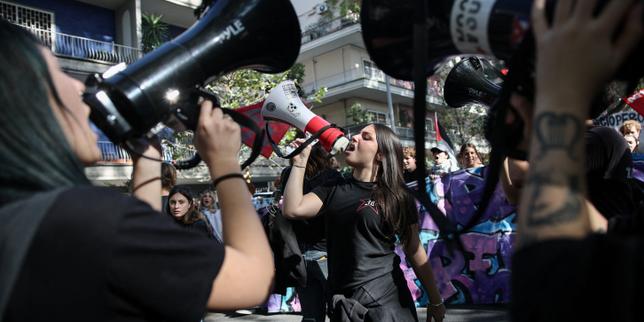
Visual documentation of civil unrest in France acts as an operational catalyst for protest movements across Europe by lowering the cognitive cost of mobilization and providing a replicable tactical repertoire. When high-density imagery of French demonstrations circulates through transnational media networks, it does not merely inspire sympathy; it alters the strategic calculus of peripheral activist groups by demonstrating state vulnerability and validating disruptive tactics.
Understanding this phenomenon requires stripping away superficial media narratives about "contagion" or "solidarity" and examining the underlying sociological and informational mechanisms. Drawing on established social movement theory—specifically the frameworks of political process, modular collective action, and transnational diffusion—we can map exactly how domestic French political friction translates into pan-European instability.
The Architecture of Transnational Diffusion
In social movement scholarship, the spread of protest tactics across national borders is defined as transnational diffusion. This process is neither automatic nor uniform. For an event in Paris, Lyon, or Nantes to trigger mobilization in Berlin, Madrid, or Athens, the signal must pass through three distinct structural filters: relational channels, non-relational media amplification, and structural equivalence.
Relational channels consist of direct organizational ties—labor union federations, student networks, and activist coalitions that share personnel and logistical infrastructure. While these channels provide high-trust coordination, they are slow and limited in scale.
Non-relational diffusion, driven by broadcast journalism and algorithmic social media feeds, operates at high velocity. Imagery serves as the primary compression algorithm for complex political grievances. A thirty-second clip of riot police retreating or a mass strike paralyzing transit infrastructure communicates tactical efficacy instantly, bypassing linguistic barriers that typically segment European political discourse.
However, imagery alone cannot manufacture dissent where material grievances do not exist. Diffusion requires structural equivalence—the perception among foreign observers that their own socioeconomic conditions mirror those of the French protesters. When European citizens face simultaneous inflationary pressures, pension reforms, or energy cost spikes, the French street becomes a proxy theater for their own domestic anxieties.
Visual Compression and Tactical Modularity
Political scientist Donatella della Porta’s core observation centers on the potency of French protest imagery. To operationalize this insight, we must examine how visual media transforms localized friction into what sociologist Charles Tilly termed modular collective action—tactics that can be detached from their original context and reapplied elsewhere.
France occupies a unique position in the European political imagination due to its historical repertoire of contention. The French state is centralized, and its civil society possesses a high baseline tolerance for disruptive street politics. Consequently, French protests generate exceptionally high-contrast visual artifacts: burning barricades, massive general strikes, and sustained occupations of public squares.
These visuals perform three distinct operational functions for foreign movements:
- Legitimation of Disruption: Mainstream European political culture often stigmatizes non-institutional direct action. Seeing hundreds of thousands of ordinary citizens—not merely fringe radicals—engaging in sustained disruption recalibrates the "Overton window" of acceptable protest behavior in neighboring states.
- Tactical Transfer: Protestors observe specific operational innovations—such as decentralized "black bloc" formations, yellow high-visibility vests as unifying symbols, or targeted blockades of logistical hubs like refineries and ports—and adapt them to local geographies.
- Asymmetric Signaling: High-impact visuals create an illusion of overwhelming momentum. Even if a French movement is statistically fragmented, tightly framed footage of intense confrontation projects state fragility, encouraging risk-averse actors in other nations to lower their threshold for participation.
The Three Pillars of Mobilization Thresholds
To predict when French imagery will trigger external mobilization, analysts must evaluate the internal dynamics of the receiving country. Collective action is governed by an implicit cost-benefit calculation made by individual participants.
1. Perceived Efficacy
Individuals rarely join high-risk protests unless they believe the action can extract concessions from the state. French movements frequently force tactical retreats from the executive branch, whether through the withdrawal of specific legislative articles or the granting of emergency fiscal subsidies. Each documented concession serves as empirical proof to external observers that street pressure yields tangible policy shifts, directly raising perceived efficacy abroad.
2. State Repression Calibration
Visuals of heavy-handed policing produce a paradoxical effect. While severe state repression increases the physical cost of protest, broadcast footage of police violence against peaceful demonstrators or union members often triggers moral shock. This shock erodes the legitimacy of the state’s monopoly on force, converting passive bystanders into active participants both domestically and internationally. Conversely, if the French state successfully contains unrest without generating viral optics of brutality, the contagion effect diminishes rapidly.
3. Institutional Absorption Capacity
The degree to which a neighboring country absorbs or deflects this visual stimulus depends on its domestic institutional architecture. Countries with corporatist bargaining models—such as Germany, Sweden, or the Netherlands—possess institutionalized mechanisms where labor unions and employers negotiate wages and policy behind closed doors. These structures act as shock absorbers, channeling grievances away from the streets. Countries with weak institutional mediation or deeply polarized parliaments—such as Italy, Spain, or Greece—lack these buffers, making them highly susceptible to French-style street contagion.
The Cost Function of Algorithmic Amplification
The modern media ecosystem distorts the diffusion process by introducing an algorithmic bias toward kinetic conflict. Legacy broadcast networks and social media platforms alike optimize for attention retention, which correlates strongly with visual intensity.
This creates a systematic selection bias in the export of French political reality:
- Over-representation of Escalation: Peaceful negotiations, incremental policy compromises, and routine union assemblies generate zero algorithmic traction. Violent clashes, property destruction, and dramatic standoffs achieve exponential reach.
- De-contextualization of Grievances: As imagery travels across borders, the specific legislative mechanics driving the French protest—such as the actuarial details of a pension reform or specific tax thresholds—are stripped away. What remains is a generalized aesthetic of anti-establishment revolt.
- Premature Radicalization: Peripheral movements in other European states often attempt to replicate the peak intensity of French protests without possessing the underlying organizational density. A French general strike is backed by decades of union infrastructure and deep strike funds. When a loose network of online activists in another country attempts to mimic the visual output of a French riot without that logistical foundation, the movement typically collapses under basic policing pressure.
Limits of the Contagion Model
Treating French protest imagery as an omnipotent trigger leads to severe analytical errors. Visual diffusion faces hard structural constraints that frequently halt cross-border spillovers before they achieve critical mass.
The primary constraint is divergent political opportunity structures. A tactic that succeeds in a unitary presidential system like France’s Fifth Republic often fails in a decentralized federal system like Germany’s. In France, paralyzing Paris effectively paralyzes the national political nervous system. In Germany, power is distributed across federal states (Länder), diffusing the impact of localized disruption.
A second limitation is historical memory and stigma. In nations with recent memories of authoritarianism or severe political violence—such as post-Franco Spain or post-reunification Eastern Europe—imagery of burning vehicles and street battles can alienate the broader public rather than mobilize them. In these contexts, French visuals may inadvertently allow domestic governments to frame local protesters as dangerous extremists, thereby strengthening the state’s hand.
Finally, economic cycle desynchronization limits sustained pan-European alignment. If inflation or unemployment peaks in France six months before it hits neighboring economies, the window of structural equivalence closes before transnational networks can coordinate simultaneous action.
Strategic Monitoring Protocol for Institutional Analysts
For policymakers, risk analysts, and institutional observers tasked with forecasting European civil unrest, tracking French domestic politics is a necessary but insufficient baseline. Anticipating cross-border spillovers requires a structured monitoring framework focused on the intersection of visual velocity and domestic vulnerability.
- Track Tactical Adaptation, Not Just Sentiment: Monitor domestic activist communications in target countries for explicit references to French organizational methods (e.g., adopting specific symbols, shifting from permitted marches to decentralized blockades of critical infrastructure). Sentiment is noise; tactical mimicry is a leading indicator of operational mobilization.
- Audit Domestic Institutional Buffers: Cross-reference spikes in viral French protest media with the legislative calendars of neighboring states. High-risk contagion windows open when viral imagery coincides with unpopular domestic austerity measures, labor market deregulations, or stalled collective bargaining agreements in countries with weak corporatist mediation.
- Measure Police-Protester Optics Ratios: Evaluate the ratio of documented state violence to protester property damage in international media coverage. Movements driven by imagery of state overreach possess far higher cross-border mobilization potential than movements defined in foreign media by chaotic vandalism.
- Isolate Logistical Bottlenecks: Shift security and economic continuity planning away from symbolic civic centers toward critical supply chain nodes. As demonstrated by French protest evolution, modern European disruption relies heavily on choking fuel depots, transit hubs, and automated ports—a low-manpower, high-leverage tactic easily replicated by small, radicalized cells across the continent.