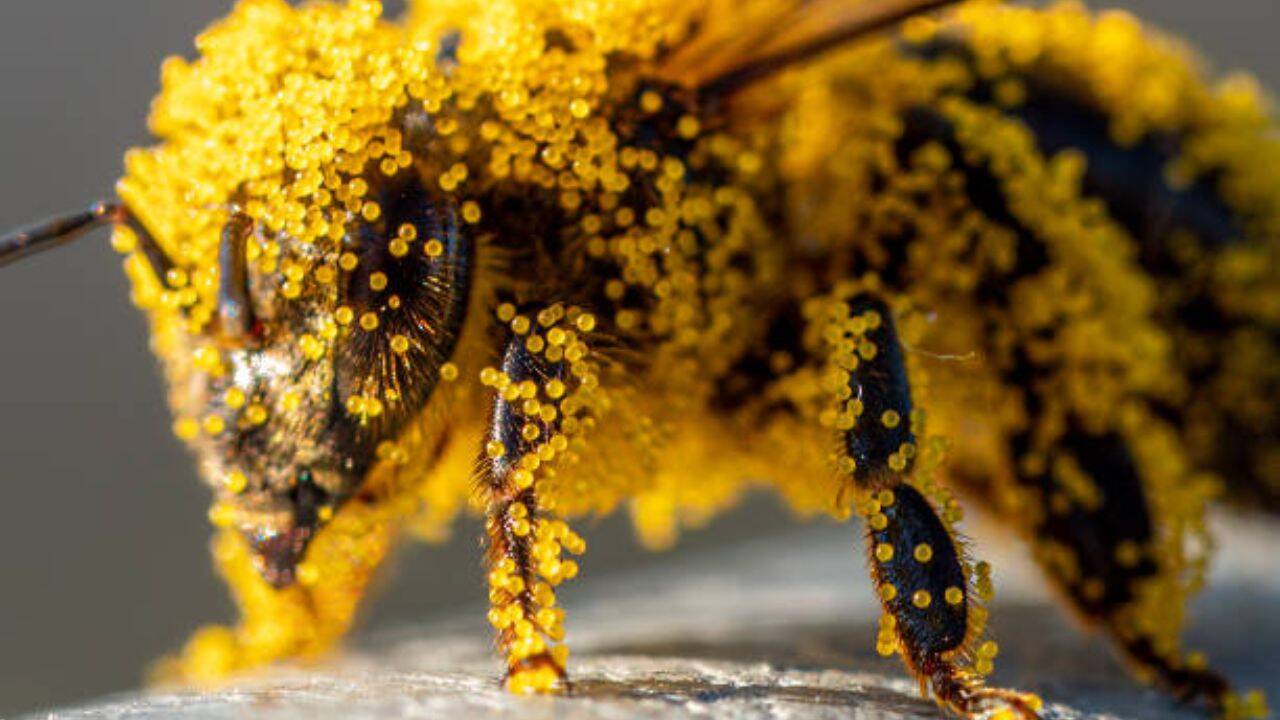
Locard’s Exchange Principle states that every contact leaves a trace. While forensic investigations routinely prioritize DNA, fingerprints, and ballistic residue, these evidence classes frequently fail when physical contact is shielded, or when environmental exposure degrades organic molecules. Microscopic botanical particles, specifically pollen grains and plant spores, offer an alternative vector for spatial and temporal reconstruction. The physical resilience of their outer shells, combined with their highly localized ecological distribution, transforms palynomorphs into reliable geographic indicators. By establishing a systematic framework for analyzing these microscopic structures, forensic investigators can trace movement, verify alibis, and link suspects to precise ecological niches with mathematical probability.
The value of palynology lies in its ability to solve the problem of spatial-temporal attribution. When a crime occurs, establishing the geographic history of an object or individual is often the primary bottleneck in the investigation. Forensic palynology bypasses the limitations of human testimony and digital tracking by analyzing the microscopic botanical signature embedded in physical materials.
The Structural Chemistry of Palynomorph Preservation
To understand why pollen serves as an effective forensic tool, one must analyze the material science of the pollen wall. The outer layer of a pollen grain, known as the exine, is composed of sporopollenin.
The Chemical Inertness of Sporopollenin
Sporopollenin is a highly cross-linked polymer composed of carbon, hydrogen, and oxygen. It is widely considered one of the most chemically inert organic substances in the biosphere.
- Acid Resistance: Sporopollenin resists dissolution by concentrated hydrochloric, hydrofluoric, and sulfuric acids. This resistance allows forensic technicians to destroy surrounding soil matrix particles using aggressive acid baths without damaging the diagnostic features of the pollen itself.
- Thermal and Biological Stability: The polymer resists enzymatic decay and high-temperature degradation. Because bacteria and fungi cannot easily metabolize sporopollenin, pollen grains remain intact in soil, clothing, and nasal cavities for decades, and in geological strata for millions of years.
- Oxidative Vulnerability: The primary vulnerability of sporopollenin is oxidation. Exposure to oxygen and ultraviolet radiation will slowly degrade the polymer over years, meaning pollen preserved in anaerobic conditions (such as waterlogged soils or sealed containers) retains its structural integrity far longer than pollen exposed to open air.
Morphological Diagnostics
The exine is not a uniform shell. It possesses highly complex, species-specific surface features that allow palynologists to identify the parent plant taxon down to the genus, and occasionally the species, level.
       [ Pollen Grain Morphological Features ]
                      │
     ┌────────────────┴────────────────┐
     ▼                                 ▼
[Apertures]                     [Ornamentation]
(Pores and Furrows)             (Surface Sculpturing)
  - Colpi (elongate slits)        - Echinate (spiny)
  - Pores (circular openings)     - Reticulate (net-like)
  - Colporate (combined)          - Striate (grooved)
These features are categorized into distinct structural components:
- Apertures: Openings in the exine through which the pollen tube emerges during germination. These present as furrows (colpi), pores, or a combination of both (colporate). The number, position, and shape of these apertures serve as primary taxonomic keys.
- Ornamentation: The external sculpturing of the exine. Surface patterns range from smooth (psilate) to spiny (echinate), net-like (reticulate), or grooved (striate). These microscopic patterns reflect the evolutionary adaptations of the plant, such as mimicking the texture of insect pollinators to facilitate transport.
The Aerodynamic and Transfer Dynamics of Pollen Grains
The utility of pollen as forensic evidence depends on how it moves through the environment and attaches to surfaces. Plants utilize distinct reproductive strategies that govern the concentration and distribution of pollen in any given area.
Anemophilous vs. Entomophilous Pollen
The primary division in pollen dispersal mechanisms dictates the spatial resolution of forensic attribution.
| Metric | Anemophilous (Wind-Pollinated) | Entomophilous (Insect-Pollinated) |
|---|---|---|
| Production Volume | Extremely high (billions of grains per plant) | Low (thousands of grains per flower) |
| Physical Size | Small ($10,\mu\text{m}$ to $40,\mu\text{m}$), smooth, aerodynamic | Large ($50,\mu\text{m}$ to $>100,\mu\text{m}$), sticky, highly ornamented |
| Dispersal Range | Regional (tens to hundreds of kilometers) | Localized (meters to kilometers) |
| Forensic Utility | Identifies broad regional geography and season | Pinpoints specific local contact or micro-environments |
Anemophilous pollen (such as pine, oak, and grasses) forms a background "pollen rain" that settles over vast areas. This background signal provides macro-regional context, identifying the general geographic zone where an object has been exposed to the air.
Entomophilous pollen (such as orchids, clover, and many agricultural crops) is designed to adhere to surfaces. Because it does not travel far through the air, its presence on a suspect’s footwear or clothing indicates direct physical contact with the plant or the immediate soil beneath it. This high spatial specificity makes entomophilous pollen highly effective for linking a suspect directly to a specific crime scene.
Transfer and Retention Mechanics
The transfer of pollen to physical evidence follows the physics of particle adhesion. Electrostatic forces, surface moisture, and mechanical interlocking govern how pollen grains adhere to target substrates.
- Electrostatic Attraction: Pollen grains often carry a negative electrostatic charge acquired during flight. Synthetic fabrics and animal hair, which readily accumulate positive static charges, act as highly efficient electrostatic precipitators for airborne pollen.
- Mechanical Interlocking: The complex ornamentation of insect-pollinated grains (spines, hooks, and sticky lipid coatings called pollenkitt) allows them to entangle mechanically in porous surfaces like wool, denim, and shoe laces.
- Nasal Filtration: The human nasal cavity acts as a highly efficient particle filter. Inhaled pollen grains lodge in the mucus layer of the nasal turbinates. Because the nasal clearance cycle typically replaces this mucus every 15 to 30 minutes, pollen retrieved from nasal washes provides a high-resolution window into the environments a suspect breathed in during the preceding few hours. If a suspect has died, the mucosal transport stops, preserving the inhaled pollen assemblage at the exact time of death.
The Analytical Pipeline for Isolation and Characterization
Extracting a clean, representative pollen sample from forensic evidence requires a strict, multi-step chemical purification process designed to destroy the surrounding matrix while leaving the sporopollenin intact.
Phase 1: Contamination Control and Sampling
The extreme abundance of modern, airborne pollen requires rigorous containment protocols to prevent contemporary pollen from contaminating the forensic sample.
- Environmental Isolation: All sample preparation must occur in a laminar flow hood fitted with HEPA filters capable of capturing particles down to $0.3,\mu\text{m}$.
- Exclusionary Sampling: Investigators must take control samples from the surrounding areas of the crime scene, the laboratory itself, and the clothing of the recovery personnel to establish a baseline of potential contaminants.
Phase 2: Chemical Digestion (The Extraction Protocol)
The raw sample (soil, clothing fibers, or nasal washings) contains large volumes of organic and inorganic debris that obscure the microscopic pollen grains. A sequence of chemical washings isolates the palynomorphs.
[Raw Forensic Sample]
         │
         ▼
[Carbonate Removal] ──► 10% Hydrochloric Acid (HCl) wash
         │
         ▼
[Silicate Digestion] ──► 48% Hydrofluoric Acid (HF) wash
         │
         ▼
[Cellulose Destruction] ──► Acetolysis (9:1 Acetic Anhydride : Sulfuric Acid)
         │
         ▼
[Density Separation] ──► Zinc Chloride (ZnCl2) heavy liquid flotation
         │
         ▼
[Isolated Palynomorphs]
First, the sample is treated with 10% Hydrochloric Acid (HCl) to dissolve calcium carbonates and dissolve any clustering clays.
Second, if the matrix contains sand or clay, it is treated with 48% Hydrofluoric Acid (HF). This highly corrosive acid digests silicates, converting them into volatile silicon tetrafluoride gas, while leaving the acid-resistant sporopollenin untouched.
Third, the sample undergoes Acetolysis. The mixture—typically nine parts acetic anhydride to one part concentrated sulfuric acid—is heated to destroy cellulose, hemicellulose, and other organic plant debris. This process darkens the pollen exine, making the diagnostic surface features more visible under light microscopy.
Fourth, a Heavy Liquid Density Gradient Centrifugation is executed. Using a zinc chloride ($\text{ZnCl}_2$) or sodium polytungstate solution with a specific gravity of approximately 2.0, the heavier remaining mineral particles sink to the bottom, while the lighter pollen grains (specific gravity of 1.3 to 1.5) float to the surface. This layer is decanted, washed, and mounted on glass slides.
Phase 3: Identification and Quantification
The isolated pollen is analyzed under a compound light microscope at magnifications ranging from $400\times$ to $1000\times$ using oil immersion. Scanning Electron Microscopy (SEM) is deployed when sub-micron level details of the exine ornamentation are required to distinguish between sister species within a genus.
The analyst counts a minimum of 200 to 500 pollen grains per slide to establish a statistically valid representation of the pollen assemblage. This quantitative profile is known as the pollen spectrum.
Quantitative Reconstruction of Geographic Profiles
A single pollen grain rarely provides sufficient evidence to pinpoint a location. Instead, forensic palynologists analyze the relative abundance of different species within a sample to construct a pollen assemblage profile. This profile is compared to regional vegetation maps and control samples.
The Pollen Assemblage Formula
The composition of a pollen sample is expressed as a relative percentage of the total pollen sum ($P_{\text{sum}}$):
$$Relative\text{ }Abundance\text{ }(%)\text{ }of\text{ }Taxon\text{ }i = \left( \frac{C_i}{P_{\text{sum}}} \right) \times 100$$
Where $C_i$ is the count of individual grains of taxon $i$, and $P_{\text{sum}}$ is the total number of pollen grains counted in the sample (excluding spores of non-vascular plants, which are calculated as a separate percentage).
   [ Crime Scene Sample Profile ]              [ Suspect Shoe Sample Profile ]
        - Pine: 45%                                 - Pine: 42%
        - Oak:  15%                                 - Oak:  12%
        - Birch: 5%              ═════════►         - Birch: 8%
        - Clover: 35% (sticky)                      - Clover: 38% (sticky)
Comparing these multi-dimensional datasets requires multivariate statistical analysis. The Bray-Curtis dissimilarity index or Principal Component Analysis (PCA) is applied to verify whether the pollen spectrum retrieved from a suspect's shoe matches the crime scene sample or a random background sample from another area.
If the dissimilarity index between the suspect's sample and the crime scene control is near zero, and high when compared to surrounding regional controls, it indicates a high probability of physical presence at the scene.
Case Framework: The Exclusionary Power of Plant Geography
To illustrate the diagnostic power of this method, consider an investigation involving a vehicle suspected of transporting illicit materials across a national border.
- The Suspect's Alibi: The driver claims to have traveled exclusively along coastal highways dominated by maritime pine (Pinus pinaster) and salt-marsh vegetation.
- The Forensic Reality: Vacuum samples taken from the engine air filter reveal a pollen spectrum dominated by interior-mountain species: spruce (Picea abies), beech (Fagus sylvatica), and a high concentration of an endemic high-altitude wildflower (Saxifraga species).
The physical impossibility of acquiring high densities of sub-alpine pollen on a low-altitude coastal highway invalidates the suspect's alibi. The air filter, acting as a passive air sampler, recorded the vehicle's true geographic trajectory through the mountains.
Systemic Vulnerabilities and Admissibility Barriers
While palynology offers high analytical precision, it is not a silver bullet. The integration of botanical trace evidence into the judicial system faces several systemic bottlenecks and methodological limitations.
1. Database Scarcity
Unlike DNA profiling, which relies on standardized national databases (such as CODIS), forensic palynology lacks comprehensive, digitized, high-resolution regional pollen maps. Creating these databases requires decades of systematic sampling across varying seasons, soil types, and microclimates. Consequently, palynologists must often collect their own reference samples around a crime scene to establish the local botanical context, adding time and cost to investigations.
2. Taxonomic Resolution Limits
Many plant families produce pollen grains that are morphologically identical under standard optical microscopes. For instance, the grasses (Poaceae) produce single-pored (monoporate) spherical pollen grains that look virtually identical across hundreds of genera, including agricultural crops like wheat and wild pasture grasses. Without costly and time-consuming scanning electron microscopy or DNA metabarcoding, pinpointing the exact species within these families is impossible.
3. Subjectivity and Human Error
The identification of palynomorphs relies heavily on the pattern recognition skills of the human analyst. Modern computer vision and machine learning models are beginning to assist in automated pollen identification, but the field remains dominated by manual counting. This human element introduces the potential for cognitive bias and classification errors, which defense counsels can exploit during cross-examination.
4. Legal Standards of Admissibility
In jurisdictions operating under the Daubert standard, scientific evidence must meet strict criteria regarding peer review, error rates, standardization, and general acceptance within the scientific community.
                       [ Daubert Admissibility Check ]
                                      │
     ┌────────────────────────────────┼────────────────────────────────┐
     ▼                                ▼                                ▼
[Empirical Testing]         [Peer-Reviewed Standards]           [Known Error Rates]
Are the extraction methods  Is the analysis published in       Can the analyst quantify
repeatable & validated?     reputable scientific journals?     the rate of false matches?
Because palynology is a highly specialized discipline with relatively few active practitioners worldwide, meeting these standards requires meticulous documentation of extraction protocols, chain of custody, and statistical validation of the matching profiles.
Technical Integration and Strategic Implementation
To maximize the utility of forensic palynology in modern investigations, law enforcement agencies and forensic laboratories must transition from treating botanical evidence as an afterthought to integrating it into standard trace-evidence collection workflows.
Implementing a Standardized Collection Protocol
To prevent the loss or contamination of palynomorphs, agencies should adopt the following operational protocols during the initial response phase:
- Prioritize Non-Porous Packaging: Clothes, shoes, and tools recovered from suspects or crime scenes must be placed in sealed, anti-static plastic bags rather than paper bags, which can leak microscopic particles or allow modern airborne pollen to penetrate.
- Vacuum Sampling of Vehicles: Vacuum attachments equipped with inline disposable micro-filters ($5,\mu\text{m}$ pore size) should be used to harvest dust from car carpets, seats, and air intake filters before any interior detailing or cleaning occurs.
- Nasal Swabbing in Homicides: Forensic pathologists should perform deep nasal washes using sterile saline during the initial autopsy phase on all cases involving unidentified bodies or suspected outdoor crime scenes.
The Shift Toward Hybrid Identification Workflows
The future of geographic attribution lies in a hybrid analysis model that pairs classical morphological palynology with high-throughput DNA metabarcoding. By extracting environmental DNA (eDNA) directly from the isolated pollen grains, laboratories can sequence the chloroplast genomes to achieve species-level identification that optical microscopy cannot resolve. This dual-layered approach combines the rapid, quantitative profiling of classical palynology with the absolute taxonomic resolution of molecular biology, establishing an empirical standard of evidence capable of withstanding intense courtroom scrutiny.