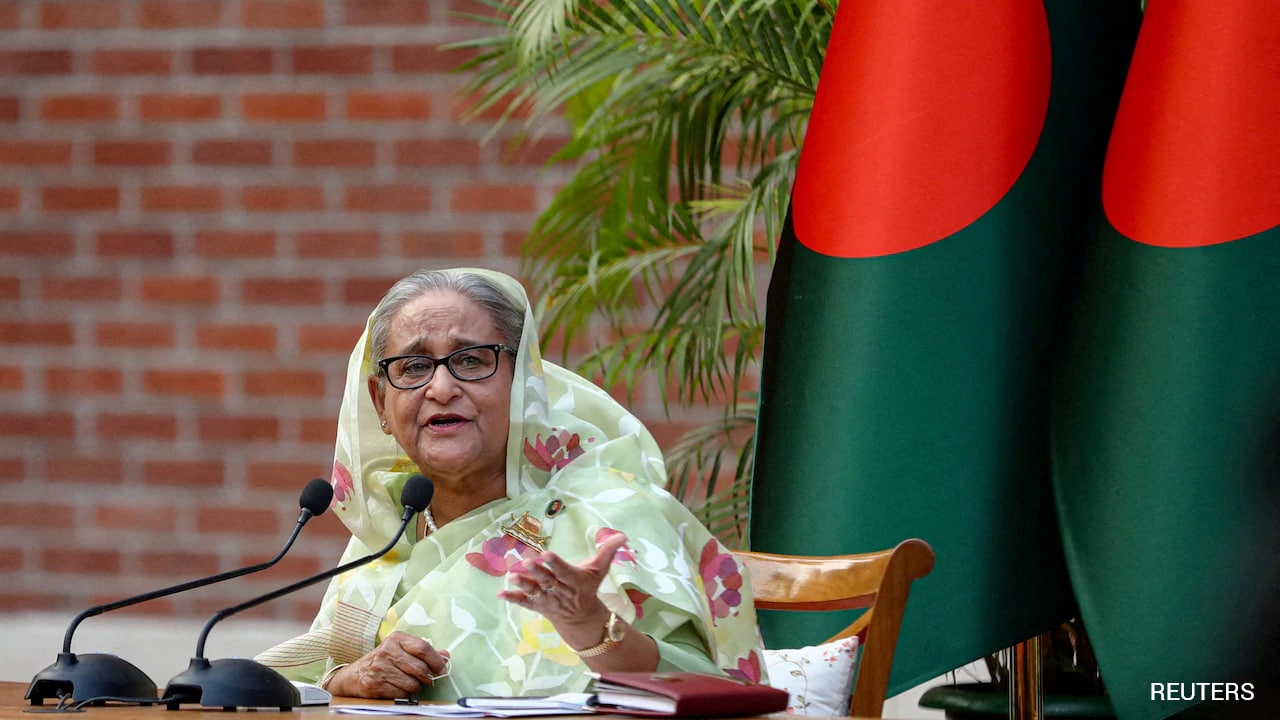
Political unrest in Gopalganj, the ancestral home of ousted Bangladeshi Prime Minister Sheikh Hasina, is not a spontaneous outbreak of civil disorder; it is the predictable kinetic output of a concentrated patronage network reacting to sudden state-level disenfranchisement. When an entrenched political apparatus loses control of the central executive branch, its geographic strongholds do not immediately dissolve. Instead, they transition from administrative hubs into defensive enclaves. Analyzing the violent protests surrounding proposals for Hasina's return requires stripping away surface-level media narratives of partisan loyalty and examining the underlying structural incentives, spatial vulnerabilities, and state-security bottlenecks driving the conflict.
Standard news coverage treats these clashes as isolated flare-ups between Awami League loyalists and interim security forces. That framing misses the operational reality. Gopalganj functions as a closed-loop political ecosystem where local economic survival, bureaucratic authority, and physical security were tied directly to a single dynastic leadership structure for over fifteen years. The sudden removal of that patron creates an acute power vacuum, forcing local actors to mobilize aggressively to deter perceived existential threats from a transitional government. For an alternative perspective, check out: this related article.
The Structural Anatomy of a Political Enclave
To understand why violence escalates rapidly in Gopalganj compared to other districts, analysts must evaluate the region through the lens of concentrated political geography. Unlike urban centers such as Dhaka or Chattogram, where political authority is contested across diverse economic classes, institutional power brokers, and student networks, Gopalganj operates under near-total ideological and organizational homogeneity.
This homogeneity produces three distinct operational dynamics during a regime transition: Related insight on this trend has been shared by BBC News.
- High Mobilization Efficiency: Local Awami League units, youth wings (Jubo League), and student fronts (Chhatra League) possess pre-existing command-and-control hierarchies. Mobilizing thousands of participants onto arterial highways requires minimal coordination overhead because the social and organizational networks are identical.
- Asymmetric Threat Perception: Following Hasina's ouster in August 2024 and the subsequent formation of an interim administration led by Muhammad Yunus, political actors within Gopalganj faced immediate loss of state protection. In post-authoritarian transitions, former ruling cadres frequently interpret central government decrees—whether administrative transfers or judicial inquiries—as precursors to systemic retribution.
- Geographic Chokepoint Leverage: Gopalganj sits along critical transit corridors connecting southwestern Bangladesh to the capital, particularly via the Padma Bridge infrastructure. Disrupting transport arteries within this district imposes immediate economic friction on the central government, giving local organizers disproportionate bargaining power relative to their population size.
The proposal or rumor of Hasina’s return acts as a synchronization signal for this entire apparatus. Whether her physical return is logistically viable in the short term is secondary; the narrative itself serves to test the interim government’s coercive capacity and reaffirm local command structures.
The Three Pillars of Enclave Mobilization
The escalation from political demonstration to violent confrontation follows a repeatable sequence driven by three structural variables.
1. Patronage Preservation and Sunk-Cost Defense
Over decades, state infrastructure spending, public sector recruitment, and local contracting in Gopalganj were heavily subsidized by central executive discretion. Local elites, business owners, and mid-level bureaucrats hold massive sunk costs in the Awami League’s political survival. When the central regime collapses, these stakeholders face immediate asset devaluation and legal exposure. Protesting for the former leader's return is a rational defensive maneuver designed to signal to the interim administration that any attempt to dismantle local administrative or economic networks will incur high operational costs.
2. Security Apparatus Friction
During a regime transition, the state's monopoly on violence undergoes severe internal recalibration. Police forces, demoralized and disorganized after the collapse of the previous government, often withdraw from aggressive crowd control, leaving the Bangladesh Army to manage civil disturbances. Military units deployed to a hostile political enclave face a classic asymmetric dilemma:
- Under-reaction allows armed or organized protesters to seize critical infrastructure, block national highways, and attack rival political factions, demonstrating state weakness.
- Over-reaction—such as the use of live ammunition resulting in fatalities—generates martyrs, radicalizes previously passive residents, and triggers international scrutiny regarding human rights compliance under the interim government.
Clashes in Gopalganj, including incidents involving attacks on military vehicles and personnel, illustrate this exact friction. Protesters exploit the military's restrictive rules of engagement, using physical blockades and improvised weapons to force security forces into defensive postures.
3. Information Asymmetry and Rumor Cascades
In environments where traditional political leadership is exiled or underground, formal communication channels break down. Information circulates through encrypted messaging apps, localized social media networks, and diaspora broadcasts. Claims regarding Hasina's imminent return—often amplified by recorded audio messages or statements from exiled party figures—create rapid expectation cascades. Local cadres mobilize to demonstrate readiness, fearing that failure to appear on the streets will result in marginalization if the party regains influence.
Cause-and-Effect Failures in Transitional Governance
Surface-level reporting typically portrays the violence in Gopalganj as a binary clash between "protesters" and "security forces." This obscures the multi-stage causal chain that turns a political gathering into an armed confrontation.
First, the central interim government initiates structural decoupling—removing politically appointed administrators, dissolving local government bodies, and filing criminal cases against former ministers and local leaders. While legally framed as accountability measures, these actions sever the institutional links between Dhaka and the enclave.
Second, deprived of institutional channels to negotiate their political survival, local Awami League leaders shift entirely to street-level disruption. Because formal parliamentary or bureaucratic pushback is unavailable, physical control of territory becomes the sole remaining metric of political relevance.
Third, the deployment of military patrols into densely populated, politically hostile zones introduces a kinetic trigger. Unlike local police, who understand community dynamics and informal de-escalation protocols, military units operate on territorial control doctrines. When a crowd attempts to block a convoy or disarm personnel, the encounter escalates rapidly from crowd dispersal to lethal force engagements.
Fourth, the resulting casualties and property damage harden local resolve, confirming the enclave's internal narrative that the central state is an occupying force rather than a legitimate governing authority.
Distinguishing Verified Facts from Strategic Hypotheses
Rigorous political risk analysis requires separating documented operational realities from unproven strategic assumptions.
Documented Operational Realities:
- Sheikh Hasina resigned and fled Bangladesh in August 2024 following mass protests, ending a 15-year tenure.
- Gopalganj remains the primary electoral and organizational stronghold of the Awami League, having consistently returned Hasina to parliament with overwhelming margins.
- Violent demonstrations have occurred in the district following her ouster, resulting in injuries to military personnel, destruction of security vehicles, and civilian casualties.
- The interim government faces simultaneous governance challenges, including police force reconstitution, macroeconomic stabilization, and judicial reform.
Strategic Hypotheses (Unverified Variables):
- Centralized Command vs. Decentralized Autonomy: It remains unconfirmed whether violent escalations in Gopalganj are directly ordered by Hasina’s exiled leadership circle to destabilize the interim government, or if they represent autonomous actions by local mid-tier leaders attempting to protect their immediate personal and financial interests.
- Logistical Viability of Return: While political rhetoric centers on Hasina's return, the operational feasibility of her re-entering Bangladesh without immediate arrest—given pending judicial warrants and extradition discussions—remains exceedingly low under current political conditions. The "return" functions primarily as a mobilizing myth rather than an imminent logistical event.
- Long-Term Cohesion of the Enclave: Analysts cannot yet determine whether Gopalganj’s resistance will sustain itself over a multi-year electoral cycle or fracture once central fiscal transfers and state development funds are systematically redirected away from the district.
Operational Limitations of Containment Strategies
Neither the interim administration in Dhaka nor the Awami League leadership in Gopalganj possesses a decisive, low-cost mechanism to resolve this standoff.
For the interim government, a purely kinetic pacification strategy in Gopalganj carries prohibitive political risks. Saturating the district with troops and conducting mass arrests would suppress street protests temporarily, but it would permanently alienate the local population, validate Awami League claims of political persecution, and strain the military's operational bandwidth at a time when troops are needed for nationwide law-and-order duties. Conversely, ignoring the unrest and allowing local cadres to establish a de facto autonomous zone undermines the interim government's writ and signals weakness to other opposition factions across the country.
For the Awami League apparatus in Gopalganj, sustained violent mobilization faces diminishing returns. Blocking highways and clashing with security forces inflicts short-term disruption, but it cannot reverse the structural reality in Dhaka. Without control over the national treasury, central bank, or intelligence apparatus, an isolated regional stronghold cannot project power nationally. Over time, continuous confrontation exhausts local financial resources, invites targeted legal prosecution of mid-level organizers, and alienates local merchants whose livelihoods depend on uninterrupted trade along the Padma Bridge corridor.
Strategic Forecast and Containment Protocol
The unrest in Gopalganj will not culminate in a broader counter-revolution, nor will it evaporate through standard policing. The conflict is entering a phase of protracted, low-intensity attrition characterized by periodic flare-ups tied to judicial milestones, political anniversaries, and leadership announcements.
To neutralize the strategic threat posed by enclave mobilization without triggering self-defeating violent escalations, transitional authorities must shift from reactive military containment to structural administrative integration:
- Decouple Economic Flow from Political Loyalty: The interim government must maintain uninterrupted state fiscal transfers, agricultural subsidies, and infrastructure maintenance in Gopalganj. Demonstrating that the district's economic survival does not depend on Awami League patronage directly undermines the primary argument used by local elites to mobilize residents.
- Isolate Kinetic Agitators from Passive Constituents: Security forces must transition away from large-scale, high-visibility convoy patrols that act as magnets for confrontation. Operations should rely on targeted intelligence-led arrests of individuals directly responsible for weapons deployment and infrastructure sabotage, avoiding broad collective curfews that punish the general population.
- Establish Non-Partisan Administrative Channels: Appoint career civil servants with no overt political affiliations to key district administrative and policing roles in Gopalganj. Rebuilding institutional trust requires credible, neutral interlocutors who can negotiate directly with local business chambers and community elders outside the Awami League hierarchy.
- Control the Transit Corridors: Security deployments should prioritize securing the Padma Bridge approach roads and major commercial arteries rather than occupying residential neighborhoods. Preserving national economic logistics strips local organizers of their primary coercive leverage while minimizing friction within civilian centers.
As long as political survival in Gopalganj remains binary—total dominance or total vulnerability—calls for Sheikh Hasina’s return will continue to generate violent mobilization. Breaking that cycle requires dismantling the economic and security incentives that bind the local population to a single political dynasty.


