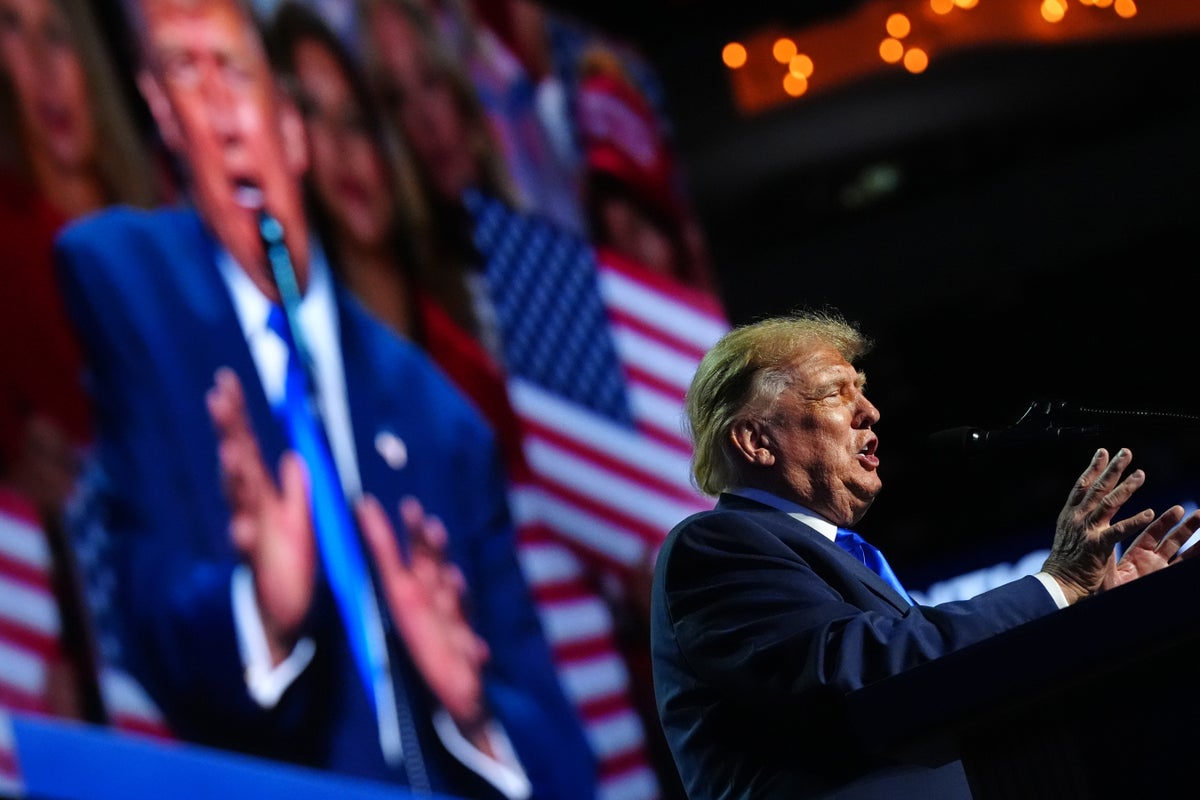
Political commentary routinely mistakes physical proximity for objective analysis, transforming standard campaign choreography into breathless validation of electoral momentum. When institutional anchors review political addresses immediately following social engagements on the golf course, the line between detached journalism and mutual reinforcement dissolves entirely. Deconstructing the mechanics of major keynote addresses requires stripping away the immediate performance bias and evaluating the underlying structural pledges, economic cost functions, and audience capture strategies deployed during high-stakes party conventions.
The primary mechanism of modern political convention speeches relies on macroeconomic promises designed to alter immediate voter calculus ahead of legislative elections. During the Dallas Republican midterm convention, the introduction of a direct citizen dividend serves as a primary case study in political incentive structures. Pledging multi-thousand-dollar cash distributions contingent upon sweeping congressional majorities bypasses traditional legislative deliberation. Evaluating this proposal from a fiscal standpoint reveals an immediate structural mismatch between projected federal revenues and the sheer scale of the expenditure.
The cost function of broad fiscal distributions of this magnitude scales directly with the adult population size, running into trillions of dollars. Funding mechanisms tied strictly to executive tariff projections face severe mathematical limitations, as estimated customs yields cover only a fraction of the total obligation. When policy proposals rely on deficit financing during periods of elevated borrowing costs, the secondary economic effects manifest rapidly in capital markets through upward pressure on interest rates and persistent inflationary momentum. Analysts tracking fiscal policy note that proposing large-scale cash injections without statutory appropriation frameworks converts campaign rhetoric into an exercise in political signaling rather than executable governance.
The second major variable in large-scale political addresses involves crowd dynamics and physical venue optimization. Convention managers face the constant challenge of maintaining visual density across massive arenas. When physical attendance lags behind expectations, leaving upper tiers visibly sparse, the speaking strategy characteristically shifts toward preemptive framing of media coverage. Speakers routinely incorporate direct critiques of broadcast optics into their remarks, attempting to neutralize visual discrepancies before independent documentation circulates. This defensive rhetorical pivot shifts the focus from policy exposition to an adversarial contest over crowd size verification.
Evaluating the efficacy of these addresses requires examining the intersection of institutional media posture and executive performance. Straight-news anchors frequently struggle to maintain analytical distance when evaluating marathon addresses that run close to two hours. The physical stamina required to deliver extended unscripted remarks is frequently conflated with electoral viability, creating a distinct reporting bias. Observers analyzing media reactions must isolate the theatrical elements of endurance and crowd feedback from the empirical validity of the legislative platform being advanced.
Future campaign strategy will likely depend on whether structural fiscal promises can withstand rigorous econometric scrutiny from nonpartisan budget organizations or whether they function purely as short-term mobilization tools designed to drive turnout before structural deficits constrain policy execution.
Trump: We will leave the world in our DUST for decades
This video provides the original context of the address delivered during the convention, illustrating the speaker's delivery style and core messaging structure.