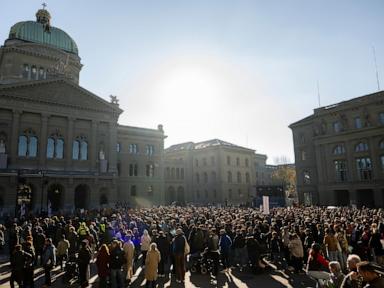
When hundreds of men march through urban centers to protest violence against women, news cameras turn up, local politicians deliver rousing speeches, and organizers declare a moral victory. Yet, despite decades of high-profile marches, awareness campaigns, and public pledges, baseline rates of domestic abuse and gender-based violence remain stubbornly flat. Marches make for striking photos, but public demonstrations by men routinely fail to disrupt the underlying mechanics of male violence. Moving from public outrage to real-world reduction requires dismantling the specific social incentives, institutional gaps, and cultural silence that allow abuse to persist long after the megaphones are packed away.
Public marches often operate on a comforting assumption: that male violence against women stems primarily from a lack of awareness. If good men simply stand up and demonstrate their disapproval, the theory goes, violent men will feel isolated and reform their behavior. This logic crumbles under basic scrutiny. Aggressors rarely act out of ignorance regarding society's official stance on physical assault. They act because of power dynamics, impunity within private spaces, and deep-seated patterns of control. A street rally addresses the public arena, while domestic terror thrives exclusively in the private sphere.
The Gap Between Public Virtue and Private Accountability
Male-led rallies suffer from what sociologists call the performative buffer. Participation requires minimal commitment. A man can put on a banner, march for two miles on a Saturday morning, and return home without ever examining his own relationships, his friend groups, or his workplace dynamics.
Real intervention is quiet, uncomfortable, and socially risky. It happens when a man confronts a brother who jokes about coercion, calls out a colleague for abusive behavior, or intervenes when a friend exhibits signs of coercive control over a partner. Public rallies rarely demand this level of interpersonal friction. Instead, they offer a collective absolution. By standing among hundreds of "good guys," attendees implicitly separate themselves from "bad guys," creating a false binary that obscures how systemic violence is actually maintained.
Consider the dynamic of peer-group protection. In closed male spaces—locker rooms, group chats, boardrooms, and social clubs—abusive behavior is rarely met with immediate expulsion. It is met with uncomfortable giggles, nervous subjects changes, or outright defenses disguised as loyalty. Until public anti-violence pledges translate into an absolute refusal to shield abusive peers from social and legal consequences, street protests remain superficial exercises.
Institutional Mechanics That Protect Aggressors
Focusing on individual moral choices ignores the structural architecture that enables violence. Police departments, legal frameworks, and corporate HR structures frequently fail victims long before any public demonstration takes place.
The Legal Evidentiary Barrier
Protection orders are routinely treated as minor administrative infractions rather than indicators of escalating lethality. When law enforcement agencies fail to enforce civil restraining orders, they signal to abusers that public declarations against violence carry no institutional weight. Prosecutors often decline to push misdemeanor domestic charges due to high victim-recollection burdens, effectively telling offenders that low-level physical control carries minimal risk.
Economic Entrapment
Violence is fundamentally tethered to financial dependence. Women attempting to flee abusive environments encounter severe economic hurdles: unaffordable housing, lack of independent credit, and prohibitively expensive childcare. Demonstrations led by men rarely demand specific policy changes like guaranteed housing access, paid leave for abuse survivors, or legal aid funding. Without addressing the financial cages that trap victims, moral appeals to potential abusers are completely hollow.
The Failure of Workplace Intervention
Domestic violence does not stay at home. It manifests in workplace harassment, stalking during work hours, and sabotaged employment opportunities. Corporate environments routinely prioritize risk mitigation over survivor protection, quietly pushing out female employees who bring high-conflict domestic situations into the office rather than holding male perpetrators accountable.
Deconstructing the Good Guy Myth
The primary structural flaw in male-led anti-violence movements is the maintenance of the "monster" archetype. Mainstream campaigns frame domestic abusers as rare, pathologically disturbed individuals operating on the margins of society.
Data paints a radically different picture. Perpetrators are often well-liked community leaders, successful professionals, attentive fathers, and yes, frequent participants in charitable causes. When anti-violence initiatives frame the perpetrator as a visible monster, average men fail to recognize abusive behaviors in themselves or their close friends.
Coercive control—monitoring text messages, isolating a partner from her family, controlling financial access, using emotional degradation—is the precursor to physical violence. Yet, because these behaviors do not involve physical bruises, they are rarely targeted by public awareness marches. A campaign that only condemns physical assault leaves the entire infrastructure of emotional and psychological terrorism intact.
+-----------------------------------------------------------------------------------+
|                         STAGES OF ESCALATING CONTROL                              |
+-----------------------------------------------------------------------------------+
| 1. Isolation          | Restricting contact with friends, family, and support.    |
| 2. Financial Control  | Limiting access to bank accounts, jobs, and transport.    |
| 3. Digital Surveillance| Demanding passwords, tracking locations, constant texts.  |
| 4. Verbal Degradation | Undermining self-worth to induce total dependence.         |
| 5. Physical Abuse     | Violent assault, often following months of non-physical   |
|                       | coercive control.                                         |
+-----------------------------------------------------------------------------------+
Men seeking to reduce violence must stop targeting the end product of abuse and start disrupting its foundational stages.
What Real Male Accountability Demands
If marching in the streets does not reduce violence, what does? Shift the focus from public awareness to structural consequence and personal risk.
First, end social sanctuary. Men must accept the loss of personal friendships, professional networks, and family harmony as the mandatory price for holding abusers accountable. This means severing business ties with known perpetrators, testifying openly in custody and abuse proceedings, and removing abusive individuals from social circles regardless of their status or charisma.
Second, redirect resources to survivor autonomy. Marches consume time, money, and media cycles. Those resources are far more effective when funneled directly into emergency housing funds, legal defense reserves for survivors, and independent childcare networks. A community with fully funded women's shelters and accessible legal representation protects victims far better than a community with a thousand vocal allies.
Third, demand legislative and judicial reform over moral pledges. Men attempting to use their civic voice should direct their efforts toward specific policy reforms: mandatory perpetrator intervention programs with proven track records, strict firearm surrender enforcement for individuals subject to domestic violence restraining orders, and expanded paid leave policies for victims.
Street demonstrations offer comfort to the participants, creating an illusion of progress while the underlying machinery of gender-based violence remains entirely operational. Until men trade the low-cost visibility of the public square for the high-cost accountability of private life and policy reform, the statistics will not change.



