Heavy.
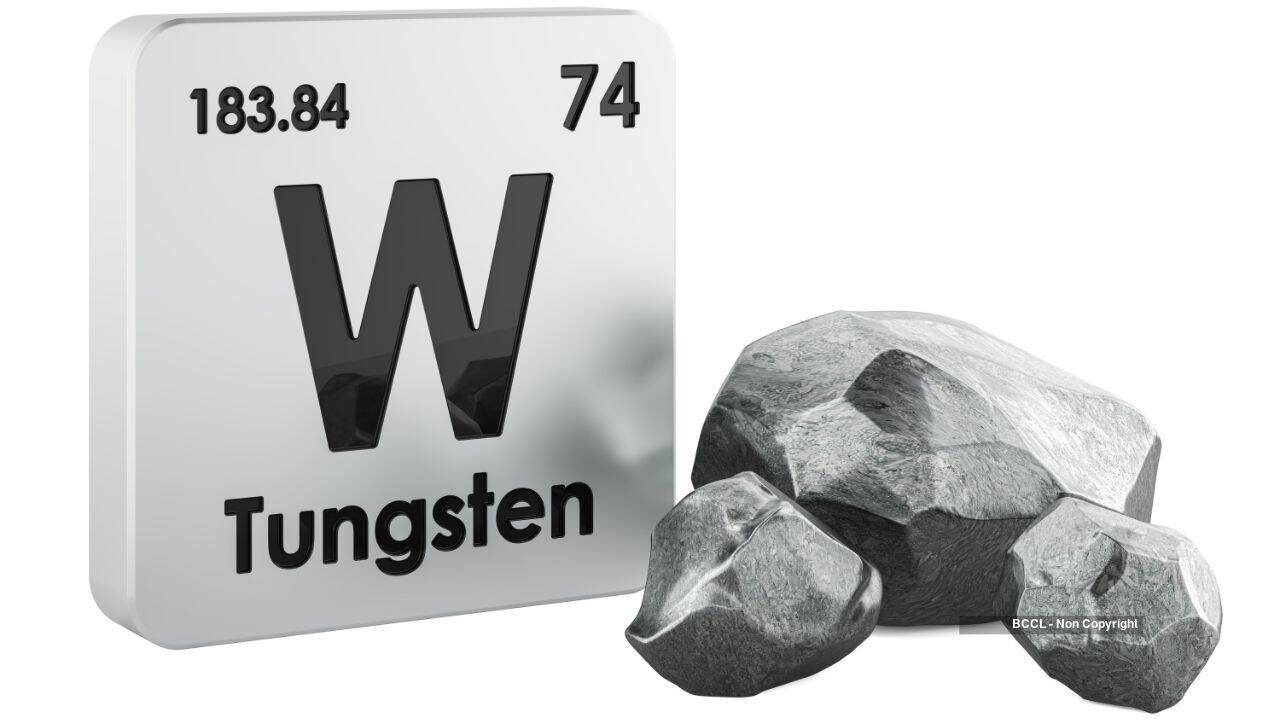
That is the first thing you notice when you hold a piece of raw tungsten in your palm. It feels wrong for its size, like a secret the earth is trying to hide from you by making it too dense to float away on human ambition alone. Drop it on a wooden floor and it does not bounce; it cracks the grain. Heat it, and it refuses to bend, staring down the blowtorch at thirty-four hundred degrees Celsius, refusing to weep into liquid until long after steel has surrendered into a glowing soup.
For most of us, this gray, unyielding rock is invisible. It lives anonymously inside the heavy-duty drill bits chewing through granite, the microscopic filaments of old-school incandescent bulbs, the ballpoint tips of cheap pens, and the vibration-damping weights tucked inside your smartphone. It is the quiet anchor of modern manufacturing.
Yet, tucked away in the filing cabinets of global trade offices and the secure conference rooms of defense contractors, this obscure metal is keeping geopolitical strategists awake at night.
Because right now, nearly every ounce of that anchor comes from one place.
The Great Bottleneck
Walk into a modern processing plant in Jiangxi or Hunan province, and you smell the sulfur and acid before you see the metal.
China commands roughly eighty percent of the global tungsten market. This is not an accident of geography alone; it is the result of a decades-long marathon. While other nations treated mining as a dirty, boom-and-bust extraction game to be outsourced when environmental regulations got too loud, domestic policy in Beijing prioritized the entire value chain. They didn't just dig the ore out of the granite; they built the chemical refineries, mastered the complex powder metallurgy, and secured the patent pathways.
When you control the powder, you control the machine tool. When you control the machine tool, you control the aerospace foundry.
I remember talking with an old machinist in Ohio a few years back—a man whose knuckles looked like weathered walnuts from forty years of wrestling with high-alloy steels. He pointed to a rack of specialized end-mills on his wall, tools coated in tungsten carbide that could carve precision parts out of titanium without dulling.
"You see these?" he asked, tapping a box stamped with an overseas import label. "If the supply line hiccups tomorrow, I can't just walk down to the hardware store and buy American. We forgot how to make the dust. We forgot how to refine the sludge. We let the furnace go cold."
That vulnerability is the invisible thread pulling at the fabric of global manufacturing. When a single nation holds a near-monopoly on a critical mineral, trade policy stops being about economics and starts looking like leverage. Every high-tech defense system, every turbine blade spinning in a commercial jetliner, every electric vehicle drivetrain relies on this single point of failure.
The Nevada Paradox
Naturally, the free market and national security apparatus began looking for an escape hatch. They didn't have to look far.
Beneath the sun-baked, sagebrush-dappled ridges of Nevada lies a massive, sleeping giant of a deposit known as the MacTung and related regional holdings, including the storied Paradise Peak and surrounding mineral belts. The earth out there remembers ancient volcanic violence, leaving behind veins of scheelite and wolframite—the raw, calcium-and-iron heavy minerals that hold the tungsten inside.
For mining engineers, Nevada is holy ground. It is a place where you can drill for gold and strike silver, where the earth gives up its treasures to men and women willing to sweat in the dust of the Great Basin.
Enter a hypothetical exploration geologist named Sarah, who spent twenty-five years chasing porphyry copper and rare earth anomalies across the American West. She remembers standing on a ridge in Nye County, squinting through the desert glare at core samples that sparkled with promise.
"We knew it was there," Sarah told me, recalling the early drill logs. "High-grade ore. Enough to supply domestic industrial needs for decades. We thought we had cracked the security puzzle. We thought we were going to build a domestic supply chain from scratch."
Then the regulatory reality check arrived.
Because just over the horizon from these rich, untouched mineral veins sits something else: the vast, acoustically sensitive silence of the American space program and national security testing grounds.
When the Sky Collides with the Earth
It sounds like the plot of a cynical corporate thriller, but it is playing out in real-time zoning boards and federal agency reviews.
A major proposed mining project in Nevada—designed to unearth millions of tons of critical minerals—recently slammed directly into a brick wall erected by NASA and aerospace defense planners.
To understand why, you have to look up.
The high deserts of Nevada are not just empty dirt; they are an irreplaceable acoustic and electromagnetic sanctuary. NASA, alongside the Department of Defense, utilizes vast swaths of this airspace and land for testing next-generation hypersonic flight vehicles, advanced rocket guidance systems, and sensitive deep-space communication arrays. The low-frequency rumble of heavy industrial mining equipment, the dust plumes rising into atmospheric tracking corridors, and the heavy truck traffic rolling down remote two-lane highways create a nightmare for aerospace telemetry.
Imagine trying to listen for the faint radio whisper of a probe landing on Mars, or calibrating the sensors of a Mach-5 jet test, while heavy earthmovers are shaking the bedrock twenty miles away.
This is the Nevada paradox in stark relief.
To build the advanced technology of tomorrow—the high-efficiency turbines, the defense shields, the aerospace components—we need tungsten. But to get the tungsten, we must tear open the very quiet, isolated landscapes that our advanced aerospace programs need to test those exact same technologies.
It is a cruel irony. The earth demands that we choose between our industrial independence and our scientific frontier.
The Weight of Choices
We stand today at a crossroads paved with heavy gray metal.
For decades, the West chose the path of least resistance. We bought our tungsten cheap from overseas refineries, traded away our refining infrastructure for short-term balance sheet wins, and pushed heavy industry out of our backyards. We enjoyed the modern world without ever asking who owned the furnace that heated the tools.
Now, the bill has come due.
When a superpower controls eighty percent of a critical mineral, you cannot simply wave a legislative wand and declare a domestic mine open by next Tuesday. Permitting takes years. Environmental review takes decades. Capital investment requires confidence that the market won't be flooded by predatory pricing the moment a new domestic shaft goes online.
And when those mining projects collide with the quiet testing grounds of our national defense and space exploration, the compromises required are agonizing. Do we sacrifice the pristine silence of the desert to secure our industrial supply chains? Or do we remain tethered to the goodwill of a global competitor who understands the true value of a rock that refuses to break?
Consider what happens next: the race for alternative extraction technologies, the bitter court battles over public land use, the quiet recycling plants trying to reclaim tungsten from discarded industrial scrap like gold prospectors panning through tailings.
The metal beneath our feet does not care about our political borders, our environmental guilt, or our aerospace ambitions. It just sits there in the dark, impossibly dense, waiting to see what we value more—the quiet of the sky or the strength of the earth.