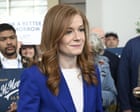
Mallory McMorrow is out. The Michigan State Senator officially suspended her U.S. Senate campaign, completely scrambling the race just a month before the August 4 primary. Her exit ends a three-way battle and sets up an intense, direct showdown between the establishment and progressive wings of the Democratic Party.
With McMorrow out of the picture, voters face a clear choice. On one side stands Representative Haley Stevens, a mainstream moderate backed by Senate Democratic Leader Chuck Schumer and boosted by millions in outside super PAC spending. On the other side is Dr. Abdul El-Sayed, a progressive former public health official championed by Senator Bernie Sanders and Representative Alexandria Ocasio-Cortez.
This isn't just a local primary. The seat, currently held by retiring Democratic Senator Gary Peters, is absolutely vital for control of the U.S. Senate. Whoever wins the primary will face Republican Mike Rogers in November. With the stakes this high, McMorrow's sudden departure changes everything.
How Big Money and Polls Forced McMorrow Out
McMorrow first gained national fame in 2022 after a viral floor speech defending LGBTQ+ rights. When she entered the Senate race, she brought serious momentum and high-profile backing from senators like Elizabeth Warren and Chris Murphy. But her campaign hit a wall over the spring.
The biggest factor in her exit was money. Huge amounts of outside cash flooded the state to support Stevens and attack El-Sayed. The United Democracy Project, a super PAC connected to the pro-Israel group AIPAC, spent over $20 million on television ads alone. Two other PACs added another $15.5 million to boost Stevens. McMorrow, who ran her campaign without corporate PAC dollars, simply couldn't keep pace with that kind of spending.
Her polling numbers took a serious dive after she publicly criticized El-Sayed for campaigning with left-wing streamer Hasan Piker in April. McMorrow compared Piker to a white nationalist, a move that backfired with many voters. By June, her support fell to single digits in multiple polls, while El-Sayed surged into a tight race with Stevens. Seeing no path to victory, McMorrow chose to step aside.
The Moderate Against the Progressive
Now that McMorrow has cleared the lane, the primary has become a textbook proxy war for the soul of the Democratic Party.
Haley Stevens represents the party's traditional, moderate core. She argues that her mainstream appeal makes her the most electable candidate to defeat Mike Rogers in November. National party leaders agree. Soon after McMorrow dropped out, Michigan Attorney General Dana Nessel officially endorsed Stevens, signaling a consolidation of establishment support.
Abdul El-Sayed is running a completely different campaign. He wants to move the party sharply to the left, advocating for Medicare for All and aggressive campaign finance reform. El-Sayed quickly used McMorrow's exit to attack the party establishment, claiming that Washington insiders and super PACs have been bullying anyone who opposes their picked candidate. He openly invited McMorrow's supporters to join his movement.
The contrast will be on full display during the upcoming televised debate. During their previous debate in May, El-Sayed went on the attack while Stevens largely ignored him. With McMorrow gone, Stevens won't be able to stay on the sidelines. They will be forced to engage directly on everything from healthcare to foreign policy, including El-Sayed's controversial stances on U.S. aid to Israel.
What This Means for the General Election
National Democrats are terrified of losing this seat. Michigan is a swing state, and keeping this seat blue is essential if the party wants any shot at winning back the Senate majority this fall.
Establishment figures fear that nominating a progressive like El-Sayed will alienate independent voters and hand the seat to Mike Rogers. They want a safe, predictable nominee. But progressive voters are energized by El-Sayed's insurgent campaign and point to recent primary victories where left-wing challengers beat mainstream favorites.
McMorrow didn't immediately endorse either candidate, saying she will support whoever wins in August. For now, her departure leaves a fractured base. If you're a primary voter in Michigan, your choice is no longer about finding a middle ground. You have to decide exactly what kind of Democratic Party you want to fight for this November. Check your mail-in ballots or head to the polls on August 4 to make that choice real.