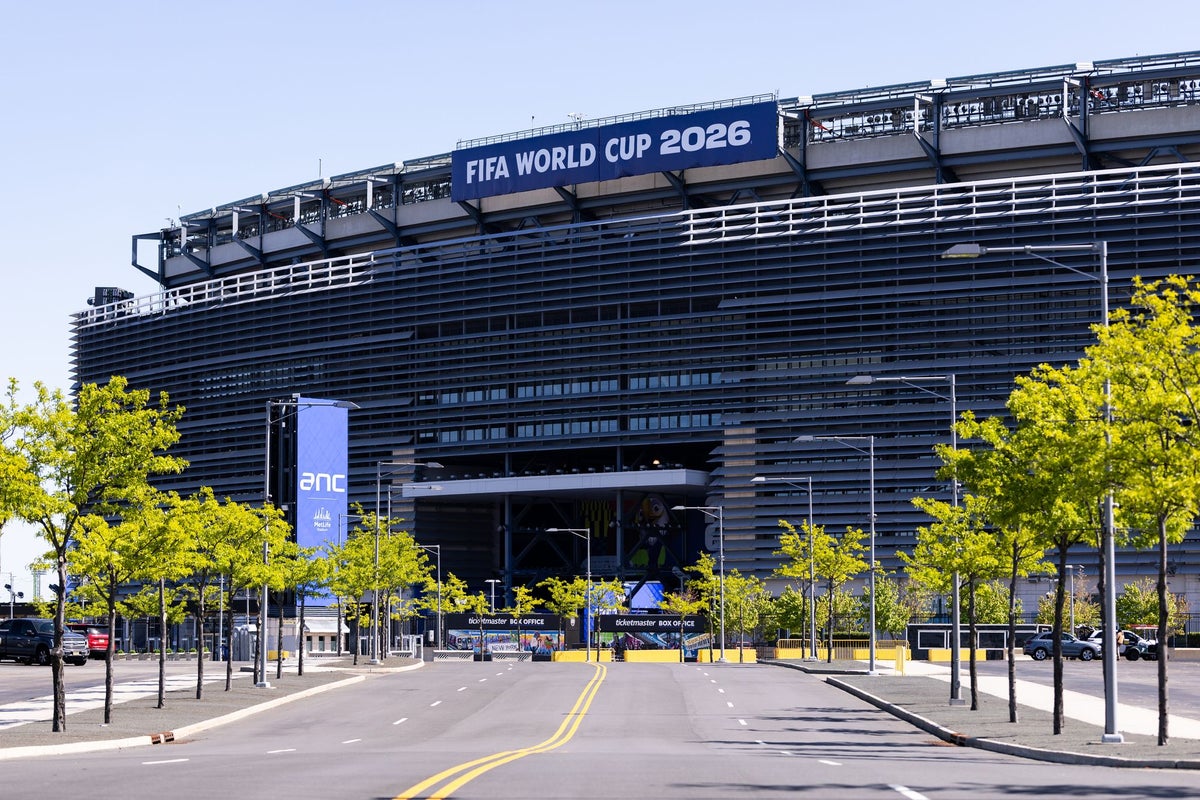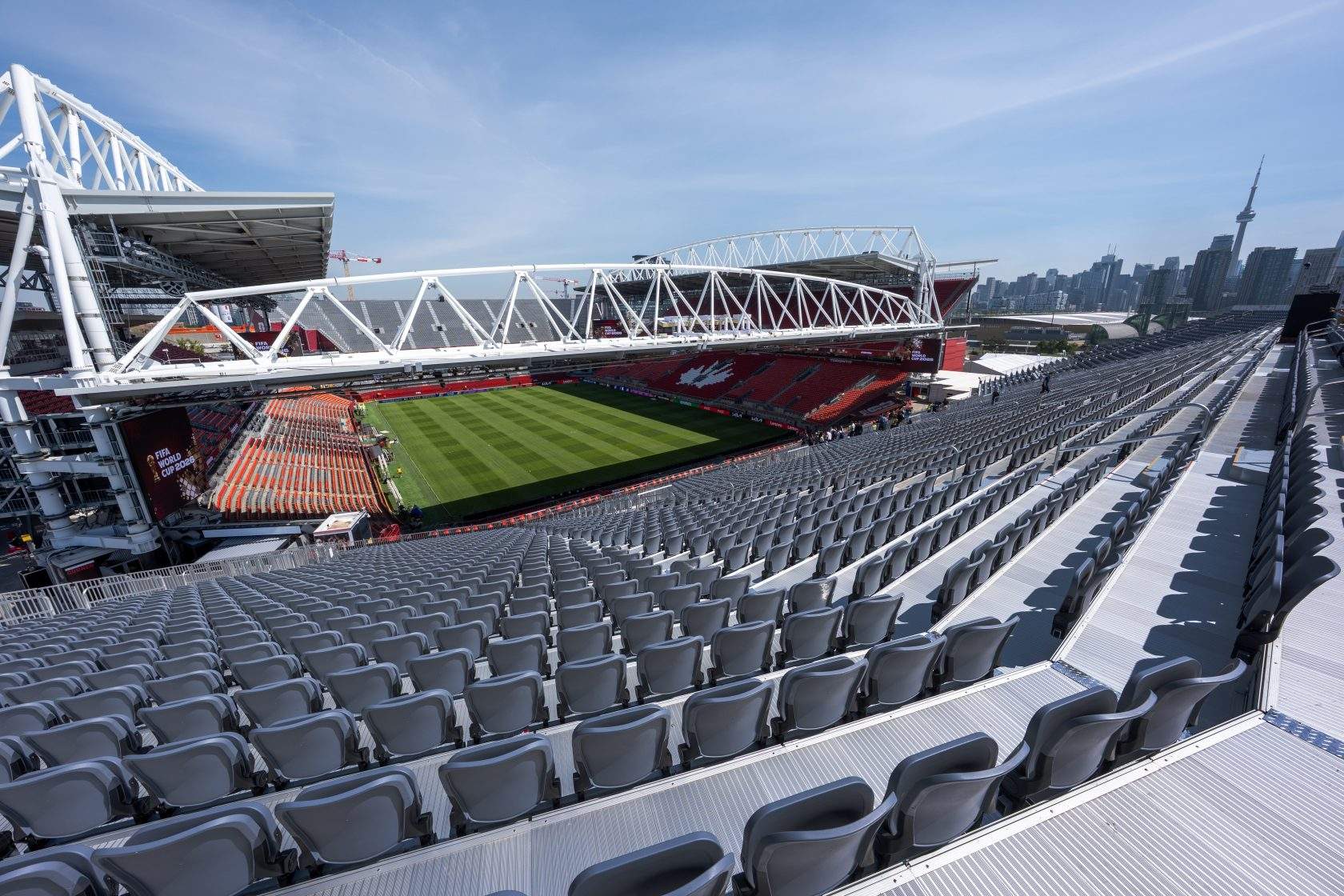
The stadium is a pressure cooker of eighty thousand souls, but you can only hear one sound. It is the rhythmic, deafening thud of your own pulse in your ears. Your lungs burn. The grass beneath your cleats smells sharply of rain and bruised earth. To your left, a defender is breathing like a locomotive, his jersey soaked in sweat, his eyes locked on yours.
Then, a flash of leather. A pass is sliced through the air, cutting across the pitch. You sprint. You outmaneuver the defender. You latch onto the ball, slide it past the diving goalkeeper, and the back of the net ripples.
The stadium explodes. A wall of noise hits you, a physical force that makes your chest vibrate. You fall to your knees, arms wide, ready to swallow the glory of a World Cup goal.
Then you hear it.
A sharp, shrill chirp of a plastic whistle. You look over your shoulder. The assistant referee is standing perfectly still, a brightly colored flag raised high against the backdrop of screaming fans.
The goal evaporates. It never happened. In fact, it was a crime against the laws of the game.
We watch the World Cup for the magic, the dazzling footwork, and the tears of victory. But the entire spectacle, the multi-billion-dollar theatrical production that halts global productivity for a month, hinges on a handful of arbitrary boundaries. These are not just rules. They are the invisible fault lines between national heroism and lifelong heartbreak.
To truly understand the beautiful game, you have to understand the quiet cruelty of its laws.
The Ghost on the Shoulder: Decoding Offside
Let’s dissect that disallowed goal. To the uninitiated, the offside rule feels like an esoteric riddle designed by bureaucrats to frustrate joy. It isn't. It is a psychological thriller.
Imagine a hypothetical striker named Marcus. Marcus is a predator. His entire life is measured in fractions of a second. If Marcus stands closer to the opponent’s goal line than the ball and the second-to-last opponent (usually the last defending field player, assuming the goalkeeper is behind them) at the exact millisecond the ball is passed to him, he is offside.
Why does this rule exist? Without it, the game degenerates into a chaotic, unwatchable mess. Strikers would simply park themselves in front of the opposing net, waiting for long, ugly launch passes. The midfield would become a barren wasteland. The offside rule is the architect of space; it forces teams to pass, to weave, to think, and to move as a synchronized unit.
But for Marcus, it is a haunting.
When a midfielder prepares to kick the ball, Marcus must judge the positioning of a defender who is actively running backward. Marcus must calculate his own acceleration, the speed of the ball, and the defensive line, all while running at twenty miles per hour.
If he moves a fraction of a second too early, the trap snaps shut. The flag goes up. If he moves a fraction of a second too late, the defender clears the ball. It is a high-wire act performed on a blade of grass.
In the modern era, this human calculation is subjected to the cold, unfeeling eye of technology. Semi-automated offside cameras track twenty-nine data points on each player’s body, fifty times per second. We now live in a world where a country's World Cup dreams can be crushed because a striker’s kneecap or sleeve-seam was three millimeters ahead of a defender’s hip.
It feels clinical. It feels unfair. But that is the razor-thin margin of the world's greatest stage.
The Pocket-Sized Executioner: The Geometry of Cautions
Away from the offside line, the emotional temperature of a match is managed by a single human being dressed in neon, carrying two small pieces of colored plastic.
The yellow and red card system is so deeply embedded in global culture that we use the terminology in everyday life. We yellow-card our friends for bad puns; we red-card toxic coworkers. But on the pitch, these cards are instruments of absolute authority and psychological warfare.
A yellow card is a formal caution. It is a public shaming and a final warning wrapped into one. The referee raises it high, a bright beacon signaling that the player has crossed a line.
Under World Cup regulations, the stakes are absurdly high. If a player accumulates two yellow cards across different matches from the group stage through the quarter-finals, they are automatically suspended for the following match. Think about the agony of that reality. You commit a slightly mistimed tackle in the group stage. Weeks later, in a frantic quarter-final, you accidentally trip an opponent. Suddenly, you are barred from playing in the World Cup semi-final—the biggest match of your existence. You are reduced to a spectator in a tracksuit, weeping on the bench.
Then there is the red card. The ultimate eviction.
A red card is issued for serious foul play, violent conduct, or receiving two yellow cards in a single match. When that crimson rectangle enters the air, the narrative of the game shifts on its axis. The punished player must leave the pitch immediately and cannot be replaced. Their team must play the remainder of the match down a player, forced to cover vast expanses of grass with ten pairs of legs instead of eleven.
It is a sporting execution. The walk of a red-carded player from the center of the pitch to the tunnel is one of the loneliest journeys a human being can make. Millions of eyes watch them leave, bearing the crushing weight of knowing they may have just cost their nation everything.
Twelve Yards of Pure Terror
If the red card is an execution, the penalty kick is a duel at high noon.
It is born from a foul committed inside the penalty box—the large rectangular area protecting the goal. When a defender panics, trips an attacker, or accidentally blocks a shot with an extended arm, the referee points to a small white dot exactly twelve yards from the center of the goal line.
On paper, the penalty kick is a mathematical absurdity. The goal is twenty-four feet wide and eight feet high. The ball travels from the penalty spot to the net in approximately 0.4 seconds. A human being's reaction time is simply too slow to watch the ball fly and then save it. The goalkeeper must guess. They must pick a side and dive blindly before the boot even touches the leather.
The advantage belongs entirely to the kicker. They should score. Everyone expects them to score.
And that is exactly why the penalty kick is a psychological torture chamber.
Consider the player stepping up to take the shot. The entire stadium falls into a suffocating, tense silence, broken only by scattered whistles from opposing fans trying to shatter their focus. The goalkeeper stands on the line, suddenly looking ten feet tall, waving their arms, bouncing on their toes, trying to occupy as much visual space as possible.
The kicker places the ball on the grass. They step back. They look at the net. They know that if they score, they have merely done their job. If they miss, if their boot slips, if the keeper guesses correctly and bats the ball away, they will become a national pariah. Their name will be etched into history not for what they achieved, but for the moment they failed.
It is not a test of athletic ability. At the World Cup level, every single player on the pitch can kick a ball into an open corner from twelve yards away during training. The penalty kick is a test of a human being's neurological control under existential dread. It is about keeping the heart rate low when the world is screaming.
The Invisible Engine of the Beautiful Game
We often complain about the officiating. We scream at the television screen when a decision goes against our team. We vilify the referees, viewing them as pedantic fun-killers ruining the flow of a beautiful spectacle.
But the truth is far more profound. The rules are not the enemy of the beauty; they are its creator.
Without the strict boundary of the offside rule, we would never see the breathtaking, intricate passing sequences that carve open a defense. Without the threat of the yellow and red cards, the pitch would descend into a gladiatorial arena of physical violence, where talent is neutralized by brute force. Without the terrifying drama of the penalty kick, the game would lack its ultimate crucible of human character.
The next time you watch a World Cup match, look past the ball. Look at the lines on the grass. Watch the subtle, anxious glances a striker casts toward the assistant referee. Watch the defender desperately trying to tuck their arms behind their back inside the penalty box, terrified of a handball call.
These rules are the invisible framework of a global drama. They are the strict, unyielding laws that transform a simple game played with a leather ball into a mirror of the human condition, where glory and tragedy are separated by nothing more than a blade of grass, a fraction of a second, and a breath of wind.