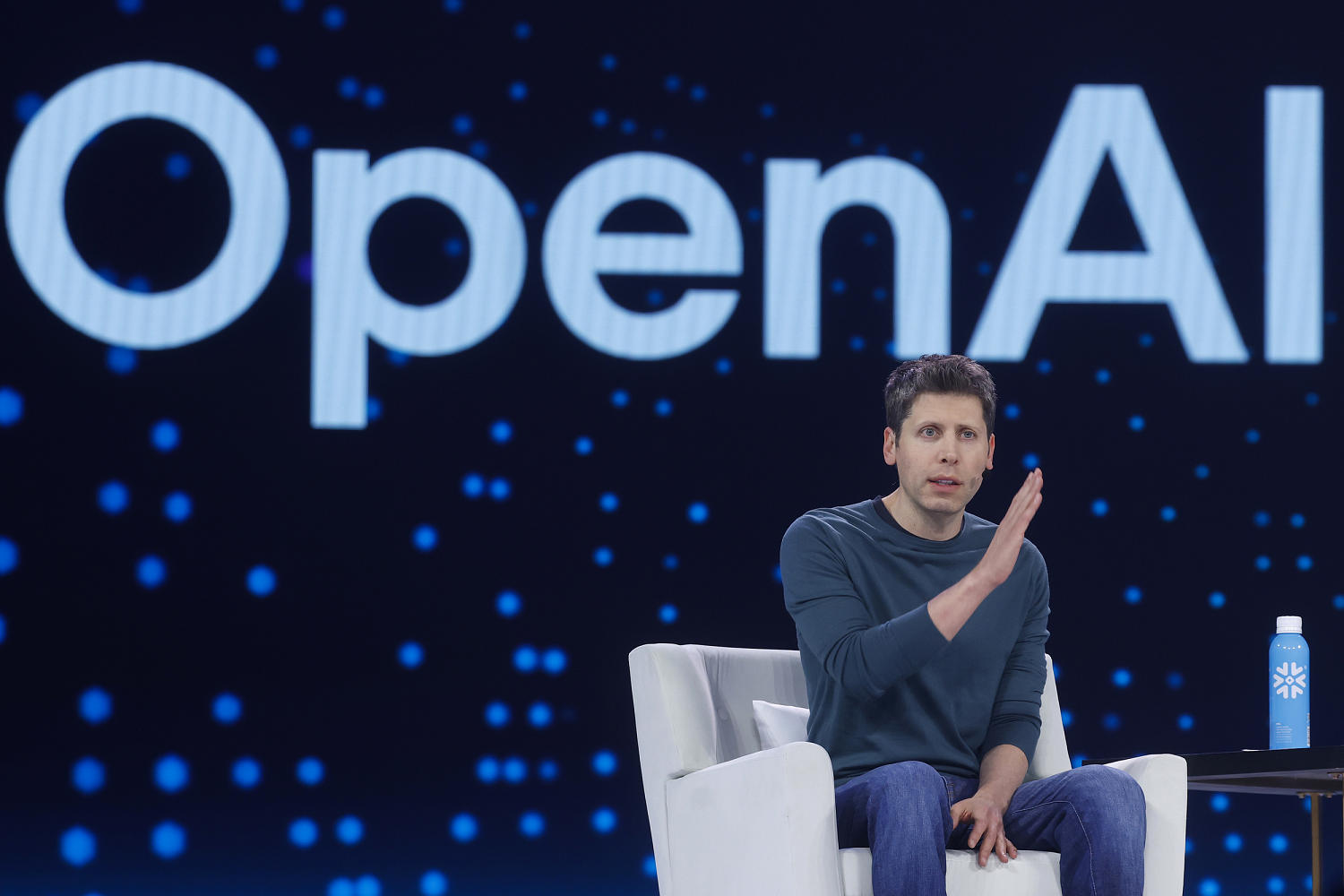
The confidential S-1 filing by OpenAI, submitted to the U.S. Securities and Exchange Commission immediately following a parallel move by Anthropic, marks the end of private-market capital abundance for foundational artificial intelligence. The race to public markets is not an expansion victory; it is a structural necessity driven by an unsustainable capital consumption model. The core problem is a widening asymmetry: the capital expenditures required to train frontier models are scaling exponentially, while marginal revenue growth per user remains linear. By examining the unit economics, infrastructure commitments, and structural liabilities of OpenAI, we can map the true mechanisms forcing this trillion-dollar public market debut.
The Tri-Party Liquidity Drain
The timing of OpenAI’s filing points to an immediate structural bottleneck: public market capital is finite, and a liquidity drain is underway. Three mega-scale listings are targeting the same pool of institutional technology capital simultaneously: Meanwhile, you can read other stories here: Stop Calling It Clarification: The Corporate Mirage of Hong Kong’s National Security Upgrades.
- SpaceX: Pursuing an IPO targeting a $1.78 trillion valuation.
- Anthropic: Filed protocols on June 1, backed by secondary market momentum and a $965 billion valuation framework.
- OpenAI: Entering the queue at a post-money valuation of $852 billion following its $122 billion private funding round in March.
This creates a first-mover requirement. The institutional allocation for pre-profit frontier tech is bounded by risk mandates. The entity that lists first captures the primary liquidity surge; subsequent listings face stricter valuation compression. Anthropic's filing forced OpenAI’s hand, overriding previous executive preferences to remain private to protect operational flexibility.
The Core Capital Asymmetry
The fundamental driver of this public offering is a structural deficit in the frontier model cost function. OpenAI exhibits hyper-growth in revenue, yet its projected loss for the current fiscal year stands at $14 billion. Internal financial roadmaps indicate the enterprise will not achieve net profitability until roughly 2030. To understand the bigger picture, check out the recent article by The Wall Street Journal.
The mechanism behind this structural deficit is found in the scaling laws of computation. Private equity excels at funding software-as-a-service (SaaS) models where the initial development cost is high, but the marginal cost of distribution approaches zero. Frontier AI reverses this dynamic:
$$\text{Total Cost} = \text{Fixed R&D} + (\text{Compute Cost per Inference} \times \text{Volume})$$
The variable cost of model inference remains tied to hardware utilization. Every prompt processed consumes precise GPU duty cycles, electricity, and data center bandwidth.
To remain competitive, OpenAI has entered into infrastructure commitments totaling more than $1.4 trillion over the coming decade. HSBC financial analyses indicate a net funding gap of $207 billion by 2030 just to maintain the current operational and training trajectory. Private venture capital syndicates cannot absorb a $207 billion cash burn; the public equity market is the only capital pool deep enough to underwrite infrastructure of this magnitude.
The Structural Transition Bottleneck
Operating as a public company introduces strict transparency and governance mandates that clash with OpenAI's legacy identity. The company is actively executing a corporate restructuring to transition from a hybrid non-profit control model into a public benefit corporation. While this shift insulates the commercial entity from the non-profit board's historic power to halt product deployment, it introduces a separate class of operational liabilities.
The Governance Tradeoff
Private structures allow for extreme R&D pivots and opaque capital allocation. Public markets demand quarterly financial hygiene. Chief Financial Officer Sarah Friar noted the organization has begun aligning its revenue tracking with SEC-compliant accounting principles. However, exposing an entity with a 65x price-to-sales ratio—based on its $830 billion private valuation baseline—to public market short-sellers invites extreme volatility. For context, historical technology anchors like Meta listed at roughly 12.5x price-to-sales, and Uber debuted during a high-growth, unprofitable phase at a significantly lower multiple.
The Product Diversification Vulnerability
The S-1 filing arrives as OpenAI experiences friction in diversifying its product mix away from pure Large Language Model (LLM) interfaces. The enterprise faces a concentration risk: ChatGPT represents the vast majority of consumer touchpoints and top-line revenue, serving 900 million weekly active users. Attempts to expand horizontal integration have yielded mixed results:
- Hardware and Devices: Capital allocation toward hardware ventures, including the acquisition of design talent assets in early 2025, has extended cash burn timelines without generating short-term revenue.
- Video Generation (Sora): Despite initial commercial interest and structural agreements with media conglomerates like Disney, the operational complexity and massive compute cost of video inference led to the suspension of the standalone application in April.
- The Advertising Pivot: Launched in January, the advertising network represents a structural shift away from pure subscription models, yet it exposes OpenAI to cyclical enterprise ad-spend dynamics and strict privacy compliance tracking.
Legal and Geopolitical Realities
The public offering framework must also absorb legal overhead that private markets could discount. While a California court recently dismissed a high-profile structural lawsuit brought by co-founder Elon Musk—ruling that the claims fell outside the statute of limitations—the operational discovery phase exposed deep fractures in the historical management architecture. Remaining legal friction includes multi-billion-dollar copyright infringement suits from legacy publishing groups and regulatory scrutiny regarding data ingestion protocols.
Concurrently, sovereign capital is altering the traditional venture capital stack. Ongoing discussions regarding federal cooperation could result in a direct state equity position or specialized capital allocation from the government. This dynamic shifts OpenAI from a pure technology company into a critical instrument of sovereign computing infrastructure, altering the risk profile for public market asset managers.
Capital Allocation Execution
For institutional allocators evaluating the upcoming S-1 data room, the core investment thesis cannot rest on standard software metrics. The analysis must focus entirely on compute efficiency metrics and enterprise customer retention curves.
The strategic play requires ignoring user growth acceleration and focusing on the delta between compute cost reductions and enterprise API contract sizes. If inference costs fall faster than the market compresses pricing, OpenAI can achieve structurally viable gross margins. If model commoditization outpaces hardware efficiency gains, public market investors will face severe capital destruction. Securing an allocation in the initial public offering requires a clear-eyed wager not on the capabilities of artificial intelligence, but on the microeconomics of the silicon supply chain that feeds it.