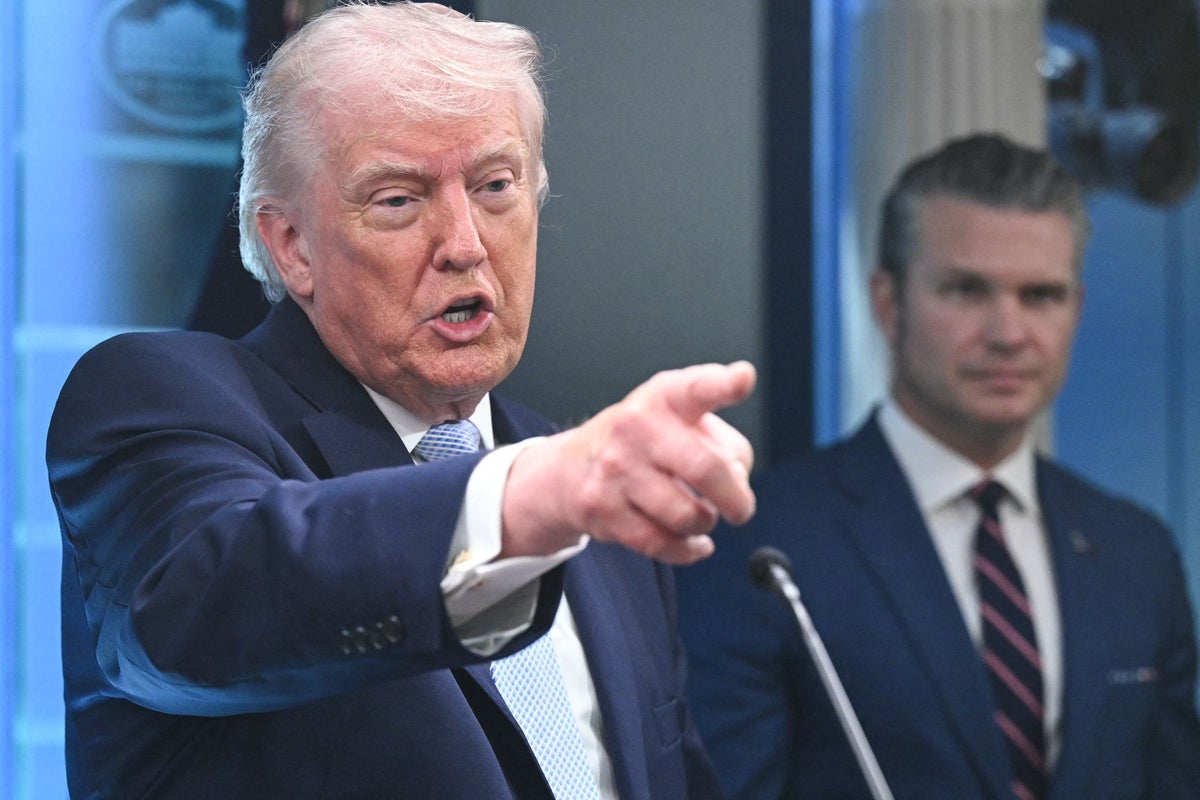
Trump is selling a "Golden Age." The markets are buying the hype. The headlines are screaming about a "ceasefire" as if the region suddenly transformed into a suburban office park.
They are all wrong.
The narrative that a cessation of hostilities between Israel and Iran—or their various proxies—automatically triggers a multi-billion-dollar economic boom is a fundamental misunderstanding of how capital actually flows into high-risk environments. Peace is not a business model. It is merely the absence of an immediate liability.
If you think "big money" is going to be made just because the missiles stopped flying for a news cycle, you haven’t been paying attention to the structural rot that defines regional investment.
The Ceasefire Trap: Why Stability is a Liability
Wall Street loves a good story about "reconstruction." They look at maps of Gaza, Lebanon, or Yemen and see a blank canvas for real estate developers and infrastructure giants. They see $100 billion in "pent-up demand."
I’ve seen this playbook before. I’ve watched private equity firms dump millions into "post-conflict" zones only to realize that the conflict didn't actually end; it just moved from the battlefield to the boardroom and the local regulatory office.
The "Golden Age" thesis relies on the idea that foreign direct investment (FDI) follows peace. It doesn't. FDI follows predictability. A ceasefire is the most unpredictable state of being in geopolitics. It is a pause, not a pivot.
When Trump talks about "big money," he’s talking about the old-school, 20th-century version of wealth: construction, oil, and basic trade. But the modern global economy runs on intellectual property, data centers, and high-tech manufacturing. None of those things move into a region because of a fragile agreement signed under duress. They move where there is a rule of law that survives a change in administration.
The Myth of Reconstruction Wealth
Let’s dismantle the "reconstruction boom" fallacy.
The assumption is that the Gulf states—Saudi Arabia, the UAE, Qatar—will foot the bill to rebuild the Levant, creating a massive trickle-down effect for Western contractors.
The Reality:
- The Sovereignty Tax: Saudi Arabia isn't writing blank checks anymore. Under Vision 2030, every riyal spent must have a domestic ROI. They are internalizing their capital. They want to build NEOM, not subsidize the rebuilding of a neighborhood in Beirut that might get flattened again in five years.
- The Inflation of Risk: The cost of insuring a project in a "ceasefire zone" is astronomical. Actuaries don't care about a handshake at Mar-a-Lago; they care about the historical frequency of treaty violations.
- The Talent Gap: You can ship in concrete. You cannot ship in a sustainable, high-tech workforce to a place where the primary concern is still physical security.
The Energy Pivot Nobody is Talking About
The "Golden Age" proponents argue that a peaceful Middle East stabilizes global energy prices, which in turn fuels regional growth.
This is backward.
The most "golden" thing about the Middle East for the last fifty years was its ability to extract a geopolitical premium on every barrel of oil. True regional peace actually devalues that premium. If the Strait of Hormuz is permanently "safe," the volatility that traders use to print money evaporates.
Furthermore, we are witnessing a global decoupling from oil. A "Golden Age" for the Middle East that is based on 1970s commodities is a dead man walking. The real money isn't in extraction anymore; it's in the transition.
If the region wants a Golden Age, it has to stop being a gas station and start being a laboratory. But laboratories require freedom of movement, secular legal frameworks, and a lack of censorship—things that a mere ceasefire does not provide.
Dismantling the "People Also Ask" Nonsense
Is now the time to invest in Middle Eastern ETFs? If you like gambling on the mood swings of three or four autocrats, sure. But understand that you aren't investing in "growth"; you are investing in "sentiment." Sentiment is a bubble. True value is built on institutional strength.
Will a ceasefire lower gas prices?
Briefly. But the structural issues—refining capacity, ESG mandates in the West, and the shift to EVs—mean that the Middle East’s grip on your wallet is loosening regardless of whether there is a war.
What is the best way to profit from regional peace? Short the defense contractors that over-leveraged on "forever war" expectations, and buy the logistics companies that can operate in chaotic environments. Don't buy the "peace"; buy the "volatility management."
The Tech Mirage
We hear a lot about the "Silicon Wadi" and the tech explosion in Dubai.
The contrarian truth? Most of this "innovation" is just localized versions of Western or Chinese apps. It’s "Uber, but for Riyadh." It’s "Amazon, but for Amman."
That isn't a Golden Age. That’s digital colonialism.
A real Golden Age requires the creation of foundational technology. It requires $R&D$ spending that isn't tied to state-owned enterprises. Currently, the Middle East (outside of Israel) has a massive deficit in private-sector innovation.
Until the private sector in the Arab world is allowed to fail without the state bailing it out or throwing the founders in jail, the "big money" will remain speculative, fast, and ready to flee at the first sign of a Twitter rumor.
The Demographic Time Bomb
The "Golden Age" narrative ignores the fact that the region is a demographic pressure cooker.
Over 60% of the population is under 30. They don't want a "ceasefire." They want jobs, housing, and a future that isn't dictated by the sectarian grudges of their grandfathers.
If the "big money" Trump mentions doesn't create 100 million jobs in the next decade, that "Golden Age" will turn into a Red Age very quickly. The capital being promised is largely "top-down." It flows into sovereign wealth funds and stays there, or it goes into vanity projects like the world's tallest building.
Real wealth is "bottom-up." It’s the ability of a kid in Cairo to start a company and not have to pay half his revenue in "protection" to a well-connected general. A ceasefire changes none of that.
The Brutal Truth About "Big Money"
When a politician says "big money will be made," they are usually talking about their friends, not you.
The people who profit from these "Golden Ages" are the ones who get the initial contracts, the ones who flip the land, and the ones who exit before the reality of the region’s structural instability sets back in.
If you want to be part of the "big money," you have to be the one selling the shovels during the gold rush. In this case, the "shovels" are security services, insurance tech, and specialized logistics.
Everything else is just a press release.
The Strategy for the Discerning Insider
Stop looking at the ceasefire. Start looking at the debt-to-GDP ratios of the countries involved. Start looking at the water scarcity metrics.
The Middle East is facing an existential climate crisis that no amount of "peace deals" can fix. Desalination, sustainable agriculture, and heat-resistant urban planning—that’s where the actual "big money" is. But that money is boring. It doesn't make for a good campaign slogan. It doesn't involve "deal-making" in the way Trump likes it. It involves hard engineering and long-term capital commitments.
If you are waiting for a Golden Age to be handed to you by a diplomatic agreement, you’ve already lost. The real winners in the Middle East are the ones who operate as if the war never ended—and never will. They build systems that are antifragile. They don't rely on the "goodwill" of regional rivals.
Treat the "Golden Age" as a marketing campaign. Use the temporary bump in asset prices to liquidate your high-risk positions.
The missiles might be on the ground for now, but the geography, the history, and the economics haven't changed a bit.
Bet on the physics, not the optics.


