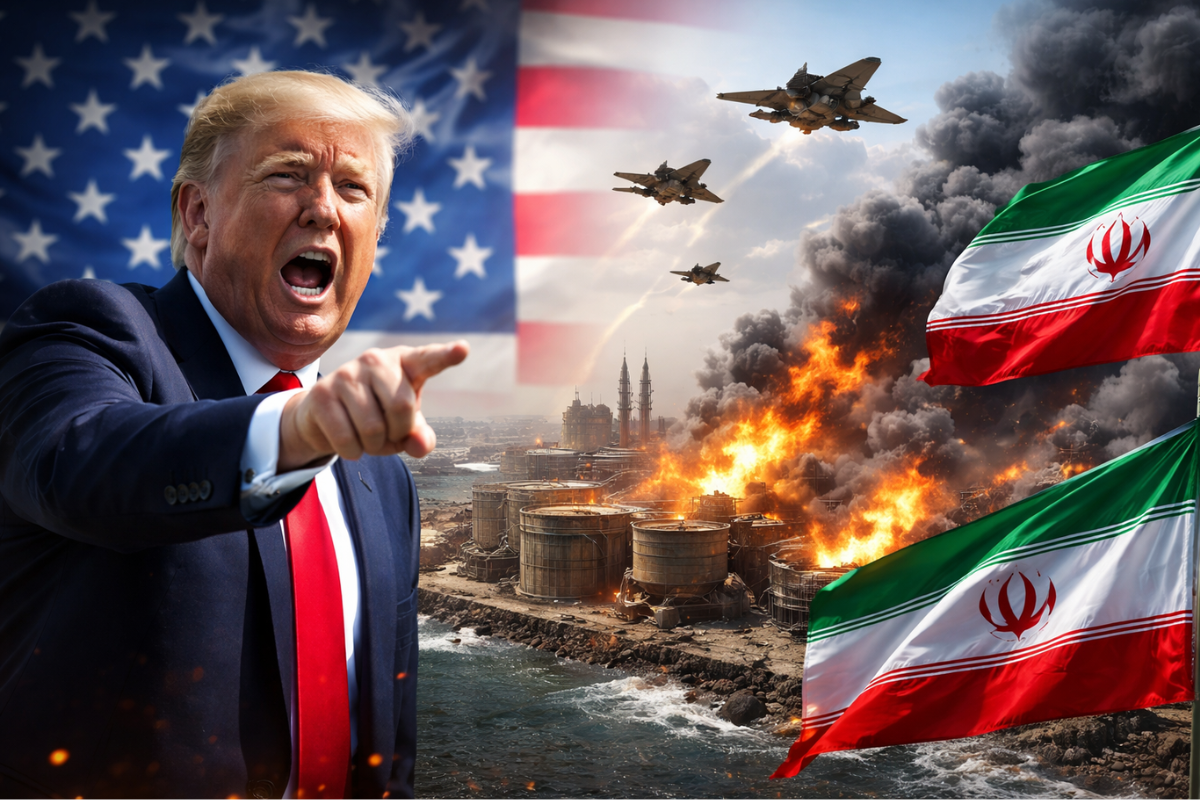
The headlines are screaming about "final warnings" and "no more mercy" regarding the Iranian nuclear deal. They paint a picture of a binary choice: either Tehran bows to the pressure of a returning Trump administration or the region descends into a scorched-earth kinetic conflict. This narrative is lazy. It is theater for the masses who want their foreign policy served as a superhero movie where the protagonist simply yells louder to win.
If you believe that a "tougher" stance is a magic wand that resets decades of Persian survivalism, you are fundamentally misreading the board. The mainstream media is obsessed with the optics of the "Ultimate Deal." They miss the structural reality that neither side actually needs a signature on a piece of paper to achieve their real objectives.
The Maximum Pressure Fallacy
The "Maximum Pressure" campaign is often cited as a masterclass in economic warfare. On paper, it was. Sanctions crippled the rial and choked oil exports. But look at the actual outcome. Did the regime collapse? No. Did they stop enriching uranium? They accelerated it.
The mistake analysts make is treating Iran like a corporate entity that will eventually declare bankruptcy and accept a hostile takeover. Iran is not a company; it is a thousand-year-old civilization state with a high pain threshold and a diversified portfolio of chaos. When you squeeze the formal economy, you simply hand the keys of the informal economy to the Islamic Revolutionary Guard Corps (IRGC).
I have watched diplomats waste years trying to "disrupt" supply chains that the IRGC moved underground decades ago. By forcing Iran out of the global banking system, we didn't isolate them—we pushed them into a shadow financial architecture shared with Russia and China. This isn't a "threat" anymore; it is a parallel reality.
The Nuclear Brinkmanship Scam
Trump’s rhetoric about "last warnings" assumes that Iran's ultimate goal is a bomb. This is a shallow interpretation. Iran’s real goal is Nuclear Latency.
Nuclear latency is the state of being a "screw-turn" away from a weapon without actually building one. It provides the deterrent benefits of a nuclear arsenal without the immediate risk of a preemptive strike by Israel or the United States.
The "Final Warning" strategy ignores that Iran has already won the race to latency. You can’t bomb knowledge. You can’t sanction away the physics. Whether a deal is signed or not, Tehran has already achieved the leverage it sought. A new deal would simply be a formal recognition of a status quo that already exists.
The Myth of the "Great Deal"
The competitor article suggests that if Iran doesn't fold, the consequences will be "severe." Define severe.
If it means total war, it won't happen. The U.S. electorate has no appetite for another trillion-dollar occupation in the Middle East. If it means more sanctions, we are hitting the point of diminishing returns. You can only ban the same oil barrel so many times before the market finds a workaround.
The real "Great Deal" isn't about centrifuges or inspections. It’s about regional hegemony. Trump is a transactionalist. He doesn't care about the morality of the regime; he cares about the cost of the presence. The contrarian truth is that Trump might be more willing to concede regional dominance to Iran in exchange for an exit strategy than the "hawks" in his own party would ever admit.
Follow the Money, Not the Tweets
While the world watches the rhetorical fire between Washington and Tehran, the real movement is happening in the energy markets and the BRICS+ expansion.
Iran isn't looking for American approval anymore. They are looking for Chinese investment and Russian hardware. The threat of a "final warning" from the West carries significantly less weight when the East is offering a bypass.
- The China Factor: Beijing is the primary buyer of "clandestine" Iranian crude. Unless Washington is prepared to sanction Chinese state banks—a move that would trigger a global depression—the "pressure" has a hard ceiling.
- The Domestic Diversion: Hardline rhetoric from Trump serves his domestic base. Hardline rhetoric from Khamenei serves his. Both leaders are using the "threat" of the other to solidify internal power. Neither is truly incentivized to end the conflict because the conflict is too useful.
The Strategy of Strategic Ambiguity
Stop asking when the deal will be signed. Start asking why anyone needs one.
The current "no-deal, no-war" state is actually the most stable outcome for both parties, despite the aggressive posturing. It allows the U.S. to maintain a presence and sell weapons to Gulf allies, and it allows Iran to maintain its "resistance" branding.
Imagine a scenario where a deal is actually signed. The Gulf states would panic, fearing a U.S. pivot away from the region. Israel would feel compelled to act unilaterally. The IRGC would lose its primary excuse for internal repression. A "Deal" is actually more destabilizing than the "Warning."
Reality Check for the Industry
If you are advising clients or managing risk based on the idea that a "tougher" Trump will solve the Iran problem, you are failing your stakeholders.
We are moving into an era of Permacrisis. The goal isn't resolution; it's management. The warnings aren't "final"—they are recurring.
The "tough talk" is a placeholder for a missing strategy. The reality is that the U.S. is trying to maintain a 1990s dominance in a 2026 multipolar world. Iran knows this. The markets know this. Only the pundits seem to have missed the memo.
The next time you see a headline about a "Final Warning," remember: in geopolitics, "final" usually means "until the next news cycle."
Stop looking at the podium. Look at the centrifuges that are already spinning and the oil tankers that are already moving. The game isn't being played in the press room. It was over before the warning was even issued.