Silence.
That is what greets you at four in the morning when the baby finally stops crying, yet your own pulse refuses to slow down, hammering against your ribs like a trapped bird trying to shatter glass. Anyone who has ever stood over a crib in the dead of night, exhausted to the marrow, knows the strange, thin veil that separates exhaustion from something far darker. You stare at the sleeping face. You love them with a ferocity that hurts. And yet, your brain—fried by sleep deprivation, flooded by shifting hormones, and chemically destabilized—starts whispering static.
For most parents, the morning sun burns the static away. Coffee helps. A partner takes over. The fog lifts.
For Lindsay Clancy, the fog never lifted. It thickened until it swallowed everything she loved, leaving behind three small caskets in Duxbury, Massachusetts, and a legal battle that refuses to end.
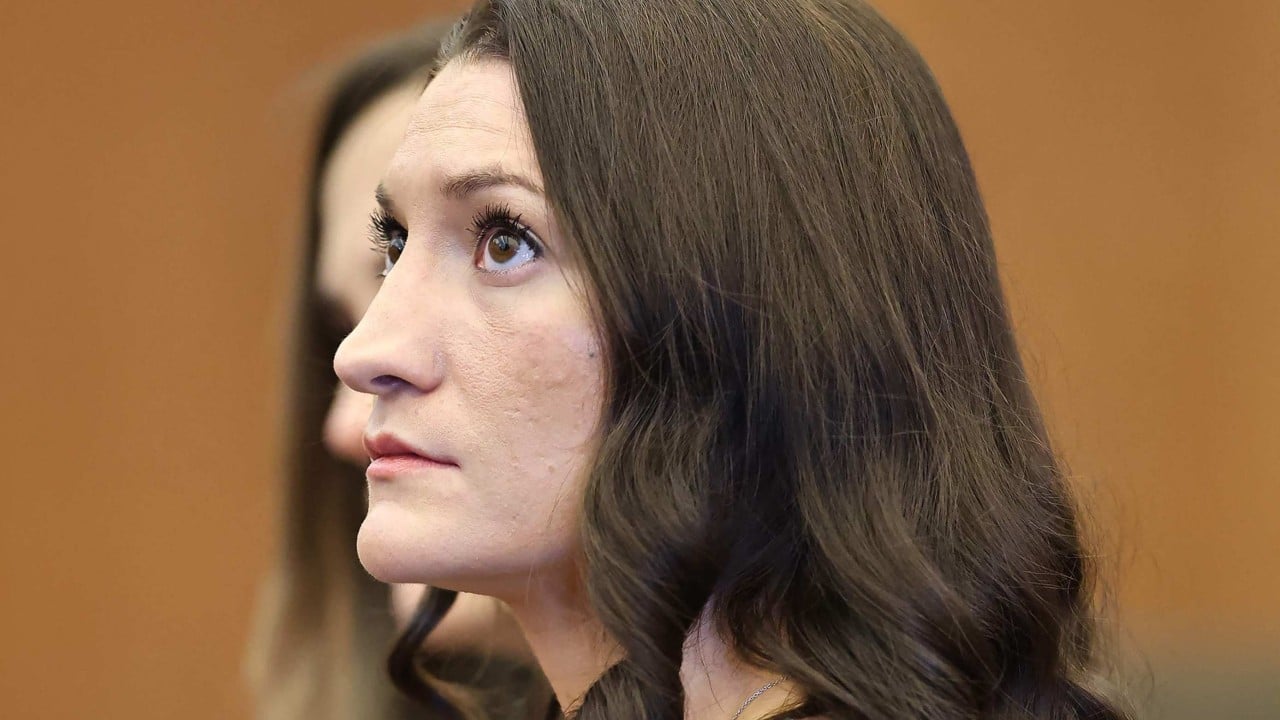
Now, a Massachusetts judge has scheduled a March retrial for Lindsay Clancy, the former labor and delivery nurse accused of killing her three young children in January 2023. On paper, a retrial is just a procedural reset. A calendar date. A docket entry in Plymouth Superior Court.
In reality, it is a collision between two irreconcilable worlds: the rigid, binary machinery of the American criminal justice system and the terrifying, misunderstood terrain of severe postpartum psychosis.
The House on Summer Street
To understand why this case refuses to fade from the national consciousness, you have to strip away the sensational headlines and look at the ordinary architecture of a life before it imploded.
Before January 24, 2023, Lindsay Clancy was the person you wanted holding your hand in a hospital delivery room. As a labor and delivery nurse at Massachusetts General Hospital, her entire professional identity was built around bringing life safely into the world. She knew the physiology of birth. She knew the warning signs. She was educated, supported by a loving husband, Patrick, and surrounded by a tight-knit coastal community in Duxbury.
Look at the timeline of those final weeks, and you do not see a cold-blooded criminal plotting an escape. You see a woman frantically trying to save herself from her own mind.
Between late 2022 and January 2023, Clancy sought help repeatedly. She recognized that something was catastrophically wrong. She journaled about her feelings. She communicated with doctors. She was prescribed a dizzying succession of psychiatric medications—antidepressants, mood stabilizers, benzodiazepines—cycling through prescriptions in a desperate attempt to quiet the escalating noise inside her skull. At one point, she voluntarily checked herself into McLean Hospital, one of the premier psychiatric facilities in the country, seeking inpatient care because she was terrified of the thoughts intruding on her consciousness.
Consider what happens next: she was discharged after just days.
Think of a severe postpartum psychiatric crisis not as a bad mood, or even ordinary sadness, but as an electrical fire behind the drywall of a house. From the street, the paint still looks fresh. The lawn is mowed. The homeowner might even call the fire department, smelling smoke, begging someone to tear open the wall. Yet if the responders only check the thermostat and hand over a bottle of aspirin, the wiring keeps burning until the entire structure collapses inward.
On the evening of January 24, 2023, while Patrick Clancy stepped out for roughly twenty-five minutes to pick up takeout food and children's medication, the house collapsed. Five-year-old Cora, three-year-old Dawson, and eight-month-old Callan were strangled with exercise bands in the basement. Lindsay then jumped from a second-story window, suffering catastrophic spinal injuries that left her paralyzed from the waist down.
Why a Retrial Changes Everything
When the legal system confronts an act so monstrous on its surface, its natural instinct is binary. Guilty or not guilty. Sanity or insanity. Villain or victim.
Under Massachusetts law, the standard for criminal responsibility—what the public broadly calls the insanity defense—hinges on the McHoul standard. To be found not guilty by reason of mental illness, the defense does not merely have to prove that the defendant was sick. Plenty of people commit crimes while depressed or anxious and remain fully accountable under the law. Instead, the defense must prove that, at the exact moment of the act, a mental disease or defect deprived the person of the substantial capacity either to appreciate the criminality of their conduct or to conform their conduct to the requirements of the law.
That legal threshold is razor-thin, and in a courtroom, it becomes a war of narratives.
Prosecutors in Plymouth County have argued from the beginning that Clancy’s actions were deliberate, planned, and methodical. They point to the fact that she used a phone mapping app to check how long it would take her husband to drive to the restaurant and return. They argue she sent him out of the house to create a window of opportunity. To the state, planning equals awareness, and awareness equals guilt.
The defense tells a fundamentally different story—one rooted in neurobiology and pharmaceutical toxicity. Her legal team has argued that Clancy was overmedicated, trapped in a state of acute postpartum psychosis exacerbated by rapid medication changes, and operating under command hallucinations or profound cognitive distortion. In her mind, they contend, she was not acting out of malice; she was acting inside a delusion so absolute that reality itself had dissolved.
When a case ends without a definitive resolution and moves toward a March retrial, the stakes multiply for everyone involved. A retrial means witnesses must take the stand again. First responders who walked into that basement in Duxbury must relive the worst night of their careers. Medical experts must dissect every milligram of medication, every text message, and every therapy note under harsh fluorescent lights.
Most painfully, a retrial reopens a wound that Patrick Clancy has spent years trying to survive. Days after losing all three of his children, Patrick issued a public statement that stunned the nation. Amid unimaginable grief, he asked the public to forgive his wife, describing the real Lindsay as a woman who loved her children fiercely and whose condition had overtaken her completely. Few moments in modern legal history have exposed the chasm between human grace and institutional retribution quite like a grieving father pleading for mercy for the woman accused of taking his children's lives.
The Invisible Epidemic Behind Closed Doors
To understand why millions of mothers watched this case with a mixture of horror and quiet recognition, we have to talk honestly about maternal mental health—and how badly modern medicine still handles it.
Hypothetically, imagine a new mother sitting in a sterile OB-GYN exam room six weeks after giving birth. The doctor spends ten minutes checking her physical healing, hands her a one-page paper questionnaire with ten multiple-choice boxes, glances at the score, and clears her to return to normal life. That single sheet of paper is often the entirety of postpartum screening in America.
Yet the biological upheaval after childbirth is unmatched anywhere else in human physiology. Within forty-eight hours of delivering a placenta, estrogen and progesterone levels plummet off a cliff—dropping more than a hundredfold. Thyroid hormones fluctuate wildly. Sleep architecture is shattered. For roughly one in seven women, this triggers postpartum depression or anxiety.
For approximately one to two out of every thousand births, it triggers postpartum psychosis.
Psychiatry classifies postpartum psychosis as a true medical emergency, yet general emergency rooms routinely miss it. Unlike depression, which slows a person down and drapes the world in gray, psychosis fractures a person's grip on reality. It waxes and wanes—a phenomenon clinicians call "lucid intervals." A mother might appear completely coherent at two in the afternoon, capable of holding a polite conversation with a nurse or spouse, and by five in the evening be convinced that her children are in imminent spiritual danger and only she can save them.
This waxing and waning is precisely what makes postpartum psychosis so treacherous in a courtroom. A prosecutor can point to a coherent text message sent an hour before a tragedy as proof of a rational mind. A psychiatrist, looking at the exact same message, sees the hallmark volatility of an acute psychotic episode.
Historically, society has struggled to separate maternal illness from moral evil. For centuries, women experiencing postpartum madness were locked in asylums or executed without any understanding of endocrine or neurological collapse. Even today, the cultural myth of motherhood demands effortless bliss. We expect mothers to be infinitely patient, instinctively protective, and naturally serene. When a mother admits she is drowning—or worse, admits she is having terrifying, intrusive thoughts about harming her baby—she risks immediate judgment, child protective investigations, and social exile.
So women stay silent. They smile in school pickup lines. They post curated photos online while privately wondering if they are losing their minds.
The Medication Maze
There is another uncomfortable truth sitting at the center of the upcoming March retrial: the role of psychiatric polypharmacy.
When a patient presents with severe agitation, insomnia, and panic after childbirth, outpatient clinics rarely have the luxury of slow, methodical observation. Doctors reach for the tools they have. Sometimes a patient is started on a selective serotonin reuptake inhibitor, which can initially heighten agitation and restlessness—a side effect known as akathisia—before it ever lifts mood. When agitation spikes, a sedative or antipsychotic gets added. If side effects emerge, one drug is abruptly stopped while another begins.
For a brain already destabilized by postpartum hormonal withdrawal, rapid shifts in neurotransmitters can act like fuel on embers.
In the courtroom, this creates an intricate scientific puzzle. Jurors—twelve ordinary citizens pulled from traffic court, retail jobs, engineering firms, and retirement—are suddenly asked to become experts in pharmacokinetics and forensic psychiatry. They must decide whether a person's behavior was driven by free will or by a chemical storm they never asked for and actively tried to treat.
It is an almost impossible burden to place on a jury.
Think about what happens when we ask laypeople to judge an invisible injury. If a driver suffers a sudden, documented grand mal seizure behind the wheel and causes a fatal crash, society grieves the tragedy without branding the driver a murderer. We understand the brain misfired. We can see the electrical spike on an electroencephalogram.
When a mother’s brain misfires through psychosis, there is no broken bone on an X-ray. There is no blood test that flashes red. There are only journal entries, prescription bottles, and the agonizing gap between who a person was for thirty-two years and what happened in twenty-five minutes.
What Accountability Really Means
Critics of a mental illness defense often raise a fair, deeply human objection: if three innocent children are dead, does someone not have to be held accountable? Does excusing an act due to psychosis cheapen the lives of Cora, Dawson, and Callan?
That question deserves honesty, not evasion.
A verdict of not guilty by reason of mental illness is not a walk out the front doors of the courthouse into freedom. In Massachusetts, as in nearly every state, individuals acquitted on grounds of insanity are committed to maximum-security psychiatric facilities—often for decades, and frequently for the rest of their lives. Lindsay Clancy is already permanently paralyzed, confined to a wheelchair and institutionalized under constant medical and custodial supervision. Whether she spends the remainder of her life in a state psychiatric hospital or a state prison infirmary, her freedom ended in January 2023.
The difference is not whether there are consequences. The difference is whether we as a society are willing to tell the truth about why those consequences exist.
If we label a profound psychiatric collapse as cold-blooded murder simply because the outcome is too painful to bear, we comfort ourselves with the illusion that monsters are easy to spot—that evil is something "other" people do, and it could never happen to a devoted nurse in a quiet New England town. That illusion feels safe. It lets us close the newspaper and move on.
It also leaves the next struggling mother completely exposed.
When the March retrial begins, cameras will once again line the courthouse steps. Analysts will debate jury selection, opening statements, and expert cross-examinations. Every detail of a shattered family will be weighed on legal scales designed centuries ago for a far simpler understanding of the human brain.
Somewhere tonight, another new mother is awake at four in the morning, staring at a baby monitor in the dark, terrified by thoughts she cannot explain and too afraid of the consequences to say them out loud. She is watching what happens in that Massachusetts courtroom, trying to decide whether asking for help will save her life—or destroy it.



